

Submarine cables: seismic sensors for maritime ports
From digital highways to global sensors. Fiber optic infrastructure beneath seas and oceans can become an unprecedented seismic and environmental surveillance system
Posted on
02.11.2026
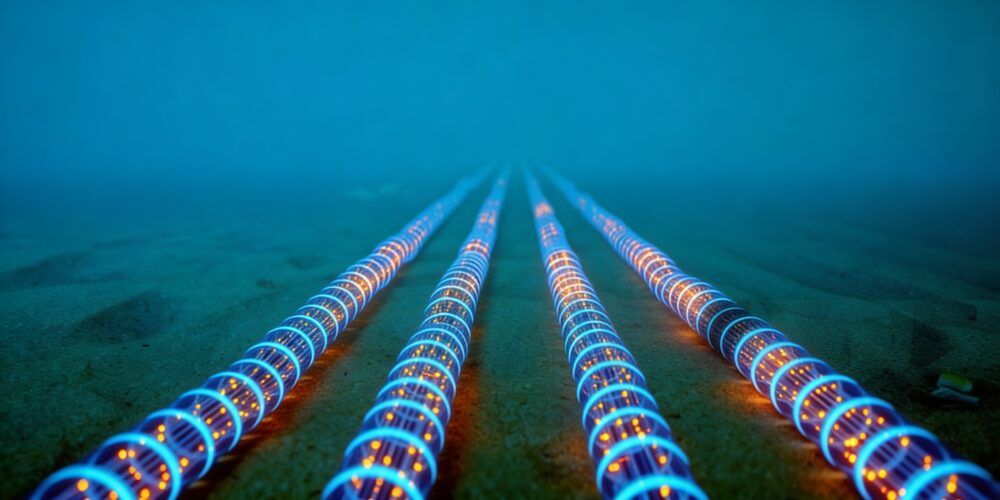
The submarine cables supporting 99% of the planet's data traffic—over 1.7 million kilometers of fiber optic according to the United Nations—are transforming into global-scale seismic sensors. This network, equivalent to 42 times around the Earth's equator, can now become an unprecedented surveillance and early warning system for ports and maritime infrastructure vulnerable to earthquakes, tsunamis, and other natural hazards.
- For the port and maritime sector, this new functionality of submarine cables represents a unique opportunity to protect critical infrastructure and strengthen resilience against natural threats. If fiber optic submarine cables consolidate in this field, risk management would enter a new dimension, enabling early warnings that save lives and protect investments worth billions of euros.
Submarine cables: critical infrastructure for ports
Ports increasingly depend on vulnerable submarine installations: power cables for wharf electrification, fuel pipelines, automated mooring systems... Any seismic event, tsunami, or submarine landslide can compromise these infrastructures and paralyze operations for weeks.
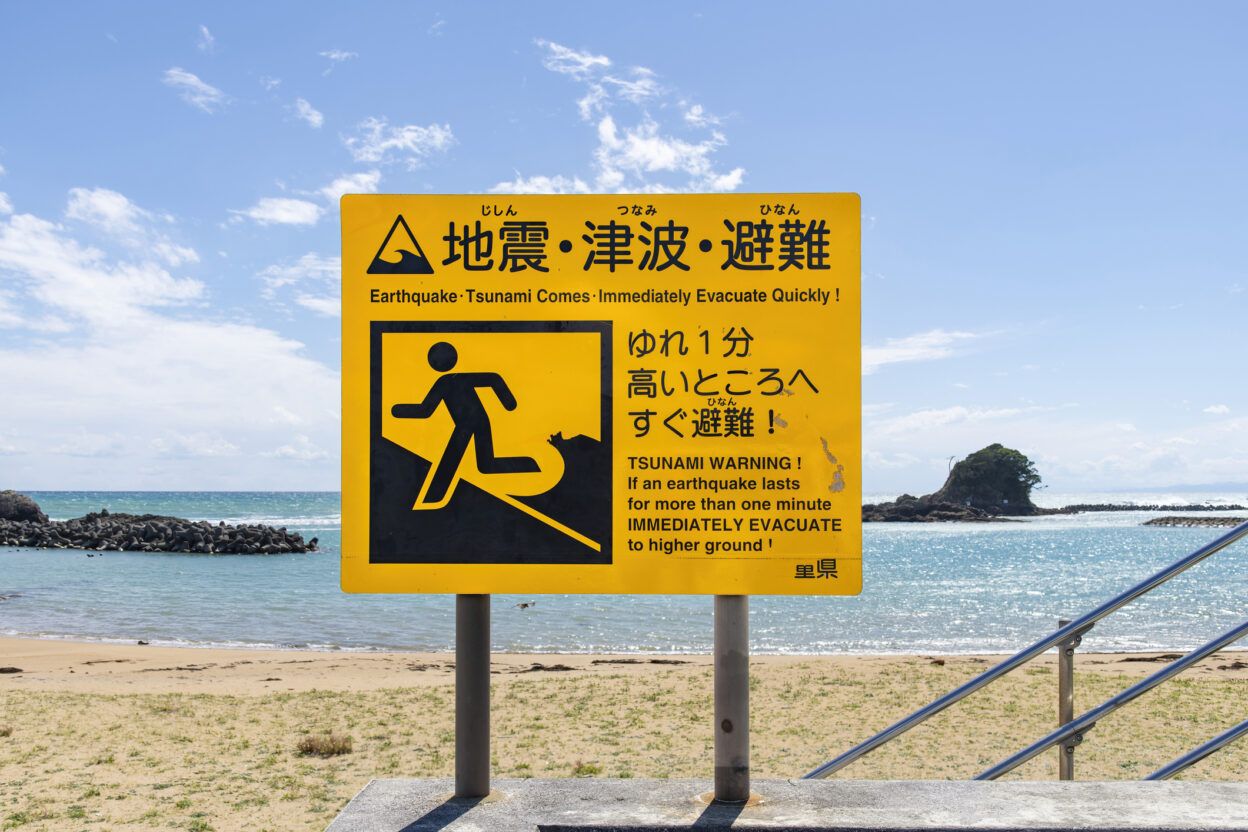
Ports located in seismically active zones—many in Asia are situated near the Pacific Ring of Fire—know this threat well. In the March 2011 tsunami in Japan, six major ports (Hachinohe, Sendai, Onahama, Ishinomaki, Kashima, and Hitachinaka) suffered considerable damage. In the Mediterranean, the 1908 tsunami near Mount Etna caused 80,000 deaths, a reminder that this threat also exists in European waters.
The question is: what if the same digital infrastructure connecting ports could also protect them?
From digital highways to global sensors
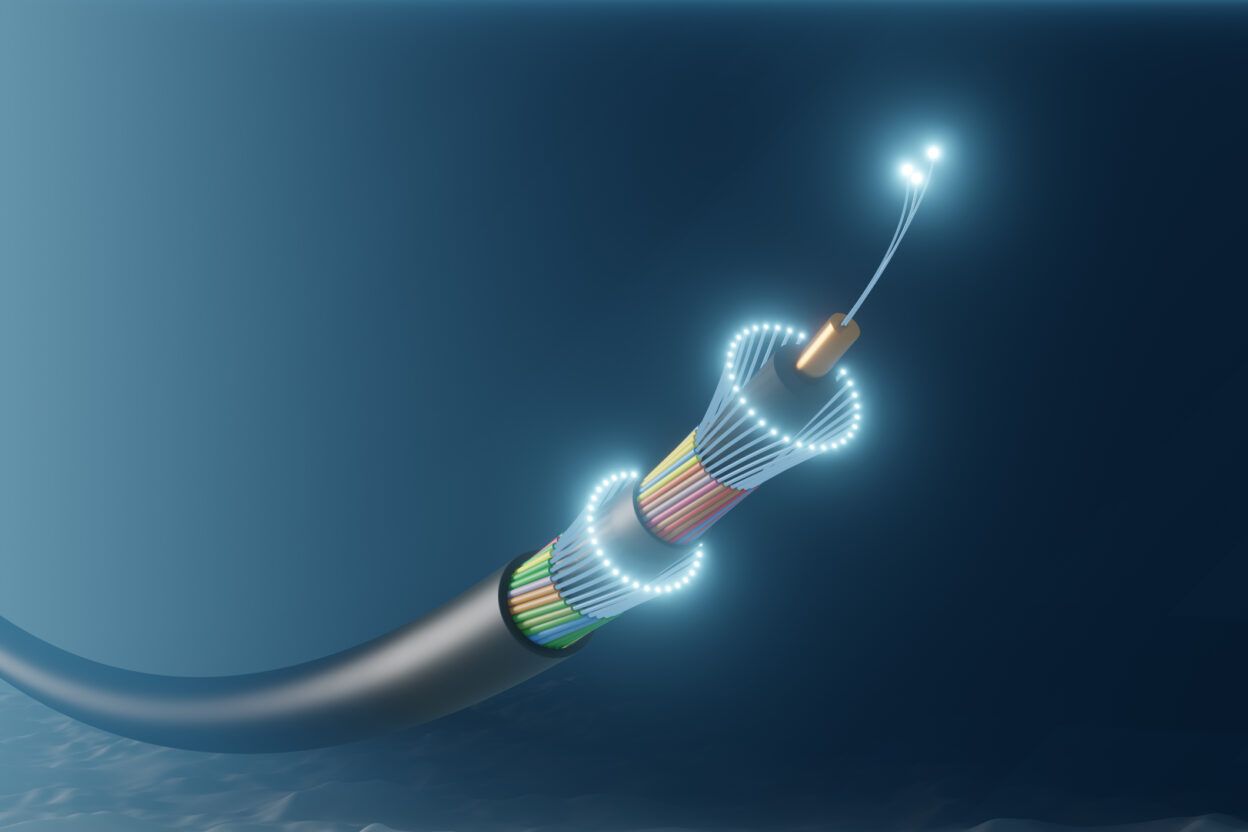
Essentially, submarine telecommunications cables are optical fibers protected by multiple layers of steel, polyethylene, and waterproof materials. These lines are designed to withstand extreme seabed conditions and transmit information through laser light pulses through the glass.
But these cables can also detect any minute change in their underwater environment. How is this possible? Thanks to two physical phenomena that occur naturally in optical fibers:
- Distributed Acoustic Sensing (DAS)
- Brillouin Optical Time Domain Reflectometry (BOTDR)
Although their names are complex, their operation is based on a relatively simple principle: converting vibrations and temperature changes into optical signals that can be measured, creating a neural network in the seas capable of sensing any disturbance.
How Distributed Acoustic Sensing (DAS) works
Arantza Ugalde, researcher at the Institute of Marine Sciences-CSIC (ICM-CSIC), explains to PierNext that DAS technology "converts a conventional telecommunications cable into thousands of separate virtual sensors, typically a few meters apart along tens of kilometers of cable."
DAS uses equipment called an interrogator, connected to one end of the optical fiber, which sends laser light pulses along the cable. Part of that light is reflected due to microscopic irregularities in the material and returns to the interrogator. Software can analyze how this reflected signal varies over time, allowing the system to detect extremely small deformations caused by vibrations or acoustic waves. These variations allow identification of seismic events or other movements. Additionally, the time it takes for the light to return allows precise localization of the point on the cable where deformation has occurred.
Translating this into more practical terms, Ugalde adds that "with DAS, seismic waves from earthquakes are recorded and, depending on the environment, signals associated with landslides or volcanic activity; meteorological-oceanic signals related to sea state and, potentially, signals associated with tsunamis."
Furthermore, the CSIC researcher explains other data that can be measured with this technology such as "maritime or terrestrial traffic and industrial activities, as well as signals of biological origin, for example, cetacean vocalizations."
French company Alcatel Submarine Networks (ASN), specialized in fiber optic sensing technologies, has developed commercial solutions that convert conventional cables into distributed sensor networks. In this video, they explain how their DAS systems can monitor critical infrastructure in real time, from pipelines to submarine cables, detecting vibrations, intrusions, and seismic events along tens of kilometers with a single interrogator.
How BOTDR technology works: measuring ocean temperature
While DAS detects vibrations and movements, Brillouin Optical Time Domain Reflectometry (BOTDR) specializes in measuring temperature changes along the entire cable. This technology exploits a physical phenomenon known as Brillouin scattering, which occurs when laser light interacts with molecules in the optical fiber material.
The process works similarly to DAS: an interrogator sends light pulses through the cable, but in this case, the frequency of the reflected light varies according to the temperature of the environment surrounding the fiber. When temperature increases, the fiber molecules vibrate differently, slightly altering the frequency of the bouncing light. By analyzing these frequency changes and the time it takes for the light to return, the system can create a detailed thermal map of the entire cable route.
A revealing example of its potential is found on the Caribbean island of Guadeloupe, where researchers from the EU's ERC FOCUS project detected a 1.5°C temperature increase that coincided with a coral bleaching event that destroyed 30% of local reefs in two years. Without this continuous monitoring, the phenomenon would have gone unnoticed until the damage was irreversible.
For port infrastructure, this thermal monitoring capability has direct applications: from detecting industrial spills that alter water temperature to monitoring conditions of protected marine species in port operation zones. It also allows identification of anomalous ocean currents that may affect navigation or anchoring operations.
Seismic sensors in submarine cables: real cases
The capability of these systems is not theoretical. A project led by Nokia Bell Labs managed to convert a 4,400-kilometer cable between Hawaii and California into 44,000 seismic stations, separated by just 100 meters. To contextualize this figure: it's like having a seismograph every 100 meters along the entire distance between Madrid and Moscow. The system successfully detected a magnitude 8.8 earthquake in the Kamchatka Peninsula and the subsequent tsunami, demonstrating that this technology can cover transoceanic distances.
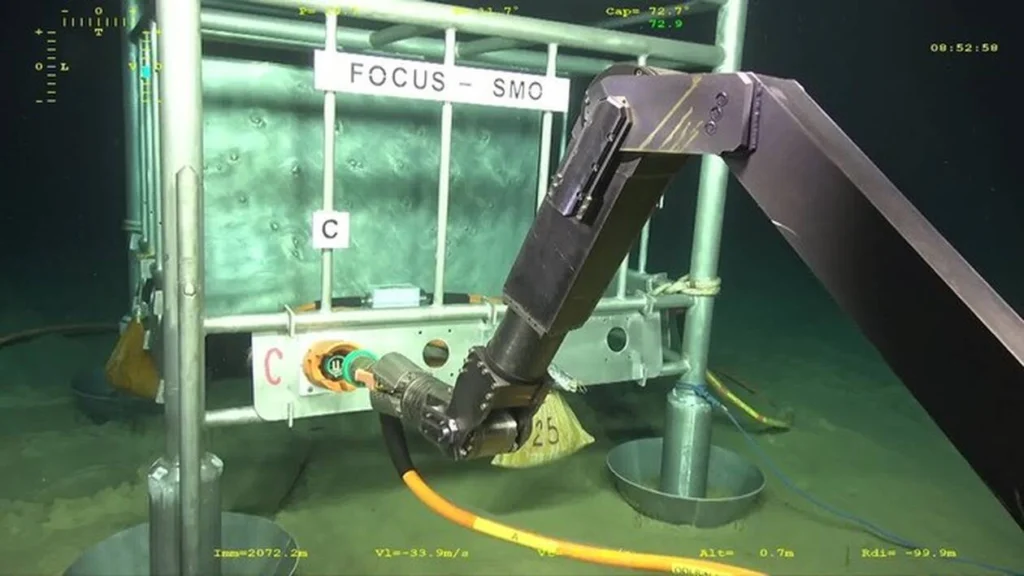
In European waters, the ERC FOCUS project installed a monitoring prototype with these cables on the coast near Mount Etna, where it aims to prevent a disaster like the 1908 tsunami that caused 80,000 casualties. This initiative demonstrates that the Mediterranean, although perceived as a relatively calm sea, also requires early warning systems.
For maritime traffic, DAS can track the movement of vessels navigating over the cable zones, offering complementary data to AIS (Automatic Identification System) and radar systems. This is especially useful for detecting unauthorized activity or managing traffic in congested port approaches. In some pilot tests, the system has even identified small vessels that do not emit AIS signals.