


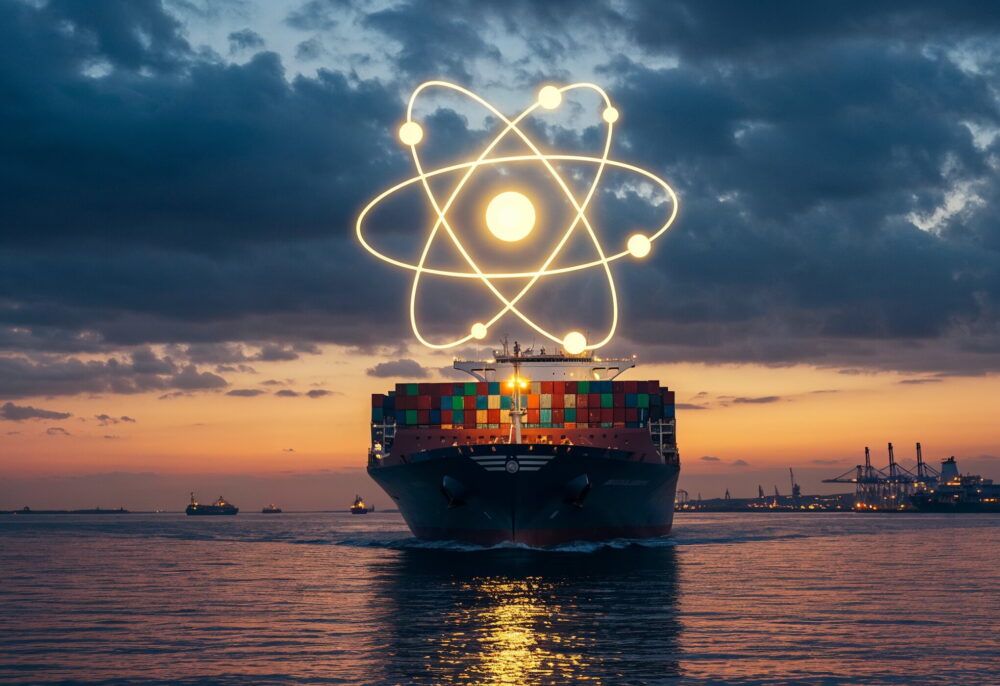
Marine nuclear propulsion: the first commercial vessels arrive
China and South Korea lead the first commercial projects that will sail before 2030, while Europe develops its regulation
Posted on
02.04.2026
Advances in international regulation for nuclear vessels
The nuclear industry is entering a phase of new technological expansion and regulatory development at a time when the maritime sector needs reliable, sustainable energy compatible with its operational demands. This positions nuclear energy as a strategic opportunity for the shipping sector.
- "Nuclear energy applied to marine propulsion is in full swing. In 2025, there were successive announcements of collaborations, working groups, and advances to develop the necessary regulation," says Maurici Hervas, Head of Energy Transition at the Port of Barcelona. "This is due to the maturation of advanced technologies that differ from the dominant pressurized water reactor, moving away from the large-capacity plant concept, better aligning with energy transition requirements, decentralized generation, and power applicable to transport."
According to Hervas, alongside technological advances, the large number of commercial designs currently under development by regulatory bodies stands out, resulting in accelerated fundraising. "This shows we're entering an implementation phase for these technologies, for now on the land side," notes the Head of Energy Transition at the Port of Barcelona.
According to the report Navigating nuclear energy in maritime: Initial considerations for nuclear ships and offshore, prepared by Lloyd's Register, the lack of a unified international regulatory framework that effectively integrates the maritime and nuclear industries is one of the main obstacles preventing the implementation of this energy in the shipping sector. Added to this is the difficulty of achieving collaboration between stakeholders.
According to LR, implementing nuclear reactors on ships or offshore requires collaboration between designers, regulators, operators, insurers, ports, and communities. It's essential to develop integrated safety cases that respond to the specific operational risks of the sea, as well as design robust physical security systems and nuclear safeguards, they note in the report.
- In this context, the step forward in designing regulations represents a boost to provide the maritime sector with nuclear energy. "A race is beginning to achieve leadership in this sector. With the establishment of the
- Maritime Nuclear Consortium, the United Kingdom positions itself as a precursor to regulatory development and its value chain. The United States has also made moves by establishing the Maritime Nuclear Policy Division, as has France with the New Energies Coalition, formed by Bureau Veritas and CMA, among others. International collaboration is also taking place, as demonstrated by the Atlantic Partnership for Advanced Nuclear Energy between the United States and the United Kingdom," says Hervas.
Other industry players are also contributing to this momentum. For example, the MIT Maritime Consortium with the publication of the Nuclear Ship Safety Handbook, which seeks to lay the foundations for regulations and operational standards for civil nuclear-powered vessels.
Leading nuclear propulsion vessel projects
In recent months, the sector has seen numerous initiatives emerge that show, with specific names, the advancement of nuclear energy as an alternative to drive the maritime sector.
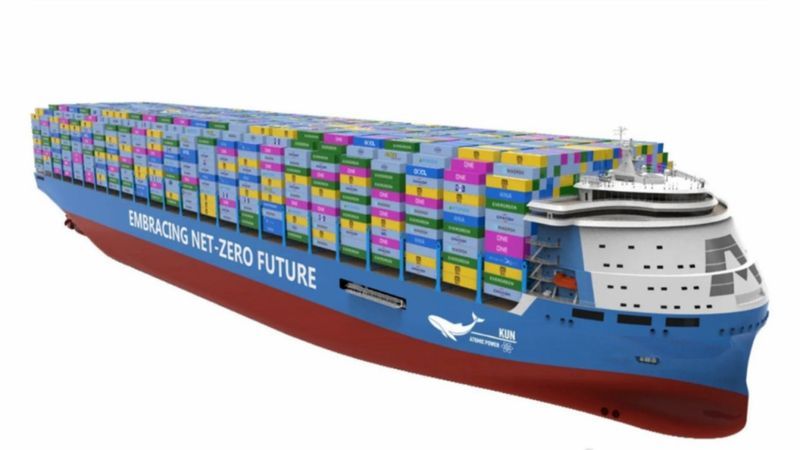
- China positions itself as one of the most advanced countries, with plans such as building a nuclear-powered container ship developed by China State Shipbuilding Corporation in partnership with China National Nuclear Corporation.
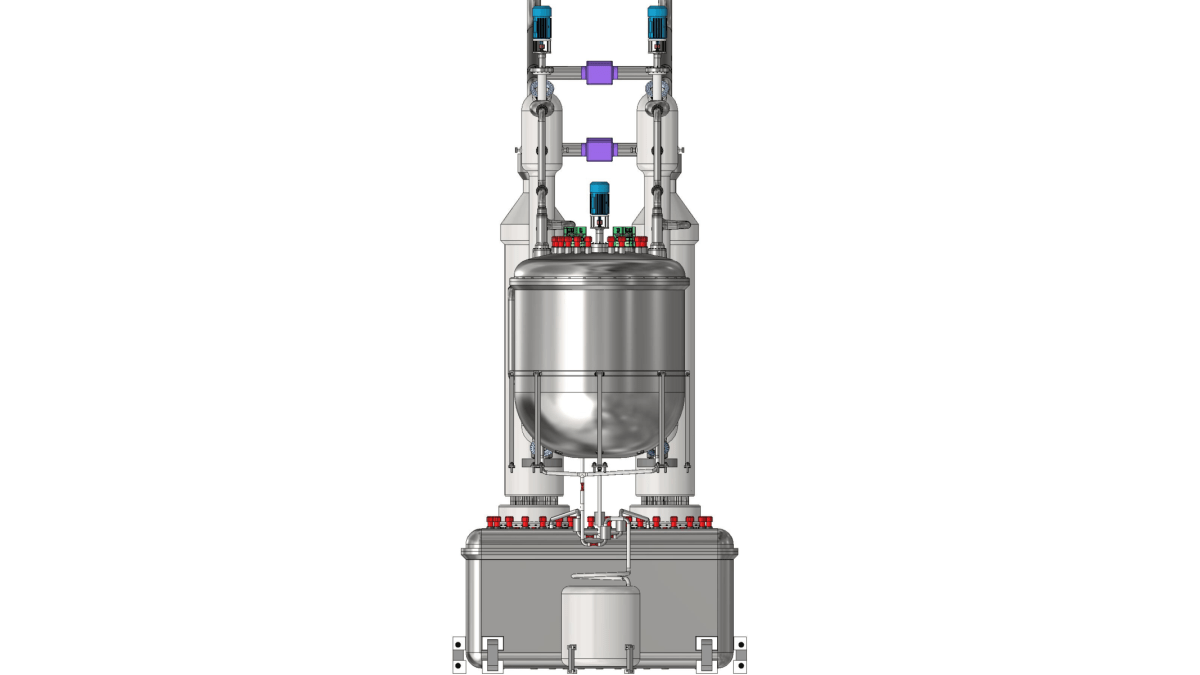
The vessel will be powered by a thorium molten salt reactor, a technology that operates at atmospheric pressure and generates hundreds of megawatts of thermal energy. This characteristic is fundamental for safety, since unlike traditional pressurized water reactors that operate at extremely high pressures, molten salt reactors eliminate the risk of overpressure explosions. Thorium, moreover, is three times more abundant than uranium in the Earth's crust and generates significantly less long-lived radioactive waste.
One of the most notable advantages of this design, according to its promoters, is its extraordinary operational autonomy. With a single thorium fuel load, the vessel could sail for a full decade without needing to refuel. This characteristic radically transforms the operational economics of maritime transport, eliminating the need for refueling stops and freeing up cargo space that in conventional vessels is dedicated to enormous fuel tanks. Additionally, predictability in operational costs improves substantially by becoming independent of oil price volatility.
The Chinese project timeline contemplates completing the detailed design and obtaining necessary regulatory approvals between 2024 and 2026. Construction of the first prototype would begin immediately after, with sea trials planned for the 2029-2030 period. If everything goes as planned, this vessel could enter commercial service at the end of the decade, marking the beginning of a new era in maritime transport.
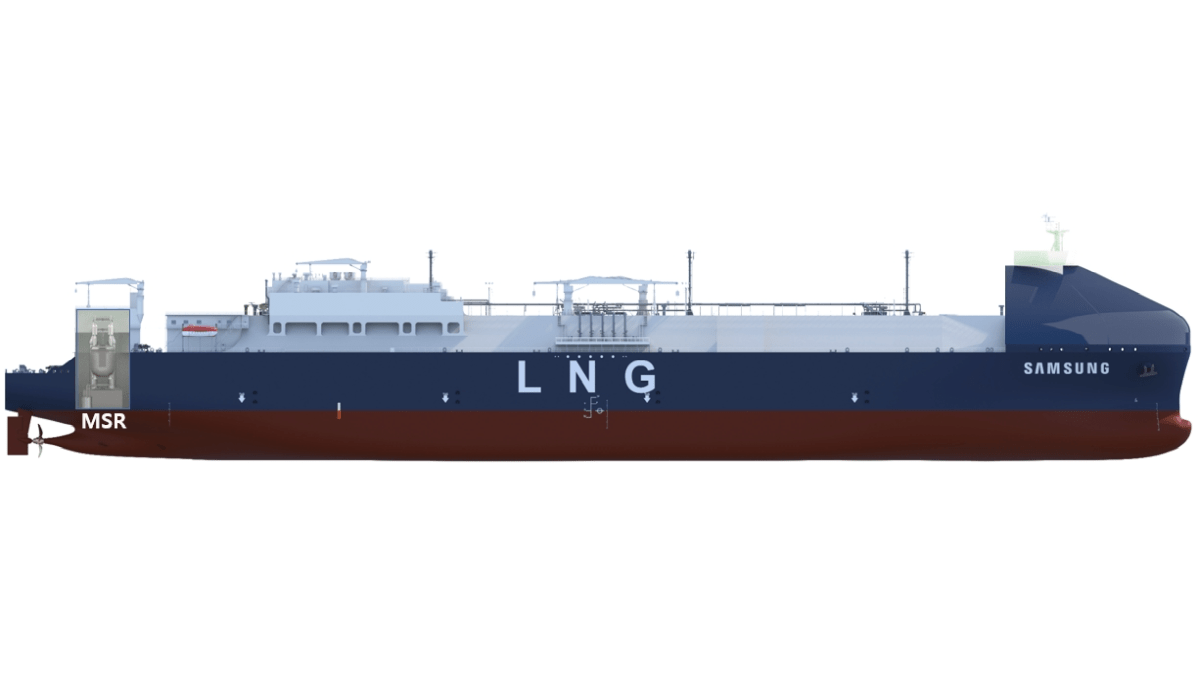
- South Korea is another protagonist country. The shipyard Samsung Heavy Industries and the Korea Atomic Energy Research Institute jointly designed an LNG carrier powered by small modular reactors that received initial approval from the American classification society American Bureau of Shipping in the second half of 2025.
This American Bureau of Shipping approval represents a crucial milestone in the project's development, as it validates that the design meets rigorous international standards for both maritime and nuclear safety. LNG carriers are traditionally large fuel consumers due to the enormous distances they must travel between gas production zones and consumer markets. Nuclear propulsion could dramatically reduce this industry's carbon footprint, while greater autonomy would allow more direct routes and fewer intermediate refueling stops. The vessel is designed to operate, like the Chinese proposal, with a thorium molten salt reactor.
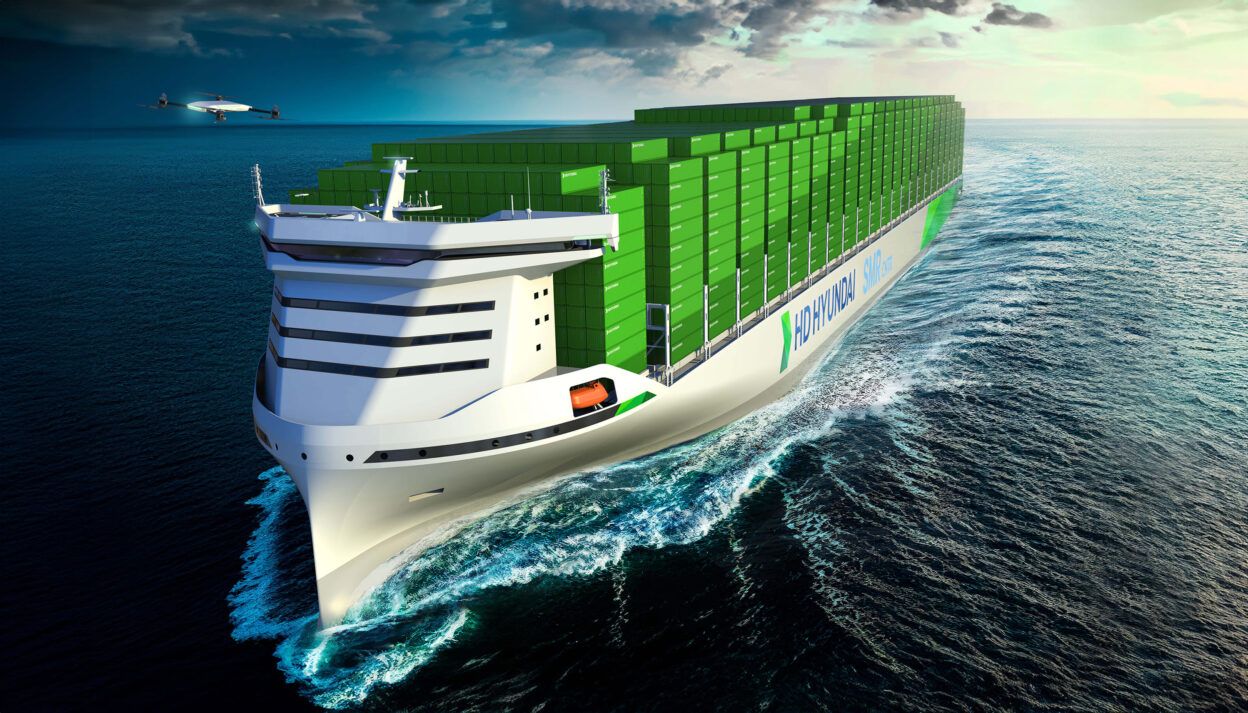
For its part, HD Korea Shipbuilding & Offshore Engineering has received approval from the classification society DNV, another important international classification society, to design a 15,000 TEU container ship powered by small modular reactor technology. A vessel of this capacity is considered large-scale, ideal for major trade routes like Asia-Europe or Trans-Pacific. The design based on small modular reactors offers significant advantages in terms of scalability and safety, as multiple small modules instead of a single large reactor provide natural redundancy: if one module requires maintenance, the others can continue operating while the vessel completes its voyage.
Benefits of nuclear energy in the maritime sector...
Among the main positive aspects of driving the maritime sector with nuclear energy, decarbonization, operational flexibility, and air pollution reduction stand out, as detailed in this PierNext article published in 2024, a year when a new generation of reactors positioned nuclear energy as an interesting option for decarbonization. The LR report agrees in turn that nuclear can help the sector improve energy security and contribute to sustainability and decarbonization goals, as well as meet future energy demand.
- "The growing pressure on access to electrical power can also be mentioned. The production of alternative fuels will require very significant amounts of electricity; the adoption of nuclear technology could help the viability of maritime decarbonization by reducing the total energy needed," says Hervas.
"The energy system benefits from a balanced mix; in this sense, incorporating a new technology that allows emission reduction would be positive. But its deployment must be preceded by the development of global regulations and the establishment of an agency recognized by the international community that serves as a common authority. Additionally, its entire life cycle must be taken into account to avoid greenwashing dynamics," he adds.
... and economic viability of maritime nuclear propulsion
The technical viability of nuclear propulsion in commercial vessels is demonstrated after decades of operation in military submarines and civil icebreakers. However, transferring this technology to the realm of commercial maritime transport poses economic and financial challenges that go far beyond mere technical feasibility. According to Lloyd's Register analysis, the financial equation for maritime nuclear energy is complex and multifaceted, but not necessarily unfavorable.
- The economic advantage of modular reactors
Large land-based nuclear projects have acquired a problematic reputation in terms of economic management. Large-capacity nuclear plants historically suffer significant cost overruns and schedule delays, a phenomenon the industry attributes to each facility being practically unique, a singular project without the possibility of exact replication. This absence of standardization prevents leveraging the economies of scale that characterize other manufacturing industries.
However, small modular reactors designed for maritime applications could radically change this equation. Lloyd's Register identifies several fundamental economic advantages of SMRs over their large-scale terrestrial cousins, such as these reactors being able to be manufactured in industrial facilities with standardized and repeatable processes, similar to how large current marine diesel engines are built. This mass production drastically reduces unit costs once significant manufacturing volumes are reached.
Additionally, the design and approval of standardized components allows multiple vessels to use the same certified systems, eliminating the need for each installation to go through a complete review and approval process from scratch. This concept of regulatory "pre-licensing" for base designs means that shipowners could acquire SMR reactors with much of the regulatory work already completed, significantly shortening licensing timelines and reducing the regulatory uncertainty that so concerns financiers.
- Beyond construction cost: comprehensive financial planning
Establishing financial backing for maritime nuclear applications represents one of the most significant challenges for the success of these projects. Lloyd's Register emphasizes that project teams must first demonstrate that the product is technically viable to build, operate, and decommission before seeking financing. This approach inverts the traditional logic of many projects, where capital is sought based on preliminary feasibility studies. In the maritime nuclear case, the bar is considerably higher.
The document identifies five fundamental questions that every project team must answer exhaustively: who assumes what costs during the different life phases of the vessel?, what are the real cost differences between nuclear technology and other decarbonization options like green hydrogen, ammonia, or methanol?, what exactly is the CAPEX to install nuclear propulsion in a specific maritime application and who will assume this initial investment?, and what are the financial guarantees for decontamination and decommissioning activities at the end of the reactor's useful life?
- High CAPEX, potentially competitive OPEX
Although Lloyd's Register does not provide specific figures in its guidance document, cost structure analysis reveals a characteristic pattern: nuclear propulsion requires a significantly higher initial investment than conventional systems, but could offer operational advantages that compensate for this differential over decades of operation.
The capital investment for a nuclear propulsion system includes not only the reactor and its containment systems, but also redundant safety systems, complete radiological shielding, specialized waste management systems, exhaustive crew training, and the extensive licensing and regulatory approval process. Each of these components adds costs that don't exist in conventional propulsion vessels.
However, a nuclear vessel with ten years or more of autonomy would completely eliminate fossil fuel costs and their associates: not only the price of bunker or LNG, but also the costs of refueling stops, associated port fees, and operational delays.
Economic viability, then, depends crucially on the type of vessel and its operational profile. For large container ships operating on transcontinental routes with high service frequency, accumulated savings in fuel and operating time could offset the higher CAPEX over a fifteen to twenty-year horizon. For smaller vessels with short routes and less intensive operation, the equation is much less favorable.
- Security by Design: when saving now costs more later
Nuclear safety must be considered from the initial conceptual moment of any project, not as a later addition. This maxim is based on decades of experience in the terrestrial nuclear industry. The document is explicit in its warning: the cost of subsequently adapting nuclear safety measures to meet regulatory requirements is significantly higher than including them in the design from the beginning. Retrofitting costs can multiply by several factors the cost of integrated implementation from the start.
The reason is both technical and regulatory. From a technical standpoint, adding safety systems to an existing design often requires major structural modifications, space reconfiguration, and compromises in design efficiency that wouldn't be necessary if safety had been considered from the beginning. From a regulatory perspective, demonstrating the adequacy of retrofitted safety measures is considerably more complex than presenting an integrated design where safety is inherent to the system architecture.
- Green financing: opportunities in the decarbonization context
Despite the challenges, specific financing opportunities exist derived from global climate urgency: sustainable bonds (especially attractive given that EMSA recognizes nuclear energy as an eligible sustainable source), special purpose vehicles that isolate specific risks, export credit agencies in countries with developed nuclear industries, and joint venture structures.
The maritime EU ETS establishes an effective carbon price for maritime transport emissions. In this context, a nuclear propulsion vessel with zero emissions during operation could have significant competitive advantages.
- The labyrinth of nuclear maritime insurance
The availability of appropriate insurance potentially constitutes an even greater obstacle than financing itself for the commercial viability of maritime nuclear propulsion. Commercial vessels have P&I insurance covering third-party damages, pollution, and loss of life. The key question is how to integrate specific nuclear risks into this traditional framework.
In the terrestrial nuclear sector, insurance pools operate where multiple insurers collectively share nuclear liability, reflecting the unique nature of this risk: very low probability but potentially high consequence events. For maritime nuclear propulsion, it will be necessary to develop specialized pools that combine expertise in nuclear and maritime risks, with financial capacity to cover incidents in international waters.
- ALARP: the rational balance between safety and costs
Lloyd's Register introduces the ALARP principle ("As Low as Reasonably Practicable"), widely used in the nuclear and maritime industries. It establishes that risks must be reduced to the point where the cost of additional reduction would be grossly disproportionate to the safety benefit obtained.
This principle is fundamental because it establishes that safety measures, although exhaustive, must be economically rational. It's not required to implement all theoretically conceivable measures if the cost is disproportionate. This rational balance makes it possible for projects with high safety standards to be simultaneously economically viable, through detailed quantitative risk analyses and rigorous cost-benefit evaluations.