


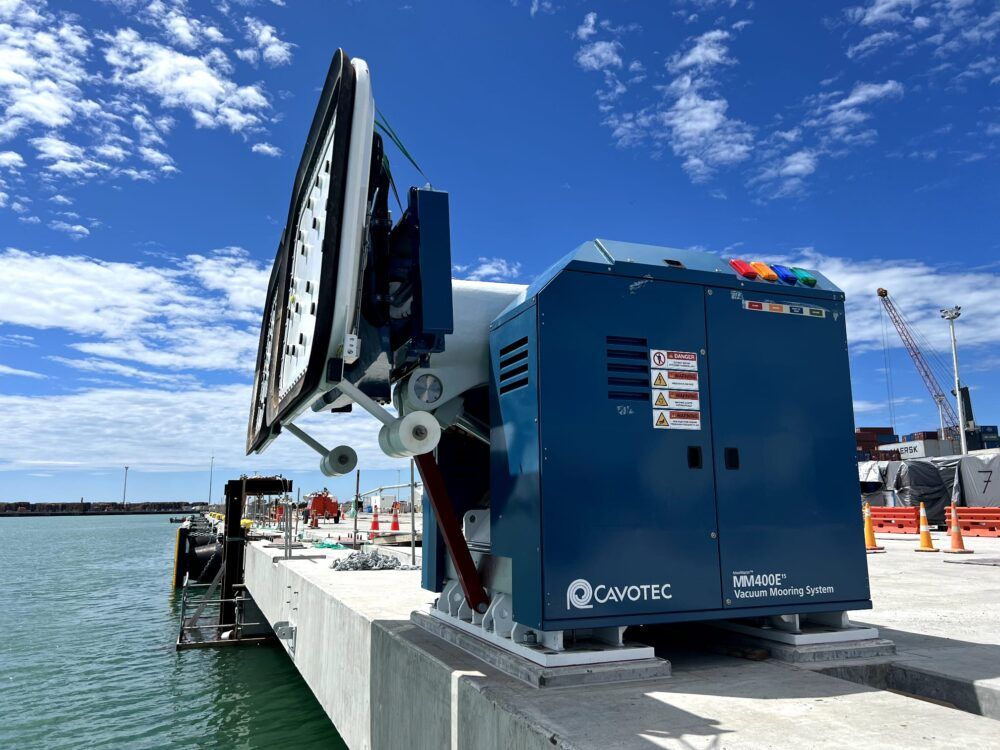
Automated vacuum mooring: the technology that moors mega container ships in 30 seconds without a single mooring line
Automated vacuum mooring is the system that secures large container ships to the berth in under 30 seconds, without lines and without human intervention. For the first time, this system is operating commercially with mega vessels of over 16,000 TEU, marking the beginning of fully automated port berthing
Posted on
02.26.2026
How the automated vacuum mooring system works: technical specifications
Setting aside the experience to date with smaller vessels and ferries, the system deployed at Qingdao presents two undeniable advantages:
- reduced turnaround times
- improved safety.
But it is worth understanding the details to assess in which ports and circumstances such a system is truly worth implementing.
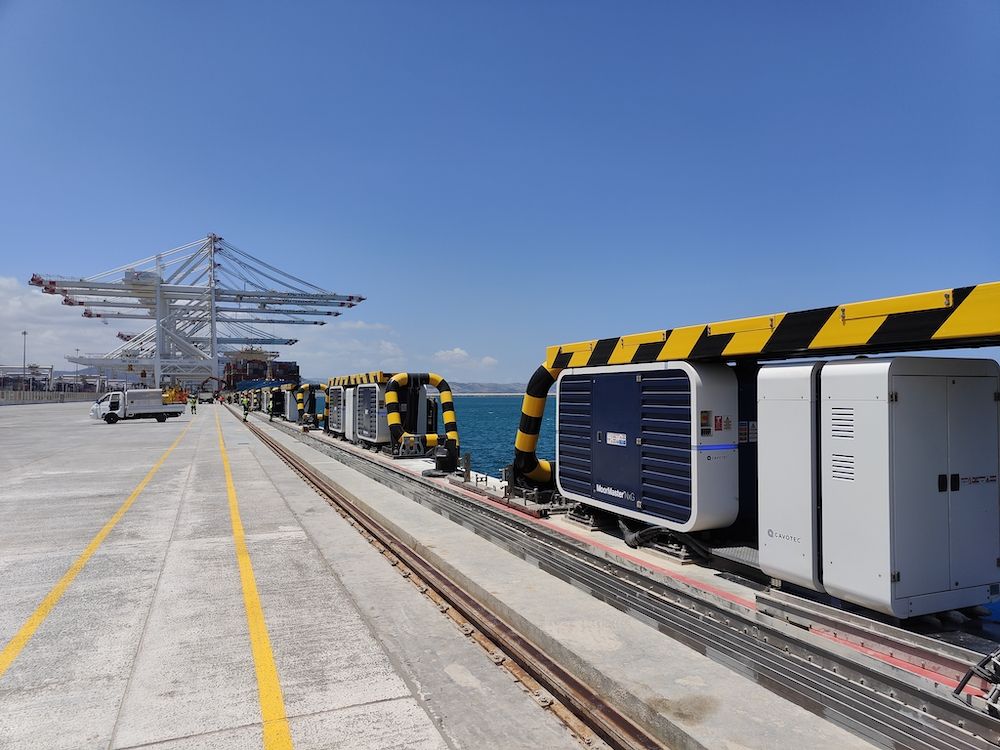
In the specific case of Qingdao, the installation comprises 13 automated mooring units distributed along the berth. Each one incorporates high-power suction pads that adhere directly to the vessel's hull, without requiring any connection element to be fitted on board beforehand. When activated simultaneously, they generate a combined holding force of 2,600 kilonewtons, sufficient to keep the world's largest container ships firmly in position under normal operating conditions.
The process is triggered when a large container ship approaches the port. Advanced sensors track the approach, automatically identifying the vessel's hull and calculating its alignment with the berth in real time. Once the system has verified that the vessel is in the correct position, it activates the suction units and completes mooring in under 30 seconds.
The system operates with millimetric precision, achieved through control algorithms that ensure the pads make contact with the appropriate area of the hull and that pressure is distributed evenly.
System management is structured around a three-level control platform:
- a remote monitoring centre that oversees the entire operation
- mobile terminals that allow monitoring from any point in the installation
- local control units installed directly on each mooring module at the quay
This distributed architecture ensures system resilience in the event of isolated failures and allows an immediate response to any incident.
Is it a viable system for all ports?
Raúl Villa Caro, Secretary of the Exponav Foundation and professor at the University of A Coruña, explains to PierNext the type of port where these automated mooring systems for mega container ships should be deployed: "for this system to succeed, the existence of a smart port is crucial for the equipment to function optimally, alongside other berthing assistance equipment that may be present at the quays."
The expert outlines further challenges the system presents: "the ideal would be to equip all the port's berths with these systems and use them when needed, but it must be noted that they do not work for all vessel types."
On the strengths of the system, Villa Caro points out that "the costs generated by cargo loading and unloading time in port are significant, so we will need to assess the savings now that these operations can be carried out so quickly." Qingdao Port has estimated the time saving at 200 hours per berth per year.
When pressed for a specific figure, the naval specialist states that "equipment suppliers indicated that with 200 berth calls per year these systems could be profitable," adding that "it is a technically viable option, but not economically so, due to the high cost of each vacuum mooring unit. Only major ports can generate the vessel movements required."
Ports that manage to implement this system will enjoy additional advantages beyond the efficiency and workplace safety improvements already mentioned. "The radical reduction in mooring time means less use of the vessel's propulsion system, tugs, etc., which translates into lower emissions in port," notes Villa Caro.
Furthermore, these mooring systems do not have a high electricity demand or significant energy consumption. Villa Caro also explains that "this time saving will require slower navigation speeds, which will translate into lower fuel consumption and therefore a reduction in pollutant emissions."
- Technical requirements for vessels using automated vacuum mooring
As well as the port having the right scale and technology, it also matters whether vessels are adapted for automated mooring. What characteristics must these ships have?
Villa Caro explains that "the vacuum suction pads on the port's quays must grip sections of the vessel made up of near-flat plates close to the part of the hull running parallel to the berth, and which do not contain significant protrusions." The Exponav Secretary adds that vessels "must also be able to withstand the suction force of the pads (9 tonnes per square metre)."