

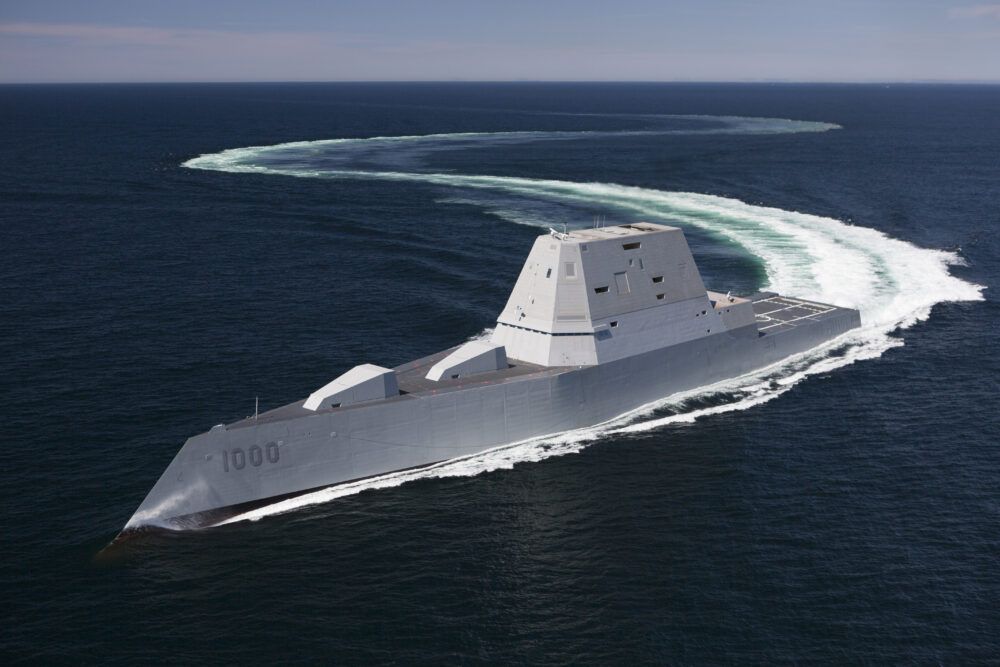
Global naval rearmament and control of maritime routes: an old dream with new tools
80% of world trade travels by sea. The country that controls these maritime routes will hold a position of power over its rivals. This is an old strategic axiom, but in the current climate of international tensions, countries are rearming to keep dominating the waves.
Posted on
02.20.2026
"He who commands the sea commands trade; he who commands the trade of the world commands the riches of the world and, consequently, the world itself," said Sir Walter Raleigh, one of the great mariners (and a pirate in the eyes of the Spanish empire). He wrote these words in the 16th century, when Western powers were beginning their race to dominate the seas of the planet.
Since then, the countries that have achieved clear global hegemony have been those that imposed their law on the world's seas and oceans. One need only think of very recent examples. The United States achieved its primacy by prevailing over the Soviet Union and Nazi Germany, two powers that had bet on a model of continental dominance.
In its role as an aspiring global hegemon, China has taken careful note of the need to dominate the seas and has spent years expanding its navy to protect its commercial interests across the planet.
But naval rearmament is not just a matter for the "heavyweights" of the international scene. Countries with strong naval traditions such as Japan, France, the United Kingdom, Spain, Turkey and India are developing their navies to defend their interests along global maritime routes.
This is not the first naval arms race in human history — one need only recall those between Germany and Great Britain before the First World War. If battleships were then the symbol of technological development, today drones (surface and submarine) and hypersonic missiles lead modernisation programmes.
The Chinese navy and its contest with the US in the Pacific
China has achieved another milestone in naval warfare: the People's Liberation Army Navy (PLAN) is today, by number of vessels, the largest in the world — more than 370 units in service at the start of 2025, with projections pointing to 435 combat platforms by 2030 and up to 475 by 2035, according to the International Institute for Strategic Studies (IISS).
By contrast, the United States Navy has around 290 combat units, a figure well below the target of 355 ships set by Congress to maintain global hegemony. However, in terms of tonnage, the US remains the leader with more than 4 million tonnes of displacement, largely thanks to its eleven nuclear-powered aircraft carriers.
On the other side of this maritime ring, the PLAN has half the displacement and only three aircraft carriers. Although its development is rapid and will close this gap in the future, as demonstrated by the enormous capacity of its shipyards — which outpaces the American equivalent by a factor of 232, according to data from the Alliance for American Manufacturing.
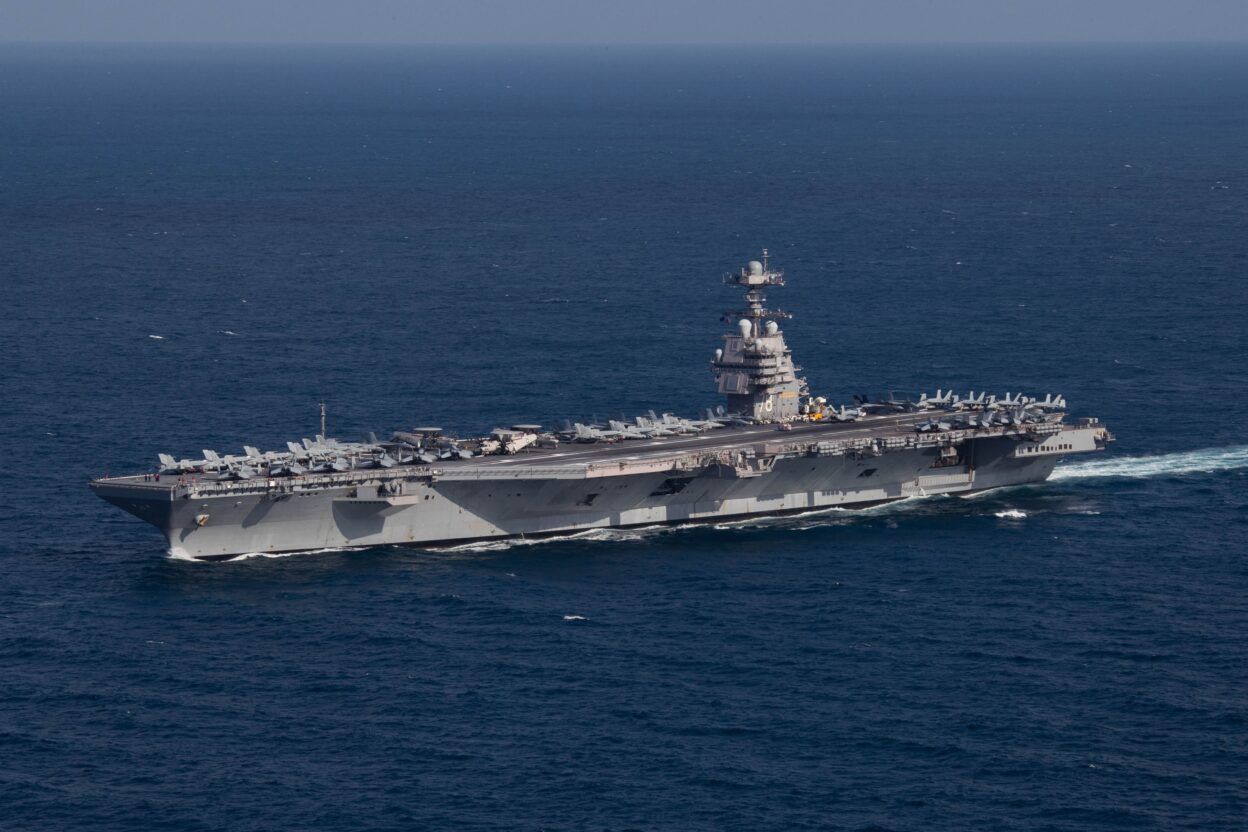
For this reason, in barely two decades, the PLAN has gone from being a coastal force to presenting itself as a blue water navy, capable of operating on a global scale. Beyond fleet size, China's ambitions also focus on modernisation. Its three aircraft carriers lead this drive, with the Fujian standing out — in service since late 2025 with its electromagnetic catapults, which allow a higher rate of flight operations from its deck, a capability matched only by the USS Gerald Ford, the most modern American carrier.
Carrier-killer missiles
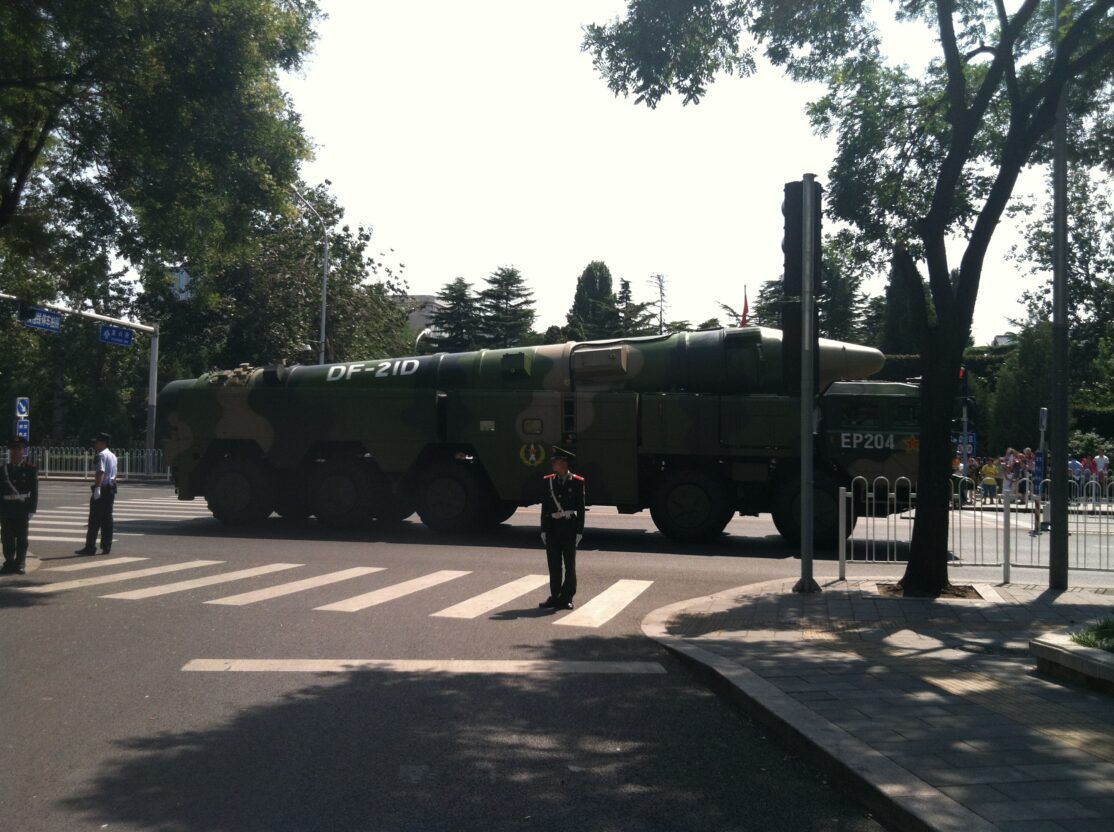
Chinese innovation also extends to other aspects of naval warfare. According to the findings of the US Congress report China Naval Modernization: Implications for U.S. Navy Capabilities the greatest threat comes from the hypersonic missiles DF-21D and DF-26B — projectiles that travel at speeds exceeding Mach 5, five times the speed of sound, making them extremely difficult to intercept.
These missiles, nicknamed "carrier-killers", could prove decisive if war broke out between the US and China. Another military innovation from Beijing, highlighted in the congressional report, is the first vessel specifically designed to deploy drones: the Sichuan. Other mid-ranking powers, such as Iran and Turkey, have already deployed ships with this function, but these are vessels converted for this specific purpose.
The United States holds cards of its own, including the arrival of the second Ford-class carrier, the USS John F. Kennedy, though it will not enter service until 2027. To try to reverse the sense of China's unstoppable rise, Secretary of the Navy John Phelan promised changes last spring to accelerate the construction of new ships.
- In late 2025, Donald Trump announced a new class of warship that would bear the president's name — a redesign of the traditional battleship concept (the US decommissioned its last such ship in 1992). This vessel is the flagship of the president's Golden Fleetinitiative, aimed at improving the US Navy's combat capability.
Supersonic weapons and new battleships
Supersonic weapons? New battleships? James R. Holmes, Professor of Naval Strategy at the Naval War College de Newport, summarises for PierNext what may prove decisive in a future naval conflict: "deploying many platforms and good-enough weapons is often better than deploying a few world-class platforms and weapons."
Holmes draws on the example of the Second World War to support his view: "Germany and Japan learned this the hard way during the world wars. Nobody had better weaponry one-on-one, but they were up against the United States, which back then could produce mountains of good-enough equipment."
The expert offers a sobering perspective for his fellow Americans: "our main competitor, China, has flipped the script and now it's they who can produce mountains of things."
The maritime drone revolution
In recent conflicts such as Ukraine, much has been said about the role of drones — but the popular image is of unmanned aircraft carrying out bombing raids on cities and attacks at the front. Yet they have also proven extremely effective at sea, in the Black Sea, where they have forced the Russian fleet to take refuge in its bases (below, a propaganda video released by the Security Service of Ukraine (SBU), showing a maritime drone attack on Russian vessels in a port, most likely Sevastopol, in Crimea).
Ukraine does not have a significant navy, but thanks to maritime and submarine drones, Kyiv's forces have managed to inflict serious losses on the enemy. By late 2025, they had escalated their attacks, targeting Russian oil tankers.
Other powers are taking note of what is happening in the Black Sea and are increasing their unmanned maritime vehicle capabilities. At a parade in September 2025, China displayed the submarine drones HSU100 and AJX002, capable of operating thousands of kilometres from their bases on reconnaissance or mine-laying missions.
As in so many other fields, Artificial Intelligence has begun to change the way these drones operate. "Precision weapons have been getting smarter and smarter since the Gulf War (1991), and with the arrival of AI, they are on the verge of being able to think for themselves," explains Holmes.
Much more than two: the naval rearmament of other powers
The naval competition is not limited to the Washington–Beijing axis. Russia, India, France, Japan and Turkey are all pursuing their own modernisation programmes, many of them with maritime routes as a backdrop.
Despite the war in Ukraine seemingly draining much of its military resources, Russia also aspires to modernise its navy. Moscow maintains its tradition of relying on powerful nuclear submarines — eight of which were commissioned between 2020 and 2024 — while Putin's government continues to pursue more modern platforms such as drones and supersonic weapons, some of which have already been used against Kyiv.
India and Japan are other Asia-Pacific nations investing in powerful navies. New Delhi places particular emphasis on protecting routes in the Indian Ocean (95% of its trade moves by sea) and in 2025 approved an ambitious strategy to commission a new warship or submarine every 40 days. The goal is to have a fleet of 200 vessels by 2035 to counter its Pakistani and Chinese rivals.
Although associated with pacifism, Japan remains one of the world's leading naval powers. Its navy, the Japan Maritime Self-Defense Force, has 155 active vessels with a combined displacement of 780,000 tonnes, placing it as the fourth naval force in the world, behind only the US, China and Russia.
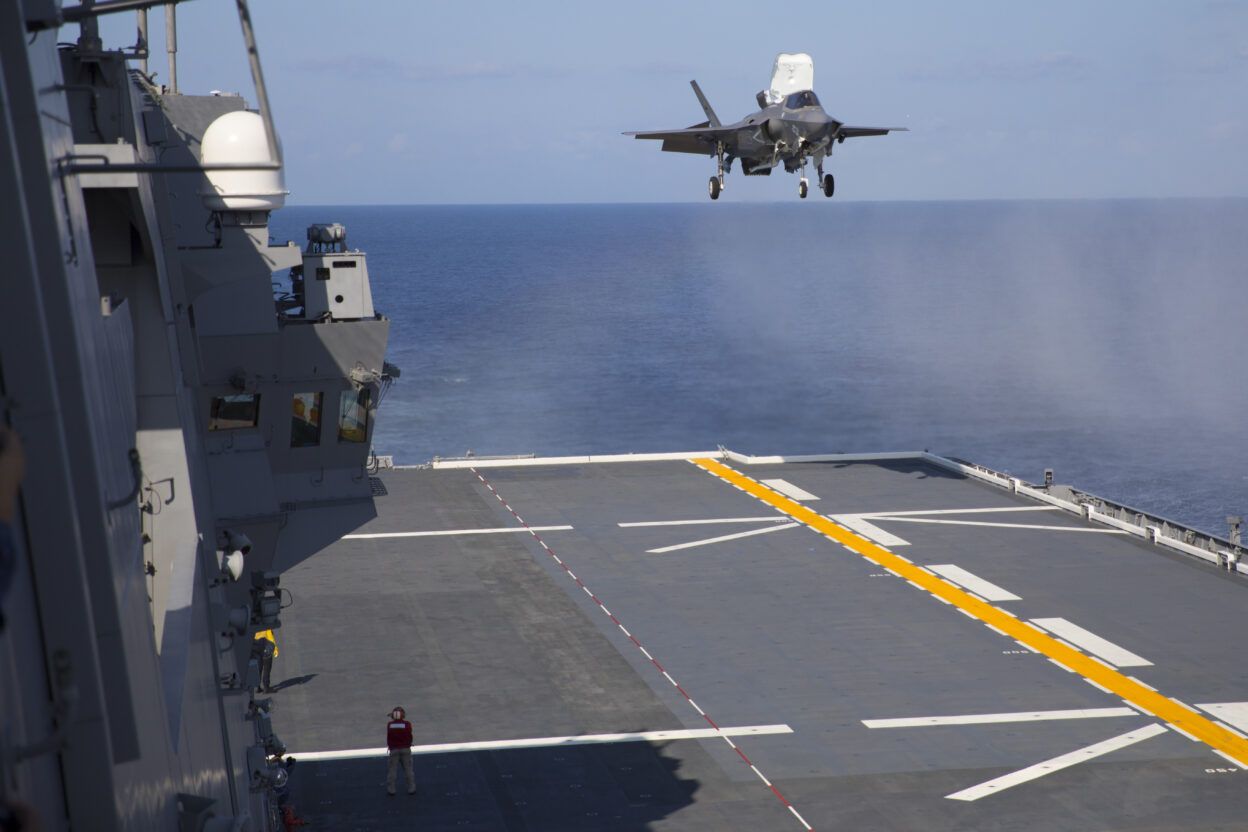
The Japanese navy is among the most modern in the world, a trend that will accelerate following the significant increase in military spending approved by Tokyo for this year: $58 billion. This increase is justified by the need to confront powers such as China (with whom Japan has maritime disputes), North Korea and Russia. Much of this upgrade will go towards drones, the construction of Mogami-class frigates and the modernisation of its Izumo-class helicopter carriers to operate the F-35.
In Europe, naval dominance has traditionally belonged to the United Kingdom, although France is the only power on the continent that can boast a nuclear-powered aircraft carrier. London is not giving up its ambition to project power globally, though its newest Queen Elizabeth-class carriers have faced heavy criticism over the technical problems they have encountered.
Mediterranean deployment
The Mediterranean is also witnessing a significant display of naval capabilities from its coastal states, driven by competition for energy resources in its eastern waters, instability in North Africa and the Middle East, and Russia's presence in the region. Italy, Turkey and Greece are leading this rearmament process.
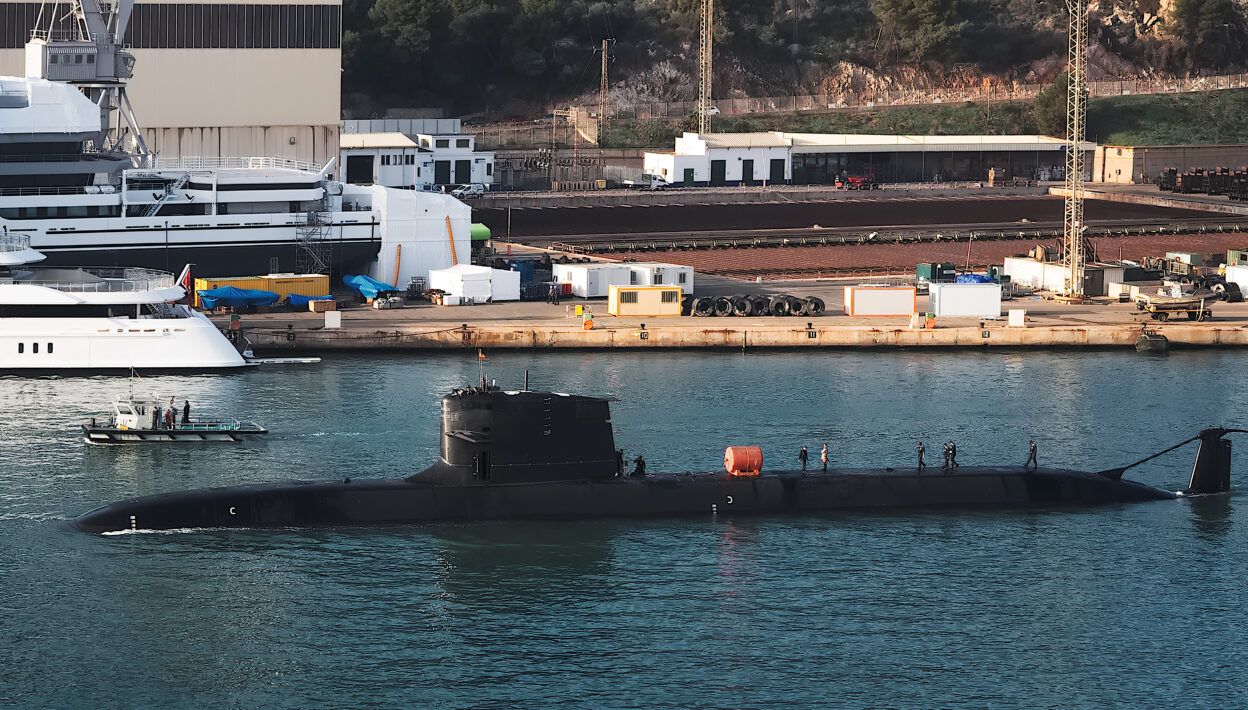
- Although the Spanish government has been among the most reluctant to increase military spending within NATO, an exception appears to be in the making for the Navy. In early 2026, a modernisation plan was announced involving an investment of €5.5 billion to acquire 37 new vessels and four S-80 Plus submarines. Although widely criticised following their deployment due to certain design issues, they rank among the quietest conventionally powered submarines in the world — a characteristic that makes them ideal for long-duration missions.
Countries are preparing with new tools to fulfil an old ambition: to dominate the seas. As Holmes puts it, "striking further, with greater precision and force, as well as with weapons capable of making their own decisions, may bring radical change to great-power competition — but it will not change its fundamental nature."