The United States, Europe and China: three competing strategies to become the world's leading maritime power

Carles Rúa is Head of Strategy and Grants at the Port of Barcelona.
The US maritime stance
In April 2025, the executive order Restoring America's Maritime Dominance was published. The order provides a diagnosis of the US maritime industry, highlighting the decline of its shipbuilding sector and its merchant fleet.
The official figures bear out this assessment.
The Order states that US shipbuilding represents less than 1% of the world total. In reality, according to UNCTAD 2024 data, US shipbuilding was below 0.05% of the global total in a market dominated by China, South Korea and Japan. The three Asian countries account for more than 95% of the global shipbuilding market, with China at the forefront (55% of the total). Worse still, over the past 10 years, between 2015 and 2024, the US shipbuilding industry has contracted by 91%, according to the same source.
In terms of flag, also according to UNCTAD, less than 1% of global tonnage flies the US flag in a market dominated by flags of convenience (Panama, Liberia and the Marshall Islands account for 42% of world registration).
And in terms of ownership, the United States holds 7.3% of the world merchant fleet, although this control is concentrated in very specific sectors such as cruise ships (with Carnival and Royal Caribbean owning a cruise fleet which, incidentally, is built mostly, 97%, in Europe) and ro-ro cargo. The remaining markets are dominated by European companies (MSC, Maersk, Angelicoussis Group, Fredriksen Group, CMA-CGM,…) and Asian ones (COSCO, NYK Line, China Merchants, Mitsui OSK Line,…).
Finally, it is worth noting the generally low productivity of US ports (and also European ones, although in this case in a more uneven way) compared with Chinese ports. Indeed, the Container Port Performance Index (CPPI), the leading international index of port competitiveness compiled by the World Bank and S&P Global Market Intelligence, shows that 7 of the top 10 of the 403 ports analysed in its 2024 ranking are Chinese.
The leading European port, Algeciras, is ranked only 20th, and the leading US port, Philadelphia, does not appear until position 26. Some American West Coast ports such as Oakland, Los Angeles and Long Beach stand out as among the least efficient in the world. This is due, among other reasons, to high waiting and anchoring times, low automation of their terminals, labour disputes and saturation of the rail network.
Returning to the Order, it describes the United States as a historically dominant but currently weakened maritime power, with heavily eroded maritime output, a reduced merchant fleet, growing external dependency, a shortage of specialised labour and, above all, a loss of competitiveness against both allies and competitors.
Based on this diagnosis, the Order sets out the need for a comprehensive revitalisation of the maritime sector, as maintaining the current statu quo implies a threat to national security and economic growth. The maritime sector is understood not only as an economic activity, but as a strategic pillar of American power.
The Order mandates the drafting of a roadmap that must include legislative, regulatory and budgetary proposals to support the long-term transformation of the sector.

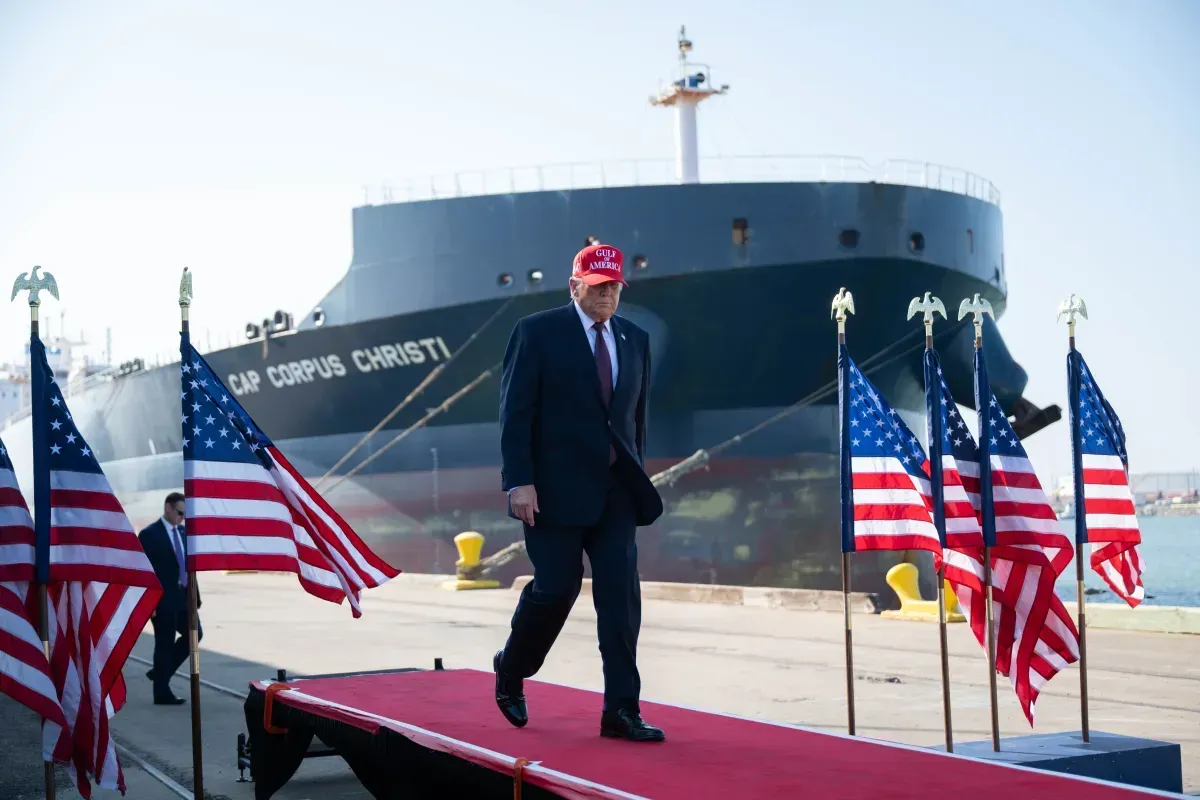
Trump's Plan to reclaim maritime dominance
This roadmap was published in February 2026 as America's Maritime Action Plan (MAP). On the first page, Donald Trump writes: "We will soon revitalize our once-great shipyards with hundreds of billions of dollars in new investments and people coming from all around the world… to build ships in America. We want them built in America."
The Plan is built around four main pillars, conceived as an integrated strategy with a strong legislative and budgetary component:
- Pillar I seeks the revival of US shipbuilding capacity by proposing to increase and improve the productive capacity of American shipyards, provide tax and regulatory incentives, create concentrated maritime activity zones (Maritime Prosperity Zones), reduce reliance on critical foreign supply chains and promote international and industrial alliances to accelerate productive capacity.
- Pillar II aims to reform training and workforce development in the sector, addressing the shortage of mariners, technicians and naval engineers. To this end, it proposes the improvement and modernisation of merchant mariner training, the strengthening of academies and the development of specific programmes to meet the new needs of the maritime industrial sector.
- Pillar III, heavily protectionist in nature, focuses on protecting and strengthening the Maritime Industrial Base (MIB), establishing commercial and regulatory (fiscal) measures against unfair practices by third countries (in clear reference to China), developing new fiscal instruments and facilitating public procurement. The plan proposes, for instance, a possible universal levy on vessels built abroad as a new source of revenue to finance the industrial conversion.
- And Pillar IV integrates the strategic dimension of the maritime sector by linking the increase of the commercial fleet built and flagged by the US to issues of national and economic security and to the industrial and commercial resilience of the country.


An analysis of the US maritime strategy
The US government is proposing an ambitious, integrated industrial strategy with strong public sector involvement, but one that will find it difficult, if not impossible, to achieve its stated goals.
The main objections can be raised to Pillars III and I:
- Regarding protectionist measures — for example, in the form of fees or tariffs on foreign vessels — these will have a negative impact on the US economy. Everyone in the sector knows that any price increase for shipping companies is quickly passed on to shippers and from them to exporters and importers, meaning these fees will ultimately be reflected in the price of goods and will therefore have their greatest impact on the pockets of American citizens. The same applies to tariffs.
- As for Pillar I, the revival of US shipbuilding, the country must be aware that, even if it were to multiply its shipyard capacity twentyfold (something which would require many years of investment and a vast amount of funding that, incidentally, is now being diverted to other uses), the US would still account for less than 1% of total world production and would therefore remain an irrelevant player in the global context.
Moreover, production costs in America would be much higher than in Asia, and therefore scarcely competitive, so who will buy an American ship? Chinese shipping companies? European operators? Because, as we have already shown, there are no large American shipping companies with the capacity to purchase significant numbers of vessels.
For all these reasons, this strategy can only be understood within a context of local protectionism, geared to the domestic US market, which is likely to have a limited impact beyond its borders.

Europe's stance
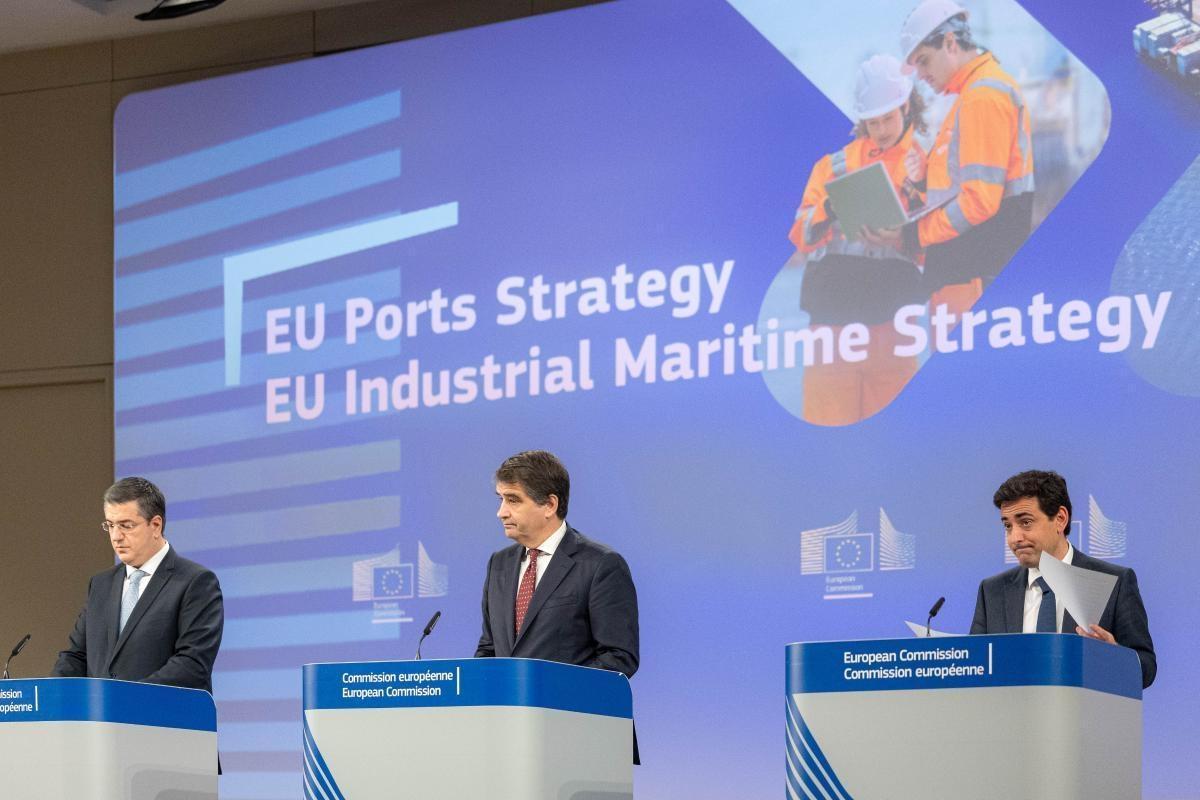
In March 2026, one month after the United States, Europe published two relevant communications.
On the one hand, the EU Ports Strategy, which reinforces the role of European ports as strategic infrastructure key to economic competitiveness, the energy transition and EU security; and on the other, the EU Industrial Maritime Strategy, which focuses on boosting shipbuilding and ship repair, maritime technology and equipment, and maritime transport, which the EU now considers strategic assets for European industrial sovereignty and security and defence.
The reality is that Europe's starting point is somewhat better than the US one.
Europe flags just over 12% of the world fleet but owns approximately 27%, with Greece in the lead (16% of the world fleet). In fact, 7 of the top 10 major shipowners worldwide are European, with Angelicoussis Group at the top of the global ranking.
However, in terms of shipbuilding, Europe has lost the volume battle with China and South Korea, but is still the undisputed global leader in the most complex and technologically advanced segments, such as cruise ships, with shipyards like Fincantieri in Italy, Meyer Werft in Germany and Chantiers de l’Atlantique in France. It also leads in offshore vessels, scientific and research vessels, and special-purpose ships (icebreakers, dredgers, cable layers) and military and dual-use vessels. Europe is also a leader in maritime technology and propulsion systems (with manufacturers such as MAN Energy Solutions, WinGD, Wärtsilä and Rolls‑Royce Power Systems).
In recent years, Europe has lost relative weight in the global maritime industry (especially against China and South Korea) and faces the risk of critical dependencies in a sector essential to its sovereignty. Thus, according to the European Commission itself, the objective of the EU Industrial Maritime Strategy is "to reinforce the industrial sovereignty, competitiveness and resilience of the European maritime-industrial ecosystem (shipyards, shipping and equipment), reducing strategic dependencies on third countries and securing EU technological leadership in the maritime sector."
The strategy is built on three pillars:
- Build, Equip & Repair, namely, the creation of a maritime industrial base to strengthen Europe's industrial capacity in shipbuilding, repair and retrofit, and the development of high-technology maritime equipment.
Within this block, the European Commission proposes the creation of the EU Industrial Maritime Value Chains Alliance in order to reinforce the European maritime-industrial value chain (shipyards, repair/retrofit, equipment and technology manufacturers, etc.) and, to that end, plans to clearly identify the real capacities of European shipbuilding, identify bottlenecks and vulnerabilities in supplies and coordinate investments and priorities to modernise the fleet and make it more sustainable. - Transport & Connect, designed to maintain the competitiveness and leadership of the European shipping business on a global scale through administrative simplification, the reduction of unnecessary burdens, (industrial and financial) support for the decarbonisation and digitalisation of maritime transport and the defence of European sovereign flags by preventing fleet relocation.
- Secure & Protect, intended to integrate the maritime sector into Europe's security architecture by explicitly recognising the dual-use nature of shipyards, vessels and maritime technologies. This means that the maritime sector is now regarded as industrial infrastructure for security, not solely for the economy.
- To achieve this, the strategy aims to mobilise European, national and private funds and invest in fleet decarbonisation, innovation and defence. This includes leveraging existing funds (CEF, Innovation Fund, Horizon Europe, European Defence Fund, or the revenues that countries obtain from the EU ETS, Emission Trading System, InvestEU,…).
The Commission also aims to identify skills gaps in maritime education, expand training and professional reskilling networks, and increase participation in higher maritime education.

The problems with Europe's strategy
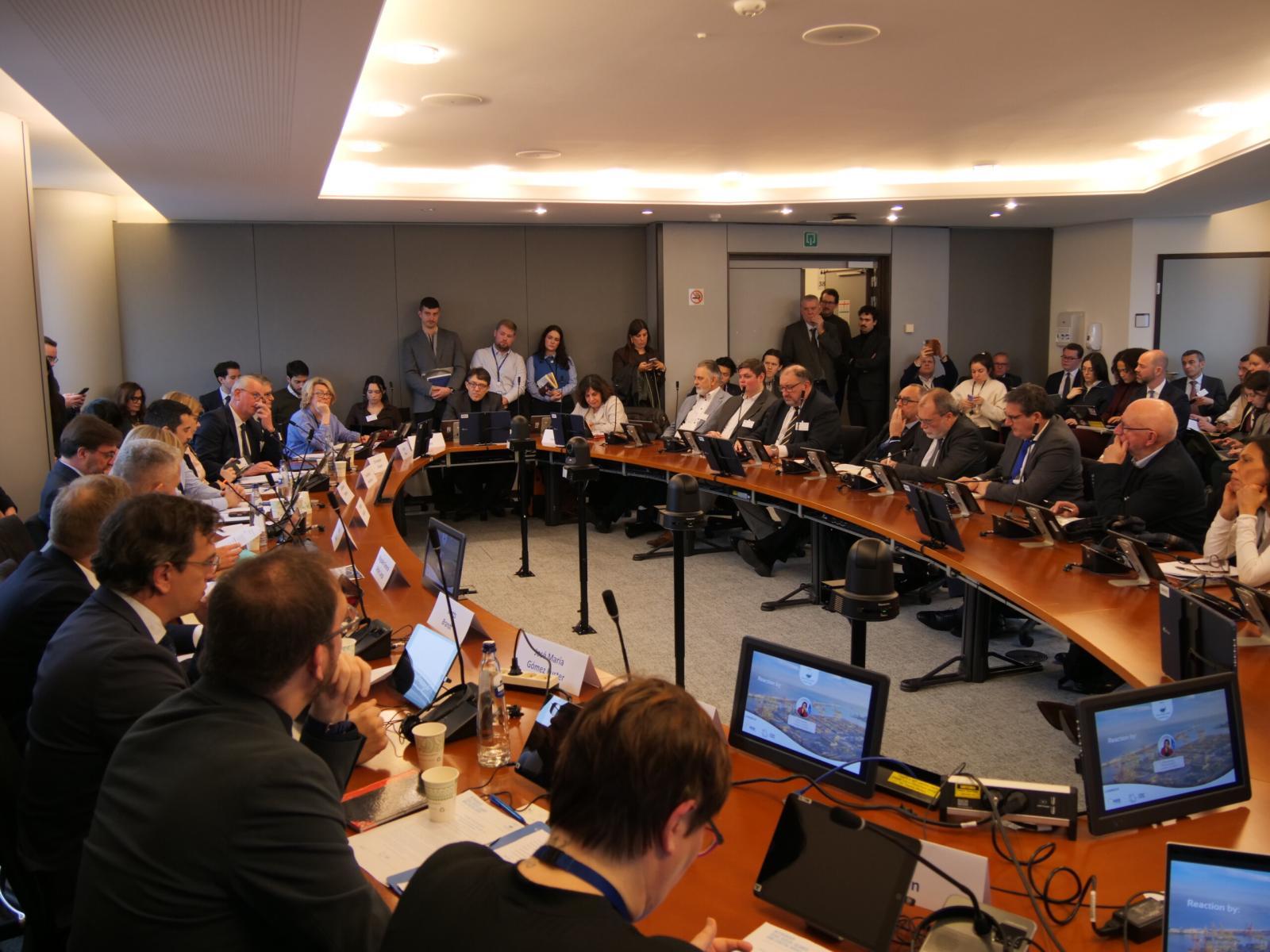
Europe's strategy seems somewhat more realistic than the American one, as its main objective is to try to maintain competitiveness in the areas in which it still holds the lead — that is, in high-value segments — rather than creating a new sector essentially from scratch.
The main problem with the European strategy is the possible lack of funding for its implementation. No specific financing fund is being created to develop the strategy; instead, it relies on existing instruments and depends on coordination with and among Member States — states which, we must not forget, compete against each other in this sector.
Although the need for regulatory simplification is flagged, the EU Ports Strategy refers to 29 regulations, legislative packages, regulatory frameworks, programmes and financial instruments, while the EU Industrial Maritime Strategyr efers to 26. Many of them need to be adapted or updated but there is no mention of their removal or consolidation. If we add to this the different levels of governance already in place (Europe, Member States, regions, ports), it is reasonable to think that Europe will remain on the path of over-regulation it was trying to avoid.

And meanwhile… what is China planning?
The 14th Five-Year Plan (Outline of the People’s Republic of China 14th Five‑Year Plan for National Economic and Social Development and Long‑Range Objectives Through 2035) is the main economic, social and industrial planning document for China for the 2021-2025 period, approved by the National People's Congress in March 2021.
The plan includes a chapter devoted to the development of the marine economy, which reinforces China's goal of becoming a maritime power through the development of smart, sustainable ports, the modernisation of maritime transport and leadership in shipbuilding (not only does China account for 55% of global shipbuilding, as noted earlier, but today 65% of new contracts, orderbooks, are going to the Asian giant). It also promotes the blue economy and a greater role in global ocean governance.
Even without reference to that document, the Asian giant's ambition to become a major maritime power is plain to see, and to this end it has spent decades developing a maritime and port strategy that has materialised in the following elements:
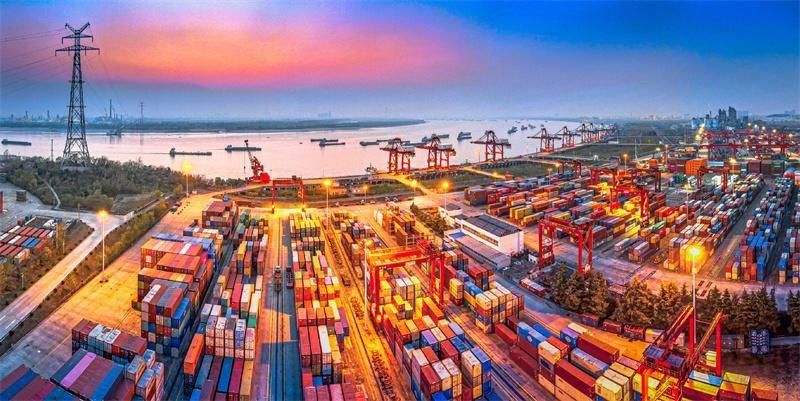
- A national port structure based on smart, sustainable megahubs. China currently has 6 ports in the top 10for container throughput (Shanghai, Ningbo-Zhoushan, Shenzhen, Qingdao, Guangzhou and Tianjin), with high productivity, heavy automation, increasingly sustainable operations, and a growing commitment to technological upgrading and digitalisation. In fact, in recent months, various Chinese bodies such as the Ministry of Transport and the National Development and Reform Commission (NDRC) have confirmed that China aims for its major ports to operate, before 2030, not with automated terminals but as integrated systems governed by AI.
- Dominance of shipbuilding production and control over the entire associated logistics chain. As mentioned, China accounts for 55% of shipbuilding and around 65% of new orders, according to UNCTAD, thereby extending its dominance further. Its objective now is to move into new, higher-value-added segments it does not yet dominate, such as ferries and cruise ships, and to take the lead in the construction of vessels using new clean fuels.
- International expansion through a global network of ports, terminals and maritime corridors whose philosophical foundation lies in the Belt and Road Initiative (BRI), the global strategy for connectivity, infrastructure and economic integration launched by Xi Jinping in 2013 and inspired by the ancient Silk Road. Its aim: to reorganise global logistics, energy and financial trade flows, placing China as the central node. Since then, China has invested, through its operators (mainly COSCO and China Merchants), in more than 150 ports across 90 countries, including significant operations such as those at Piraeus (Greece), Hambantota (Sri Lanka), Chancay (Peru) and Darwin (Australia).
- Boosting maritime security and control of critical routes. China understands international trade as a matter of national security and acts accordingly, with strong integration of the various elements: ports, fleet (both merchant and military), industry, technology and security.
- Active involvement in international ocean governance bodies such as the IMO in order to take part in the major decisions that affect transport and the blue economy.

Common and differentiating aspects of the three strategies
The three blocs agree in viewing the maritime industry, shipbuilding, maritime transport and port operations as critical strategic assets, essential for their economic independence in a global context of neo-protectionism and to ensure their national sovereignty and security as well as the resilience of supply chains.
The United States, the EU and China see ports not only as transport hubs, but also as key platforms for industry and the energy transition, and the maritime industry as a necessary vector to secure the supplies that feed their entire industrial base.
The three blocs are all trying to protect the maritime sector by limiting foreign participation, the three link this industry to security and defence, the three agree on the need to digitalise and automate the sector, and the three are committed to training improvements.
But they differ considerably in how they seek to achieve these goals, as this table shows:
| UNITED STATES | EUROPEAN UNION | CHINA | |
|---|---|---|---|
| Starting point | Diagnosis of decline and external dependency. No major American shipping companies or significant merchant shipbuilding. Low port productivity and labour shortages. | Fragmentation and relative loss of competitiveness. Major shipping companies and shipowners (MSC, Maersk, Angelicoussis, CMA-CGM, Hapag-Lloyd), but shipbuilding focused on niche markets (ferries, cruise ships). | Dominant position in ports and logistics, in both capacity and competitiveness. The world’s largest ports are in China (Shanghai, Ningbo-Zhoushan, Shenzhen). 55% of global shipbuilding. Significant shipping companies (COSCO). |
| Geographical scope | Primarily national. Domestic strategy. | Regional (EU) and coastal areas, with international regulatory projection. | Global (international port network), with particular focus on the Pacific and Indian Oceans. |
| Role of the State | Financial driver and regulator, with a dominant private sector. | Multi-level coordinator (EU-Member States-ports). Push for public-private financing. | Planner, owner and direct operator. Instructions issued to executing arms (shipping companies and terminal operators). |
| Economic model | Defensive reindustrialisation. | Regulated social market economy. | Integrated state capitalism. |
| Ports and defence | Strong direct link to national security. | Growing dual use. | Systemic dual use (civil-military). |
| Industrial policy | Revitalise shipyards, fleet and workforce. | Protect the European maritime-industrial cluster. | Full port-industry-export integration. Control of critical logistics chains. |
| Digitalisation | Modernisation for efficiency and control. | Interoperable and cybersecure smart ports. | World leadership in port automation. AI-driven governance. |
| Energy transition | Subordinate to economic security. | Central and binding regulatory framework. Leadership in the green transition. | Pragmatic and technological approach. |
| Foreign investment | Restrictive and defensive. Aversion to foreign control in the US and across the continent. | Restrictive and regulated, with growing concern over foreign control. | Expansive outwards, highly closed in the domestic market. |
| Port system governance | National critical infrastructure. | European integrated intermodal network (TEN-T network). | Global logistics network linked to the BRI, led by major groups (COSCO and China Merchants). |
But the main difference may well be the tempo of execution of this strategy.
While the United States and Europe have just made public a statement of intent that still has to be implemented, China has spent more than a decade rolling out its roadmap… from a dominant starting position and with over 10 years' lead in implementation.