Lighthouse, the Port of Barcelona's accelerator for maritime startups

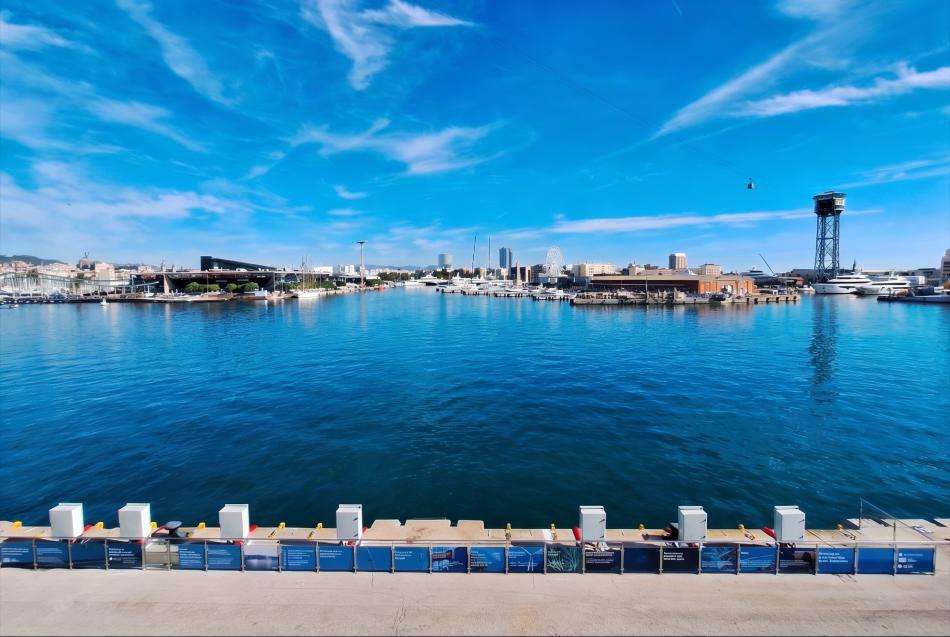
On 23 April 2026, Lighthouse opened applications for global startups in the maritime, port, logistics and blue economy sectors that want to test their technologies where it matters most: in a top-tier operational port. The accelerator offers something few programmes in the sector can guarantee: real infrastructure to validate pilots under operational conditions.
The programme is led by BlueTechPort, with the support of the Port of Barcelona and the technical expertise of Mind the Bridge, the organisation responsible for bringing a globally scalable methodology to the programme.
Applications are open until 1 June 2026 through the official Lighthouse website and the call targets a very specific profile. Lighthouse requires mature technologies with a Technology Readiness Level (TRL) of 5 or above — that is, solutions whose components have been validated in a relevant environment and are ready to be tested at real scale.
The programme will select up to eight startups in areas such as port digitalisation and automation, logistics and maritime mobility, sustainability and decarbonisation, infrastructure resilience, ocean environmental monitoring, and marine biotechnology.


A third model of acceleration: neither sector-specific nor generalist
We spoke with Francesca Cavanna, Managing Director for Europe at Mind the Bridge, to understand the programme's distinctive value proposition.
"Most accelerators follow one of two models," she says, drawing a clear line around Lighthouse's approach. "Either they are programmes focused on a specific sector and run by a company within that sector — with deep experience and solid infrastructure, but often limited in methodology, global reach, and the ability to connect startups with external markets — or they are generalist innovation programmes, with a robust process and a wide network, but without the sector-specific infrastructure needed to offer real validation opportunities. Lighthouse is based on a third model."
This third way that Cavanna highlights rests on the combination of two capabilities that neither BlueTechPort nor Mind the Bridge could offer on their own:
- On one hand, BlueTechPort, the Port of Barcelona's blue economy innovation hub, managed by World Trade Center Barcelona, brings the operational environment, the sector-specific infrastructure, and a dense network of ports, logistics operators and maritime corporations.
- On the other, Mind the Bridge brings a global architecture designed for innovation and over 15 years of experience accelerating companies with programmes in Silicon Valley, Europe, Korea and Africa. That background gives it the ability to identify and select international startups with genuine scale potential, along with a network that extends beyond the maritime sector to investors and global tech ecosystems.
The result, according to Cavanna, is something most accelerators worldwide simply do not offer: access to a real port environment. "What does a startup actually need to move from being a promising solution to a scalable business in a specialised sector like maritime or the blue economy?" she asks. "The answer is not only guidance or contacts to secure funding, but also real infrastructure, real stakeholders and real conditions to run tests."


Why the Port of Barcelona works as a real sandbox
Against the backdrop Cavanna describes, it is clear that the Port of Barcelona is far more than a mere host for the programme. It is a potential client for these startups, a testing environment, and an institutional gateway to a broader ecosystem of port operators, logistics companies and maritime corporations.
This laboratory also carries considerable economic weight. According to the Blue Economy Observatory, the sector generated a turnover of more than 11 billion euros in Barcelona, representing 5% of the city's total economic activity, with productivity levels more than 20% above the average. And it is in the midst of a major transformation: the Port of Barcelona, together with World Trade Center Barcelona, has launched a 60 million euro investment to build the new BlueTechPort, a 25,000 m² innovation hub fully dedicated to the blue economy, scheduled for 2028.
Moving from the physical setting to the programme's format, Lighthouse has a clear methodological approach:
- Over 12 weeks, from July to November, in-person sessions at BlueTechPort will be combined with online activities.
- In-person sessions are reserved for activities where proximity adds undeniable value: tests in the port sandbox, meetings with operators and corporate partners, and other immersive dynamics. To this is added the cohesion that comes from working alongside other startups in the same space.
- The digital component concentrates mentoring sessions, market access workshops, and the programme's more structured content, sparing founders from constant travel.
Innovation Day
The high point of these 12 weeks is the Innovation Day, held within Tomorrow.Blue Economy, part of the Smart City Expo World Congress, in Barcelona on 3–5 November 2026.
There, Lighthouse will have its own stand for the programme's startups throughout the three days of the event. It will be, in Cavanna's words, "a high-intensity, high-value event that justifies the travel precisely because of the concentration of sector leaders, investors and media in one place."
What happens after the 12 weeks: the post-programme network
The importance of these 12 weeks is clear, but, as Cavanna points out, "the real measure of Lighthouse's success will be seen in the 12 months that follow." Cavanna believes the programme "will offer startups a solid base from which to operate in Europe, leveraging the ecosystem around the Port of Barcelona, WTC Barcelona and Catalonia's wider innovation ecosystem."
It is no ordinary setting, as Cavanna stresses: "Europe is a fundamental market for maritime and blue economy solutions, given the regulatory environment and the density of port activity. Having a local foothold is vitally important for commercial conversations with European operators."
Mind the Bridge's network, which maintains active relationships with corporate innovation teams, port authorities and investors across multiple markets, will remain available once the programme ends. Lighthouse alumni will be able to access emerging opportunities, from introductions to port authorities in other markets to connections with investors active in the blue economy.
"Perhaps the clearest sign of success would be for this programme to run again next year. If the first Lighthouse cohort delivers enough value to all the stakeholders involved, the startups, the Port and the wider ecosystem, its continuation will follow naturally," Cavanna notes, adding that "it would mean we have built something with lasting impact, not just a one-off initiative."
Interested startups have until 1 June 2026 to apply at lighthouseacceleration.com. Participation is free and requires no equity or relocation, although office space is offered at the BlueTechPort hub. The programme starts on 6 July 2026.