New Latitude: open innovation programmes to address the challenges of the maritime and port sector


Open innovation programmes: when demand defines the challenge
Open innovation programmes in the maritime and port sector address very specific situations that the traditional model cannot solve quickly or efficiently enough.
Unlike, for instance, an innovation hub, these programmes are focused on solving a specific challenge through calls, challenges and pilot projects. They are not, like the former, an ecosystem with permanent infrastructure dedicated to continuous innovation.
"It is a methodology that allows demand — not supply — to define and shape the challenge. As a result, the product or service under development is not constrained, and it is the companies or corporates themselves that validate its market adoption," explains Miquel de la Mano, Chief Technology Officer at the BCN Port Innovation Foundation.
The BCN Port Innovation Foundation, together with BlueTechPort and Lloyd's Register — through Safetytech Accelerator — presented the open innovation programme New Latitude – Open Innovation Program by Port de Barcelonaat 4YFN during MWC 2026, with the aim of addressing some of the challenges faced by the international port sector. The initiative launched in April 2026 and will present its results in November, at Smart Ports: Piers of the Future, within the Smart City Expo World Congress 2026.
"What is urgent and what is important?" De la Mano asks. "Ports bring together, in a single territory, an extremely diverse environment in which companies from eight, nine or ten different sectors coexist, each with very different business and value propositions," he explains, adding that innovation "can help these companies discover the direction they want to take and provides them with the methodology, framework or physical space to keep up at a moment when everything is moving very fast."
The aim is for these proposals to generate a competitive advantage for the industry, and for startups, once integrated, to become part of the value proposition of large companies. "The goal is to bring both worlds together," he concludes.


The challenges that New Latitude addresses
In the case of New Latitude, three areas have been identified that are strategic for the Port of Barcelona and the BCN Port Innovation Foundation, but also relevant on a global scale:
- Trusted data sharing (Green Digital Corridors & Trusted Data Spaces). This initiative stems from the agreement signed in July 2025 between the Ports of Barcelona and Shanghai to develop a green maritime corridor, focused on driving digitalisation, standardisation and decarbonisation in maritime transport, and on enabling secure and efficient data exchange between port stakeholders.
- Circular economy (Circular Economy & Innovative Raw Materials). It addresses how ports can reduce waste generation, recover industrial by-products and develop new raw materials from the logistics flows they already manage, in line with the objectives of the European Green Deal.
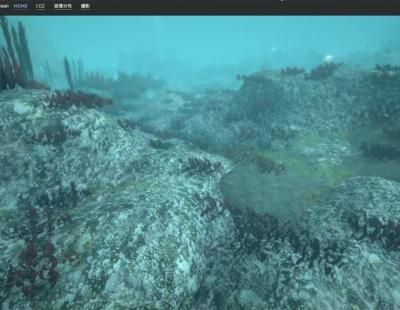
- Integrating nature into ports (Evolving Ports to Integrate Nature). It explores how to recover and protect coastal biodiversity within the port area, in line with the EU Nature Restoration Law. It includes nature-based solutions — such as artificial reefs, habitat restoration or green infrastructure — that coexist with port operations without compromising competitiveness.
The three areas are cross-cutting and scalable globally: their impact extends beyond the maritime and port sector, fostering the creation of synergies. The Green Shipping and Digital Corridor Barcelona–Shanghai itself — which will promote maritime routes operated with green energy and develop the regulatory framework for the supply of clean fuels at both ports — is a concrete example of how these challenges connect distant port ecosystems.
"In terms of methodology and alliances, the aim is to generate complementarity, technology transfer and knowledge sharing on the best practices, since ports share similar ambitions," says the Chief Technology Officer at the BCN Port Innovation Foundation.


How New Latitude works: from call to pilot
Following the structure of open innovation programmes, New Latitude will issue two calls:
- one aimed at the ecosystem that is part of the Foundation and BlueTechPort;
- and a second one open to global corporates seeking to establish themselves in Barcelona, looking to enter a new market within the sector, or specialising in products or solutions related to one of the three aforementioned areas.
"First, we will launch an expression-of-interest call: the New Latitude team will meet each corporate to define the area and the specific challenge. The aim is to have several corporates per challenge, or for these challenges to be similar enough to take on an ecosystem dimension and converge with one another," he shares.
From all the proposals received, a committee will select ten per area, which will take part in a tech event scheduled for after the summer. "From these, between two and four will be chosen to develop a feasibility study in detail, which must be validated before running a pilot project funded by the Foundation," says De la Mano.
New Latitude calls will be held annually, although small adjustments to the definition of the focus areas are possible. Another goal is, beyond securing funding from the founding partners, to attract more companies thanks to the added value this open innovation programme delivers.


Global examples of open innovation in ports
Miquel de la Mano explains that several ports around the world run similar initiatives. "The influence between ports is increasing and, broadly speaking, all the programmes work in similar ways, since they share the same premise: generating solutions based on demand rather than supply, and working from a global perspective," he says.
Plug and Play Maritime (Port of Antwerp-Bruges)
Plug and Play Maritime is an open innovation platform and startup accelerator focused on the maritime sector, driven by the Belgian port in collaboration with Plug and Play, the global accelerator headquartered in Silicon Valley.
It runs 12-week programmes twice a year, in which proofs of concept are co-developed with companies from the port ecosystem.
Featured initiatives:
- IoT solutions and data analytics for port logistics, enabling asset tracking and predictive analytics.
- Maritime decarbonisation technologies, such as alternative fuels and route optimisation.
PIER71 (Port of Singapore)
PIER71 is a maritime innovation ecosystem fostering tech startups to transform the maritime sector, with a focus on sustainability and next-generation technologies. It is a partnership between the MPA and NUS Enterprise (National University of Singapore).
Among its initiatives, the Smart Port Challenge stands out: an annual competition that seeks solutions to real port issues, alongside acceleration programmes and access to grants.
Since its founding in 2018, it has worked with more than 160 startups from over 20 countries and more than 70 corporates.
Notable success stories include:
- Clear Robotics: an autonomous surface vehicle (USV) used for port inspection, environmental monitoring and security.
- GT Wings: a wind propulsion system for vessels that has become a benchmark in decarbonisation innovation.
LACI – Los Angeles Cleantech Incubator (Port of Los Angeles)
The incubator created by the City of Los Angeles is a public-private model focused on sustainable transport, energy and logistics, accelerating startups and piloting clean technologies in real-world environments. In this model, the port acts as a testing platform and creates innovation sandboxes to validate technologies under real conditions.
Some actions include the electrification of port machinery at the container terminal and the development of charging infrastructure for electric trucks.
Towards a global network of port innovation
These cases share a common premise with New Latitude: innovation is not dictated from the supply side, but built from the real demand of ports and their corporates.
The differentiator of the Barcelona model is the combination of a global industrial partner (Lloyd's Register, through Safetytech Accelerator), a local hub specialising in the blue economy (BlueTechPort) and a foundation dedicated exclusively to port innovation (BCN Port Innovation Foundation), united around three challenges, trusted data sharing, circular economy and integrating nature into ports, that are simultaneously local and global.
The results of the first call will be announced in November 2026, at Smart Ports: Piers of the Future, within the Smart City Expo World Congress 2026.