

RESourceEU: Europe Seeks Strategic Autonomy with Critical Raw Materials in 2026
The European Commission has presented the RESourceEU Action Plan, a strategy to reduce European dependence on raw materials essential for the economy and strengthen its strategic autonomy against China and other powers
Posted on
01.22.2026
While the planet's major powers seem to have chosen to flex their muscles, the EU is opting for its own mechanisms to avoid falling behind in the 21st century's commercial and technological war. The RESourceEU Action Plan, presented on December 3, 2025, demonstrates how Europe wants to carve out its own profile on the international stage.
- This plan is the EU's response to an uncomfortable reality: the 27 member states depend excessively on China for the critical raw materials their industry needs, their energy transition requires, and increasingly in focus, their defense capacity demands.
The European decision can also help counter the aggressive international positioning with which the US has marked the international agenda at the start of 2026.
As President Donald Trump himself has acknowledged, Washington's intervention in Venezuela and threats to annex Greenland are also linked to access to vital resources such as oil and rare earths. Thus, the RESourceEU Action Plan is a European bet to achieve strategic autonomy.
And on this geopolitical chessboard, Mediterranean ports such as Barcelona are called to play a crucial role as gateways for these strategic materials and logistical nodes of a supply chain that Europe wants to reconfigure from scratch.

The European awakening: from dependence to action
Beyond recent headlines about Trump's intentions, this European need goes back more than five years. This is explained by Víctor Burguete researcher in Global Geopolitics and Security at CIDOB (Barcelona Centre for International Affairs) and associate professor in the Master of Science in Finance and Banking at UPF-BSM (Universitat Pompeu Fabra-Barcelona School of Management), who states that "the EU discovered its strategic vulnerabilities from three major shocks: the pandemic, post-pandemic recovery with bottlenecks, and the war in Ukraine."
During this time the EU has been working, and RESourceEU is the natural evolution of the Critical Raw Materials Act (known as CRMA) of 2024, which established ambitious objectives but which, in just two years, the dizzying pace of geopolitical events rendered outdated.
RESourceEU bluntly diagnoses the root of the European problem in obtaining critical raw materials:
- "China has established dominance over global production capacity at all stages of the value chain, from extraction to the manufacture of metals or magnets. This dominance creates dependencies for the EU and other partners, which are increasingly used for geopolitical purposes and can significantly affect the manufacturing industry."
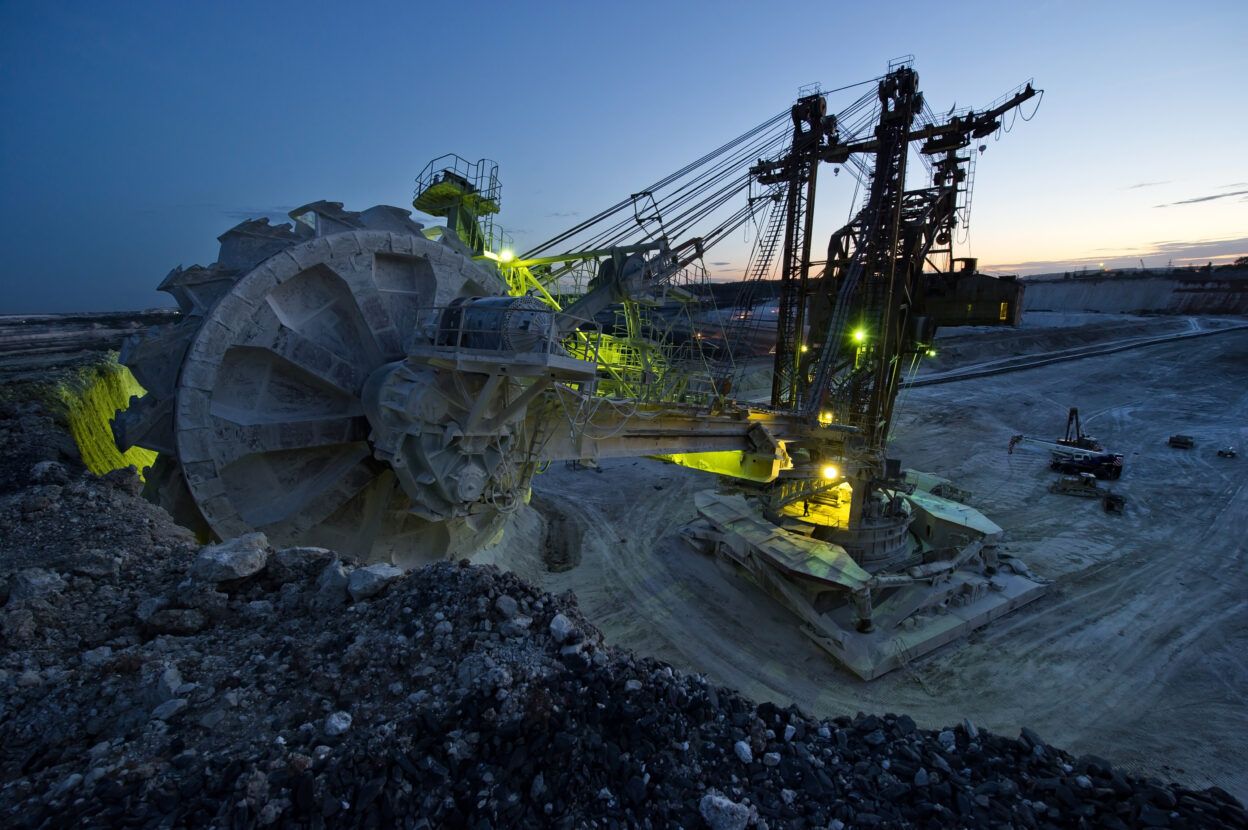
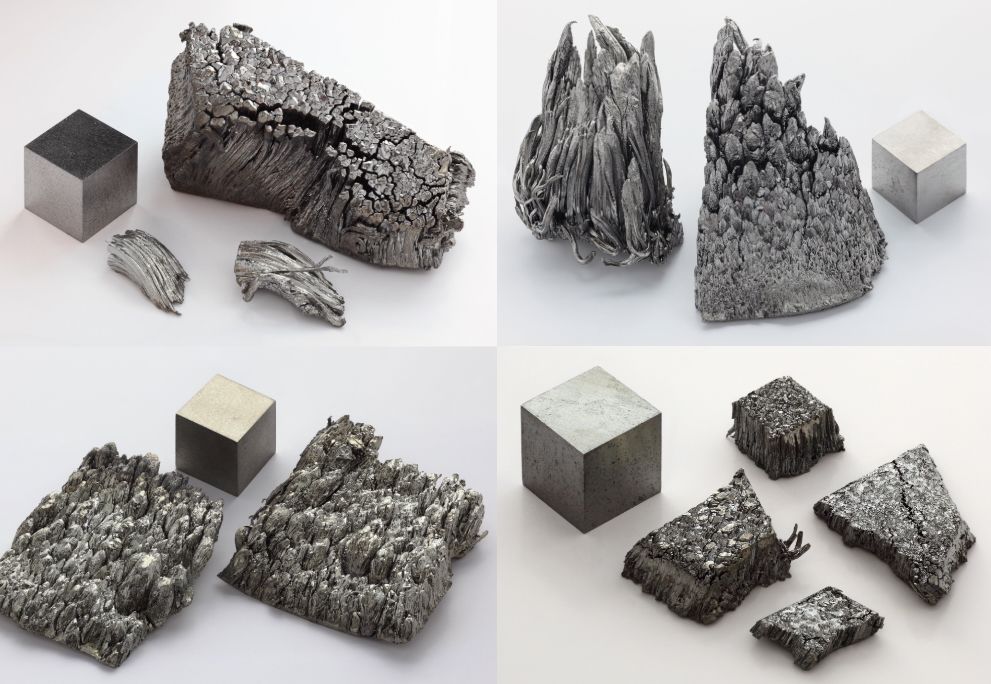
A dominance that became evident in 2022 when China took measures to control exports of now-indispensable rare earths, specifically graphite, gallium, bismuth, tungsten and germanium. Restrictions that were expanded last October when Beijing added more restrictions on any industrial or defense product containing these materials.
The report documents all these moves by the People's Republic and concludes that this exposure ensures that "a crisis in the supply of critical raw materials is a very real and present threat to the EU."
EU vulnerability in raw materials
Beyond RESourceEU and analyzing European policies in this area as a whole, Burguete considers that "they are a good tool, but insufficient, and also reveal the starting point and vulnerability of the European Union in this area."
- The analyst deepens his analysis by saying that "when the EU sets a goal to produce 10% of certain critical raw materials, what it is acknowledging is that it starts from an extremely low floor."
The expert also points out that one should not only focus on extra-European factors, he also considers that this situation highlights a traditional problem in the different countries of the Old Continent: "the current problems are not due to lack of natural resources in Europe, but to a historical rejection that led to the closure of mines and processing plants." The expert recalls that there are countries with important resources such as Sweden or Spain.
In any case, the CIDOB expert on raw materials also makes it clear that, in a world that seems to be heading toward isolationism and spheres of influence, "the EU's objective with these measures is not autarky, but to create interdependencies that avoid blockages and economic coercion."
For Burguete, the European legislative framework on this issue and initiatives like RESourceEU can open frameworks for international cooperation with actors other than the United States, China or Russia. "There is willingness to collaborate from many countries, but Europe must offer value generation and not reproduce neocolonial mechanisms of simple extraction".

EU-non-EU country collaboration
According to the CIDOB analyst, Australia and Canada are two candidates to collaborate with Europe (and with important resources). Likewise, Burguete emphasizes "that these potential partners and the global south reject the framework of strategic competition. So, the key is whether the European Union will be able to show itself as an alternative or we will have a more vassal role with respect to the great powers."
The Commission has begun to develop an intense diplomatic agenda in the field of raw materials. Since 2021, 15 strategic partnership agreements have been signed with resource-rich countries. One of the most recent has been South Africa, with which a Memorandum of Understanding was signed on November 20, 2025 to develop the Zandkopsdrift mining project, which will exploit important deposits of rare earths and manganese.
Burguete's opinion can be reinforced with data from other international organizations. For example, the OECD report, Economic Security in a Changing World, highlights the role of some non-Chinese countries that can be an alternative source of critical raw materials thanks to their rich deposits.
According to the aforementioned report, Indonesia can be an important source of cobalt supply, the Philippines stands out as a nickel producer and Australia or Chile are world leaders in lithium production.
In this scenario of an EU converted into an alternative to more aggressive powers, ports will become important assets as they are the EU's gateways for these strategic resources. Reports such as Port politics: Strategic autonomy and European ports by the Clingedael Institute think tank, highlight the role of these infrastructures in the geostrategic autonomy that the 27 member states yearn for.
In the specific area of critical raw materials, ports not only count as import points, but also allow control of traceability and facilitate storage of these strategic resources. Two important elements if supply interruptions due to geopolitical tensions are to be avoided.
Public-private collaboration for greater strategic autonomy
Returning to the specific content of the RESourceEU plan, the Commission has established for this year the creation in 2026 of the European Critical Raw Materials Centre, inspired by the Japan Organization for Metals and Energy Security (JOGMEC).
As the EU working document indicates, "this Centre will develop systemic intelligence on the value chain and on primary and secondary markets, in order to inform European and national actions on investment, storage and joint procurement."
- This new body will act as a strategic project portfolio manager, using financial instruments adapted to the needs of each project: from loans and guarantees to equity participation, in cooperation with public and private financial institutions.
Looking at its most critical function, this will be to act as a protective shield for European competitiveness and single market resilience. Thus, in theory, strategic reserves of critical raw materials are guaranteed in times of geopolitical uncertainty. To ensure project viability and develop these reserves, the Centre will have a mandate to carry out joint procurement operations, as well as connect the public and private spheres to develop projects.
"In an environment of greater competition, greater assertiveness and strategic competition, it is very necessary for public policy designers and the private sector to go hand in hand," explains Víctor Burguete on the direction this European policy should follow.