

SEAMLESS: autonomous ships in Europe, between technological progress and the regulatory maze
The biggest obstacle to the deployment of autonomous navigation is not technological — it is legal. Regulation on Maritime Autonomous Surface Ships (MASS) remains fragmented, and the first mandatory code will not enter into force until 2032. The European project SEAMLESS (2023–2026), endowed with €15 million and backed by a consortium of 26 organisations from 12 countries, is investigating how to make the automation of freight transport on inland waterways and short sea shipping commercially viable.
Posted on
03.19.2026
Regulatory achievements of the SEAMLESS project
Iolande Viricel sets out the legislative achievements of SEAMLESS, such as "successfully mapping and comparing a very fragmented legal landscape" across maritime law, inland waterways law, EU law, CCNR rules and national regimes, especially in France, Belgium, the UK and Norway".
Among the milestones highlighted by Viricel is the legal classification of the project's vessels, "identifying when they can operate under common law and when they require exemptions", as well as explaining how liability and insurance frameworks apply in the context of autonomy.
She also points to another "success despite complexity" is the report’s handling of the master/crew/remote operator issue. "It shows that the law is still unsettled, but it also demonstrates that remote operation can already be integrated, at least experimentally, through derogation regimes and, in some jurisdictions, through national definitions that already recognise remotely operated or autonomous ships."
Finally, the IDIT legal expert highlights automation does not make ships legally “non-ships”. The report’s conclusion is that automated ships are still legally ships and automated inland vessels can be fitted into existing categories, even though the rules governing seaworthiness, manning and responsibility still need adaptation.
Intermediate levels of autonomy are the most realistic today. Solutions combining automation with human oversight (on board or remote) are currently the most compatible with existing legal frameworks, while fully unmanned vessels still face major legal barriers.
Without a legal basis, there is no autonomy
The SEAMLESS project has shown that legal uncertainty is one of the main factors that Is slowing deployment not because the technology cannot move forward, but because scaling requires predictable rules on who is in command, what counts as a lawful crew, how liability is allocated, and under what conditions insurers and authorities will accept the risk.
Scaling remains the real challenge.Today, most projects rely on case-by-case derogations. Legal fragmentation, particularly around liability, manning and insurance, remains a key obstacle to large-scale deployment.
A key conclusion is that responsibility remains human, but autonomy challenges traditional definitions of master, crew and command, especially with the emergence of remote operations.
"Autonomy turns the master from an on-board commander into a potentially remote command function, transforms “crew” from a purely physical concept into a partly virtual one, and elevates the remote operations centre into a possible locus of navigation and safety functions, but the law has not yet fully caught up with that transformation," the researcher responds.
The SEAMLESS pilots: Rhine, European ports and remote control centres
The SEAMLESS project includes several pilots to test in real conditions how autonomous maritime transport will function within European logistics. These pilots aim to validate technology, operations and regulatory aspects.
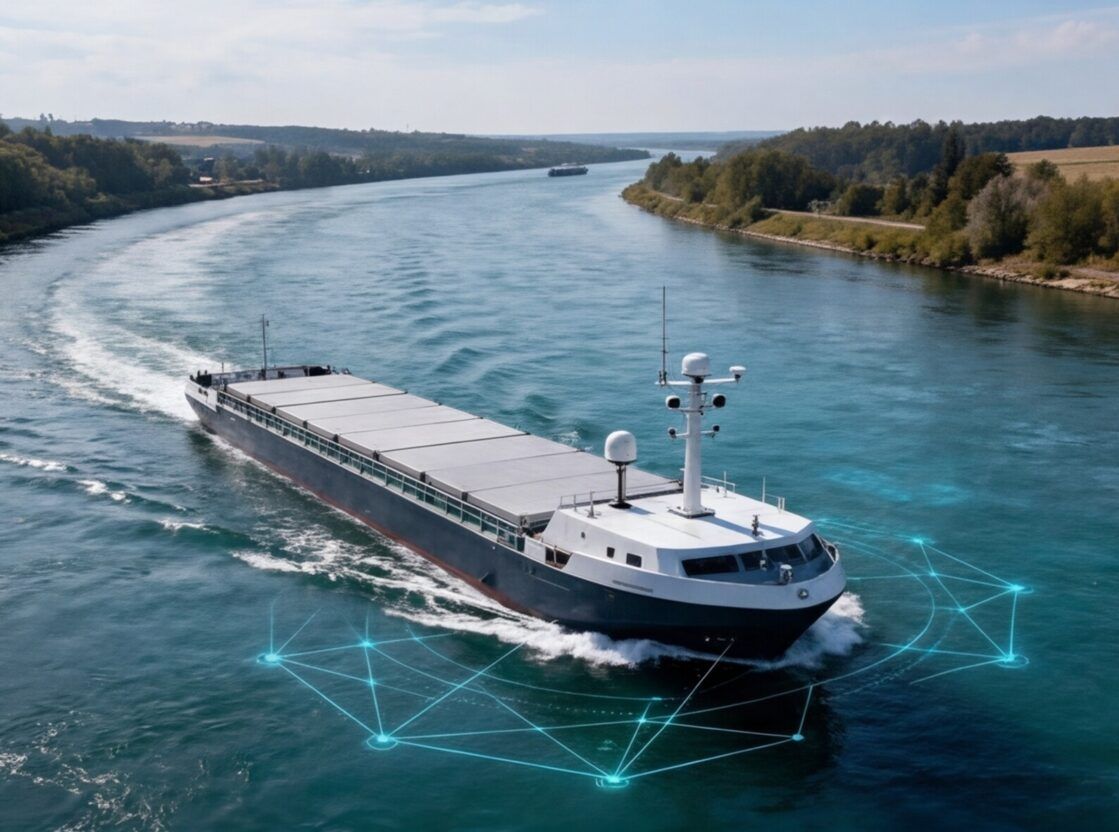
- Inland waterway pilot (River Rhine) — an ideal setting because it concentrates heavy inland freight traffic and connects with seaports. The objective is to test automated or highly autonomous barges, integrate autonomous navigation systems, evaluate supervision from remote control centres, and analyse interaction with conventional river traffic.
- European port pilots. The project also examines operations in port environments to test the automation of cargo movement, digital coordination between vessel, port and land-based logistics, and the reduction of port operation times to create a seamless logistics flow between maritime and land transport.
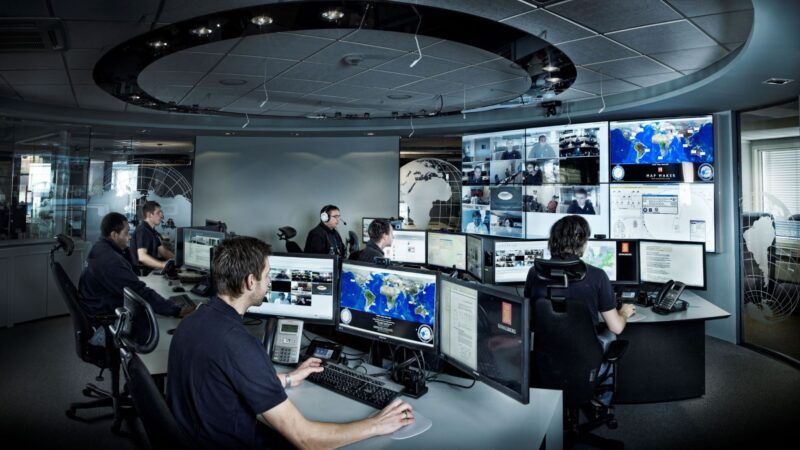
- Remote control centres. Another component under trial is the concept of the Remote Operation Centre — centres where human operators supervise multiple autonomous vessels and intervene in complex situations. This concept is key because it aligns with the regulatory model being developed by the International Maritime Organization for the MASS Code.
Regulatory roadmap: from the voluntary MASS Code (2026) to the mandatory one (2032)
Although the IDIT report does not analyse all European jurisdictions, Iolande Viricel explains that several countries are leading the way.
France appears the most legally ready on the maritime side, because it already has a dedicated legal framework for autonomous ships since 2021, including a statutory definition in the Transport Code. "Belgium also appears to be relatively advanced, but primarily through an experimental exemption regime under the Royal Decree of 16 June 2021 for unmanned ships", she adds. And Norway, the third country cited, allows trials and has functional rules, but the report says there is still no single codified legal framework specifically for autonomous ships.
For inland waterways, the Rhine/CCNR system and the Flemish and Dutch frameworks look comparatively advanced in terms of concrete derogation procedures and pilot-project pathways. The report highlights a common CCNR authorisation framework and notes that Flemish and Dutch laws allow derogations for highly automated navigation experiments, on a case-by-case basis.
The conclusions of the report developed by the IDIT are that crewed or partially crewed concepts are currently far more legally deployable than fully unmanned ones, and that derogation-based experimentation is the bridge between today’s rules and tomorrow’s permanent framework.
- The International Maritime Organization (IMO) is working in parallel to establish the global framework that will make the commercial operation of these vessels possible.
The Maritime Safety Committee (MSC) agreed in December 2024 on a revised roadmap for the development of the MASS Code: adoption of the non-mandatory code in May 2026, development of an Experience Building Phase (EBP) framework in December 2026, commencement of the mandatory code in 2028 — with amendments to SOLAS — and adoption of the mandatory code before 1 July 2030, for entry into force on 1 January 2032.
At its 110th session, held in June 2025, the MSC finalised 18 of the 26 chapters of the draft Code, with a view to completing and adopting it as a non-mandatory instrument in May 2026.
Among the key outstanding issues are the definition of "master" and "crew" in remote or autonomous operation contexts, the requirements for remote control centres and cybersecurity risk management — aspects that the regulatory review exercise identified as priorities to ensure that international regulation keeps pace with technology.
- "The non-mandatory phase should function as a regulatory learning period, allowing states and industry to test equivalent-safety solutions, collect operational feedback from derogation-based trials, and convert that experience into harmonised rules on command, manning, liability and assistance obligations before the mandatory code enters into force," explains Iolande Viricel.
The timeline has slipped but, the expert notes, it is not possible to attribute this to any single cause. "Our report frames the delay as part of a broader period of international legislative experimentation needed to refine technology and regulation before mandatory rules enter into force", she points out.
Although it concludes in December of this year, SEAMLESS is laying the groundwork that will undoubtedly serve as the foundation for future projects and regulations — but as of today, the expert consulted by PierNext cannot confirm any succesor project.