OceanEye: Europe's bid to lead ocean observation

A year after the European Ocean Pact was presented, its first actions are starting to take shape. As we explained in the article “The European Ocean Pact: Ports as the New Blue Frontier”, one of the Pact's key priorities was to boost research, knowledge and innovation in our seas and oceans. And it all starts with something basic: knowing what is happening in them.
The ocean covers 70% of the Earth's surface, yet only 5% of it has been explored. For Brussels, ocean observation is no longer optional: it has become a strategic priority.
That is why, on 3 June 2026, the European Commission presented OceanEye, the EU's ocean observation initiative.
“With OceanEye, Europe will lead the race to understand our ocean, to protect it, and to sustainably harness its potential. This is about using science and good governance to understand our ocean and secure our future. We call on all Member States and global partners to join us in supporting the Global Ocean Observing System and make OceanEye a reality.”
Ursula von der Leyen, President of the European Commission
Knowing the ocean in order to protect it
The ocean's strategic importance goes far beyond the environment. It is the planet's largest carbon sink and, therefore, a key ally in the fight against global warming. It produces 50% of the oxygen we need, is a cornerstone of the water cycle and provides a wealth of resources, especially food from fisheries and aquaculture, which are essential to Europe's food sovereignty, territorial development and a sustainable, healthy food system.
Ocean observation is also an economic sector in its own right, with strong growth potential. As the European Commissioner for Fisheries and Oceans, Costas Kadis, points out, every euro invested in ocean observing systems generates a return of 5 to 6 euros in economic and social benefits.
The sector covers everything related to software, digital platforms, autonomous navigation systems, artificial intelligence (AI) and hardware, as well as maritime autonomous surface ships (MASS), underwater vehicles, aerial drones and multimodal autonomy systems. It also includes subsea infrastructure such as submarine cables, underwater observatories and oceanographic buoys.
The figures, however, show that there is still a long way to go. UNESCO estimates that global public investment in in situ ocean observation stands at between €850 million and €1.3 billion a year, an amount that covers only 60–70% of the system needed. Other sources put global spending at around €2 billion a year, of which some €500 million is invested in the EU. Meanwhile, in the United States, economic activities directly linked to ocean observation products and services already amount to around €7 billion and serve a business ecosystem worth between €35 billion and €80 billion.
Ocean observation: an investment that falls short
Public investment and economic activity linked to ocean observation, in millions of euros
Global public spending on in situ ocean observation (€ million per year)
UNESCO estimate
€850–1,300m
Covers only 60–70% of the system needed
Other sources' estimateOf which, in the EU: €500m
€2,000m
United States: economic activity linked to ocean observation (€ million)
Products and servicesfor ocean observation
€7,000m
Business ecosystemthat they serve
€35,000–80,000m
Source: PierNext, based on the European Commission's OceanEye initiative (2026), which compiles estimates from UNESCO and other sources.
The current system is also fragile: it depends on a small number of major contributors and suffers from chronic underfunding. The Commission warns that, unless action is taken, the Argo network of autonomous profiling floats, which measure temperature and salinity throughout the water column, could lose 35% of its capacity by 2030.
What is OceanEye?
OceanEye aims to be the spark for European ocean observation. And it is not starting from scratch: over the past decade, the EU has developed benchmark ocean data infrastructures and services such as the Copernicus Marine Service (CMEMS), the Copernicus Data and Information Access Services (DIAS) and the European Marine Observation and Data Network (EMODnet), which provide quality-controlled ocean observation data, forecasts, analyses and projections at global and pan-European scale.
The problem is that ocean observation, both in Europe and across the rest of the world, is fragmented and poorly coordinated, and faces severe funding constraints made worse by geopolitical shifts. OceanEye has been designed to bring order to this landscape and build a global operational system connecting the national, European and international levels. It will do so by combining observations from space (Copernicus, the European Space Agency and national space agencies), in situ observations, mainly from national infrastructures, and digital data and modelling systems. The model it seeks to replicate is that of today's operational weather forecasting.
Specifically, OceanEye has three objectives:
- To strengthen national and European efforts and coordination structures focused on in situ ocean observations.
- To create an International Alliance to strengthen the Global Ocean Observing System (GOOS).
- To establish a European digital ocean system that integrates existing marine knowledge services, guarantees operational services, fosters innovation and opens up new markets for Europe's maritime industrial base.
OceanEye's ambition extends beyond Europe's borders. The EU wants to take on a global leadership role and will therefore launch an International Alliance to support GOOS, the programme coordinated by the Intergovernmental Oceanographic Commission (IOC) of UNESCO. The Alliance will be open to other countries, organisations and private partners. Its mission will be to maintain existing infrastructure (buoys, gliders, observatories and Argo floats), fill the observation gaps that still persist in the southern hemisphere, the Arctic, the deep ocean and even unsampled coastal areas, and share the responsibility for sustaining the system more fairly. The proposal will be complemented by a memorandum of understanding between the EU and the IOC.

2035: an ambition on an ocean scale
The European Commission's intentions are highly ambitious. By 2035, OceanEye sets three goals: for the EU to provide 35% of the Global Ocean Observing System, to secure 35% of the market for ocean observation technologies and to become the world's leading provider of ocean intelligence. All this with the aim of leading frontier technologies such as artificial intelligence, autonomous sensors and the EU Digital Twin of the Ocean (EU DTO).
And that is no small feat. According to various studies compiled by the Commission, the global ocean observation market is worth between €10 billion and €20 billion a year, with annual growth of 5–10%, according to Commissioner Kadis, and serves a business ecosystem worth between €40 billion and €90 billion, most of which is in the hands of the United States. For the EU, becoming a leader in this field is an economic and geopolitical decision of the first order. That is why the initiative will focus on deep tech start-ups and scale-ups developing sensors, autonomous systems, data-driven services or AI solutions, and on speeding up their journey from lab to market.

A digital twin of the ocean
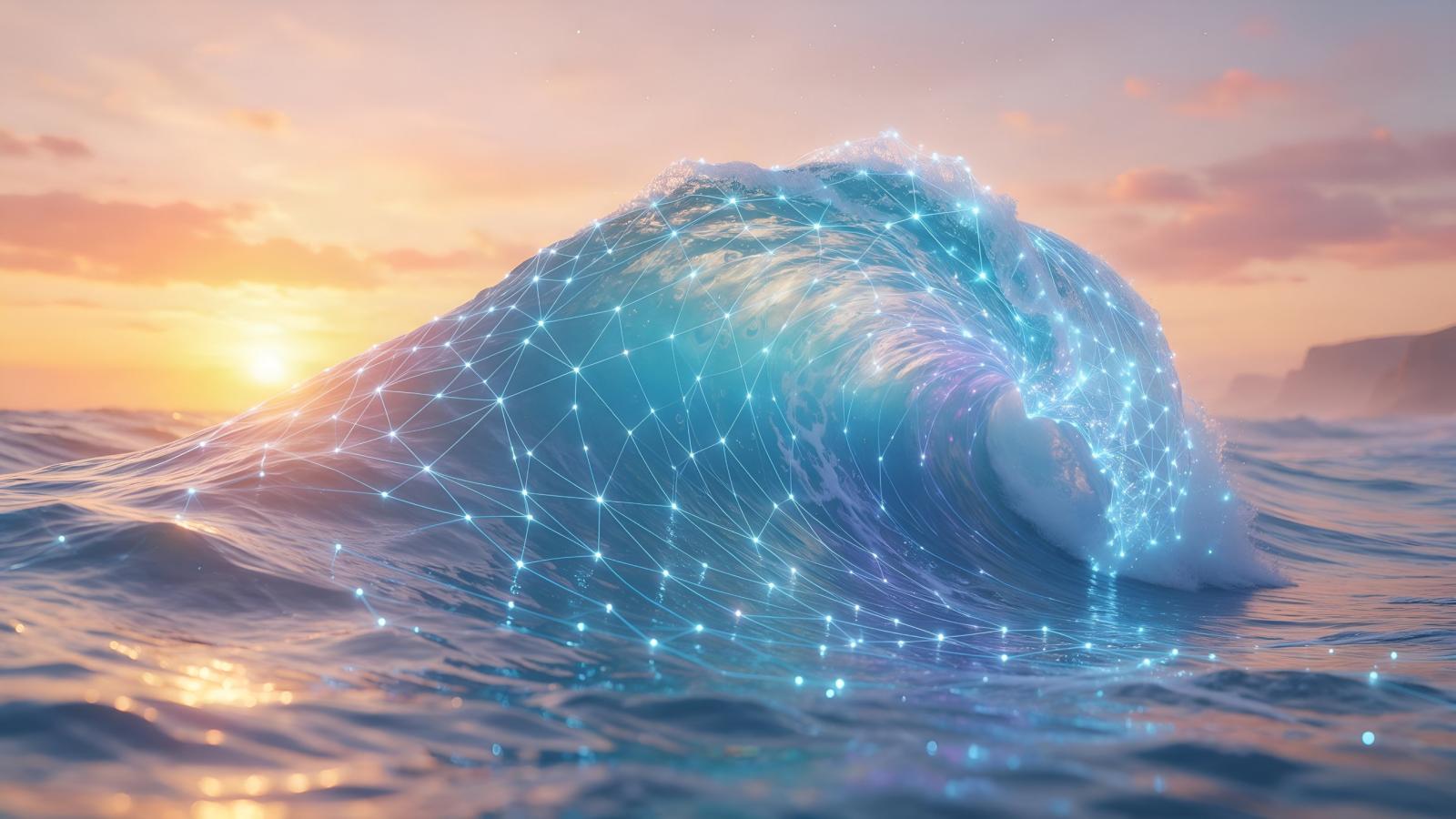
One of the centrepieces of OceanEye is the European Digital Twin Ocean, a virtual representation of the ocean that provides seamless access to data. Conceived as a public service and a common good, it has received around €15 million a year from the European Commission since 2021, including EDITO, its core infrastructure.
The digital twin integrates historical and real-time data from satellites, sensors and numerical models. But it goes far beyond monitoring: it makes it possible to explore what-if scenarios and simulate the effects of different policies, climate warming pathways or economic activities before any decision is taken. Still under construction, the Commission wants it to be fully operational by 2030, as a public service for European citizens and as a contribution to the rest of the world.
Making this possible will require large volumes of computing power, cloud infrastructure and, above all, artificial intelligence. In this way, OceanEye is paving the way for AI to become a key tool for ocean knowledge.


AI dives into a sea of data
Fortunately, ocean data are becoming ever easier to obtain. New monitoring technologies, new sensors and remote sensing reduce the effort needed to collect each data point, which means it can be done far more often.
But all these data are useless if they simply stay in the cloud: they have to reach safe harbour. And for that, they need to be processed and interpreted. The volume of data is so large that, at some point, we can no longer analyse it with traditional methods. This is where artificial intelligence comes in, making it possible to automatically process large datasets and extract useful knowledge from them. Applications range from better understanding plankton to monitoring and predicting the presence of environmental pollutants.
The scientific community is already using AI to analyse millions of images and sensor readings and detect changes in oceans and rivers faster than ever. A shift that is also forcing science to transform the way it works.
Researchers on the European iMagine project are seeing this first-hand. Between 2022 and 2025, the project brought together aquatic scientists and digital experts from 11 European countries to develop AI tools capable of processing and analysing large volumes of aquatic data. Gergely Sipos, of the EGI Foundation and project coordinator, points out that healthy oceans, rivers and lakes are key to food, climate, tourism and drinking water, and that “faster and cheaper monitoring means problems like plankton decline, litter accumulation, oil spills and coral degradation can be picked up and acted on sooner”.
But AI is no longer just a tool for processing data: it is also being used to analyse them. Jean-Olivier Irisson, a plankton researcher at Sorbonne Université, sums it up: “AI is starting to replace well-established statistical analyses. Science needs to adapt to this new way of working.” Tasks that once took months or even years, such as counting organisms by hand, are now being radically accelerated.
Ports on the front line
The European Commission is very clear about the role of ports. The ocean is also a key space for maritime transport, energy, maritime security and defence. In an era of evolving hybrid threats, such as cyberattacks, sabotage and disinformation campaigns, the resilience of critical maritime infrastructure has become a strategic priority. A continuous flow of ocean knowledge is therefore essential to safeguard Europe's interests, strategic autonomy and leadership in a constantly changing world. The EU's security and defence partnerships with non-EU countries such as the United Kingdom, Norway, Canada and India reflect the growing importance of this area.
Ports and maritime transport are also among the sectors that stand to benefit most from reliable ocean knowledge, enabling them to operate more safely, more efficiently and with less impact, alongside fisheries, aquaculture, marine energy and tourism. A better observation system will also strengthen weather forecasts, risk assessments and early warning systems for threats such as pollution or the effects of climate change.
Ports will also be places to bring the ocean closer to people. The Commission plans annual communication campaigns with the EU's research vessel fleet to open the vessels to the public in European ports. In addition, through programmes such as the New European Bauhaus, it proposes to promote initiatives linking art, culture and ocean science. The aim is to take ocean observation and knowledge beyond marine laboratories and digital platforms, bringing them into public spaces, ports, museums and coastal cities across Europe. The goal is not only to share science, but also to spark imagination, foster empathy and promote shared responsibility for the care and management of the ocean.
For ports such as the Port of Barcelona, OceanEye is an opportunity to consolidate their role not only as logistics infrastructure, but also as a hub of ocean knowledge and awareness.
“Global leadership in ocean observation infrastructure, data and information services is the Moonshot ambition we want to set for the EU. We will start by developing the next generation of European ocean observing technologies. We call on all partners to choose Europe to develop together a more resilient global system, a common good to the benefit of all.”
Ekaterina Zaharieva, European Commissioner for Startups, Research and Innovation
How will OceanEye be funded?
The Commission estimates that the annual funding needed to reach the level OceanEye aspires to is three to four times higher than current investment. As a first step, the EU will mobilise more than €92 million through existing programmes such as Horizon Europe and the European Innovation Council (EIC): €50 million to strengthen the global in situ observing system, €12 million for data systems through EMODnet's global data service, and €30 million for an EIC challenge aimed at the best start-ups in ocean observation technologies.
Beyond EU funding, the Commission is calling on Member States to step up their support for ocean observation and align national budgets with EU priorities. It is also inviting other countries, organisations and private companies to invest in ocean observation over the long term, with greater support for GOOS. Looking ahead, the next multiannual financial framework, and in particular the new European Competitiveness Fund, could give continuity to this effort.
In short, OceanEye is the EU's bid to build a comprehensive, operational European Ocean Observing System that safeguards the Union's strategic autonomy and positions it as a reliable global partner.
To know where the ocean is heading, we first have to look at it.