The blue economy is undergoing unprecedented diversification: a report details the talent needed


Good news for the blue economy: it is growing, diversifying and looking for new talent. This would be one of the main conclusions of the Blue Economy Jobs Report 2026, the annual study produced by Blue-jobs, the leading international platform for employment, skills and professional opportunities within the marine and maritime sector.
At PierNext we discuss the report with Celia Murcia, CEO of Blue-jobs, co-author alongside Sara H. Gomez, Sustainability Skills Assistant at the same company.
The Blue Economy Jobs Report 2026 was produced from the analysis of more than 1,700 job vacancies published in 76 countries. On this documentary basis, it maps out a labour market that shows the sector is undergoing a profound transformation: new emerging sectors, growing demand for digital and sustainable profiles, and low salary transparency that the upcoming European Pay Transparency Directive should address.
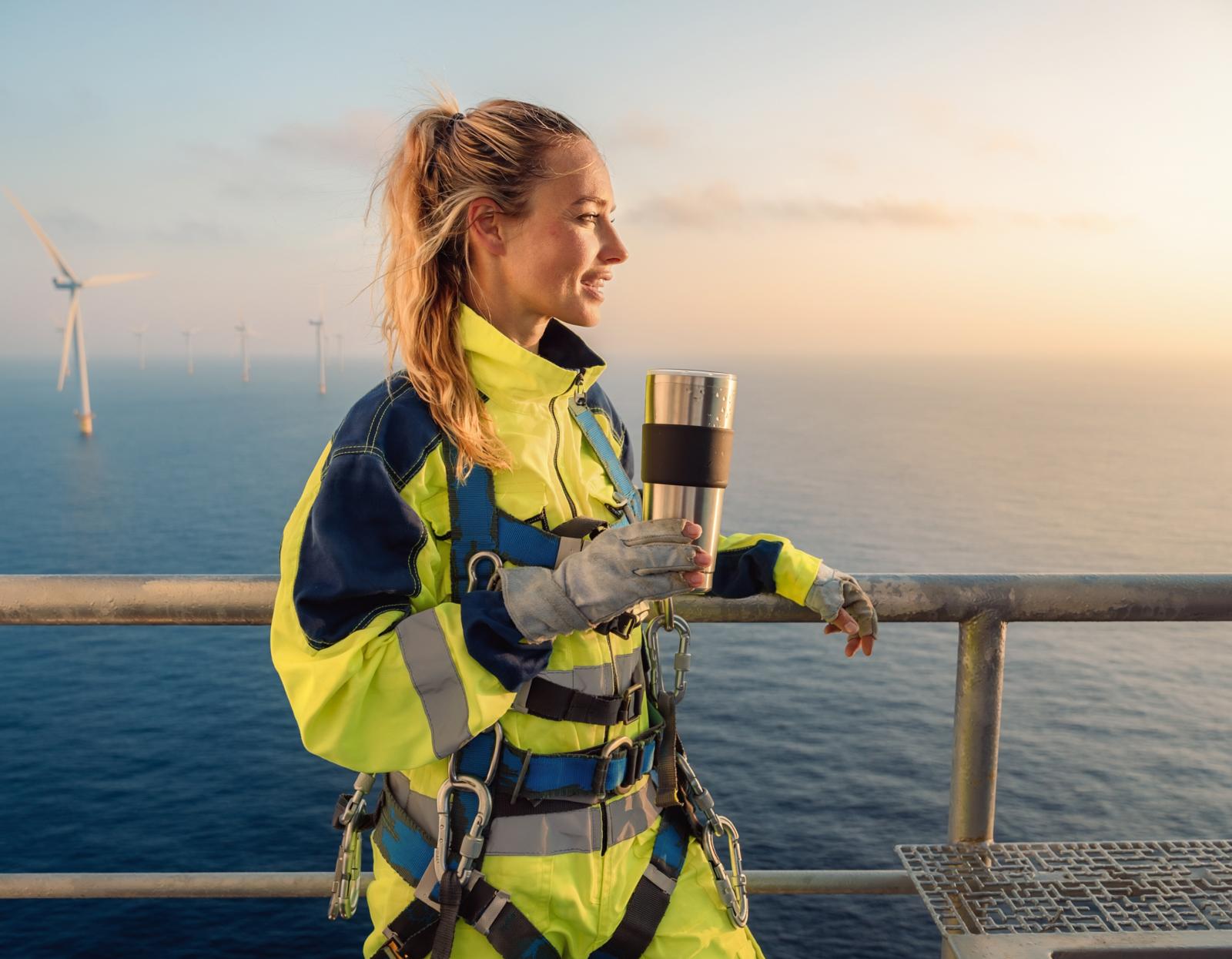
“One of the report’s main findings is that the blue economy is undergoing an unprecedented process of diversification,” explains Celia Murcia. The report’s co-author points out that job opportunities “are no longer concentrated solely in traditional sectors such as fishing or maritime transport. There is increasingly more employment in marine renewable energy, blue biotechnology, marine conservation, ocean technology, oceanography and environmental education.”
Murcia also makes clear that the ecological transition and digitalisation are driving not only the growth of new sectors but also a growing demand for professionals with multidisciplinary profiles capable of responding to the challenges of the future.

Who is hiring and how people work
Beyond the sectors, the report also portrays who is behind the hiring and how ways of working in the sector have changed.
“The report shows that the blue economy’s labour market is undergoing a clear transformation, driven by innovation, sustainability and the growing specialisation of professional profiles,” Murcia notes:
- Private companies are the main hiring driver and account for close to 40% of the organisations posting job vacancies.
- Other important players in hiring are research centres, universities, public administrations and non-profit organisations, which continue to carry significant weight, a reflection of the strong scientific, technological and public-interest component that characterises the sector.
As for working arrangements, on-site work remains the norm, according to Murcia: “around 77% of vacancies require on-site work, compared with 15% offering hybrid arrangements and 8% fully remote.”
The report’s author does not stop at listing figures and adds that “the data reflect the very nature of many blue economy activities, such as fieldwork, oceanographic campaigns, port operations, infrastructure maintenance, laboratory research or work carried out on board.”
Nonetheless, Murcia also points to a certain shift towards more flexible models: “these options are mainly concentrated in profiles related to consultancy, project management, public policy, communication or data analysis.”


Skills for the port sector
Which skills will be key for professionals in the port sector in the coming years? In Murcia’s view, it is a field where “a profound transformation is taking place, driven by decarbonisation, digitalisation and technological innovation.”
As a result, “companies are no longer looking solely for profiles with traditional knowledge of port operations or maritime transport, but for professionals able to operate in a much more technological, sustainable and interdisciplinary environment.”
Among the most sought-after technical skills are:
- maritime transport planning
- emissions-reduction strategies
- port sustainability assessment
- environmental management in ports
- logistics optimisation
- digitalisation of maritime operations
“Knowledge of concepts such as smart ports, the integration of new technologies and the regulatory frameworks linked to sustainable maritime transport is starting to gain relevance,” Murcia adds.
In the digital sphere, she points to “growing demand for capabilities in data analysis, digital skills, data-driven decision-making and artificial intelligence applied to the management of infrastructure and operations.” That said, she adds a caveat: “technologies such as digital twins or automation still appear only tentatively in the vacancies analysed, but everything suggests they will carry increasing weight in the coming years.”
In any case, the CEO of Blue-jobs insists on a message that goes beyond the technical, because “companies increasingly value transversal skills such as:
- analytical thinking
- solving complex problems
- interdisciplinary collaboration
- the ability to work with multiple stakeholders
“The combination of technical, digital, environmental and management skills will be what makes the difference for the professionals of the future,” Murcia notes.
Is there a gap between training and the labour market?
The report highlights that current training does not fully prepare professionals for the new scenario. According to Murcia, “one of the clearest messages of the report is that companies are no longer looking solely for technical knowledge. Labour demand increasingly combines technical skills with digital, sustainable and transversal abilities, such as problem-solving, communication, interdisciplinary work or project management.”
This shift poses a challenge for education and training systems, which must adapt more quickly to the needs of the labour market. In this respect, the report underlines the importance of lifelong learning and of reskilling and upskilling programmes to support the sector’s transformation.
Opaque salaries and confusing job titles
Another notable finding of the report has to do with the sector’s own hiring practices. “One of the most striking trends is low salary transparency: only 28% of the vacancies analysed included information on pay,” Murcia explains. This lack of transparency makes it harder for candidates to compare opportunities and make informed decisions, and it also limits real knowledge of the labour market.
This is not just another eye-catching figure, as it takes on particular relevance in the context of the European Pay Transparency Directive, which will progressively require companies to provide more information on salaries during selection processes.
Added to this is another problem: the limited standardisation of job titles. Approximately 30% of the offers use very generic labels (Officer, Expert, Coordinator or internal project names) without clearly describing the professional profile or the role’s functions. “This lack of precision makes it harder for candidates to find opportunities matching their experience and also limits the ability to carry out reliable analyses of how employment and in-demand skills are evolving,” notes the CEO of Blue-jobs.
“Overall, the report shows that the transformation of the blue economy involves not only the creation of new jobs and skills, but also the modernisation of hiring practices,” she concludes.


The role of port authorities
Finally, the report has also analysed the role of port authorities in attracting talent. The author considers that they “have a key role in ensuring that the growth of the blue economy is matched by the talent the sector will need.”
Going into more detail, the expert believes they “can drive upskilling and reskilling programmes aimed at professionals already working in the sector, helping them adapt to new skills related to digitalisation, automation, artificial intelligence, decarbonisation or data management.”
Another point Murcia highlights is that they “can strengthen collaboration with universities, vocational training centres and technology centres to adapt training provision to the real needs of the market, promoting internship programmes, dual training and closer connections between students and companies.”
There is also room, she insists, to improve hiring practices themselves: “moving towards more transparent selection processes, with clear descriptions of duties, required skills and working conditions, would make it easier to attract talent and improve the efficiency of the labour market.”
As a conclusion to her analysis of the report she has produced, Murcia wishes to point out that “the ports of the future will compete not only for better infrastructure or more advanced technology, but also for their ability to attract, develop and retain qualified professionals. Talent management must become a strategic pillar for building a more innovative, sustainable and competitive port system.”