

PierNext — The Port of Barcelona's intelligence hub


Must-read topics

The best of PierNext

Imagen
Imagen
Imagen


Last publications
A selection of the 10 best articles published last year in PierNext, in a handy ebook format.
Available Languages: / /
exclusive ebook featuring the top 10 topics that have been published in PierNext in the last year.
Available Languages: / /
Featured videos
Imagen
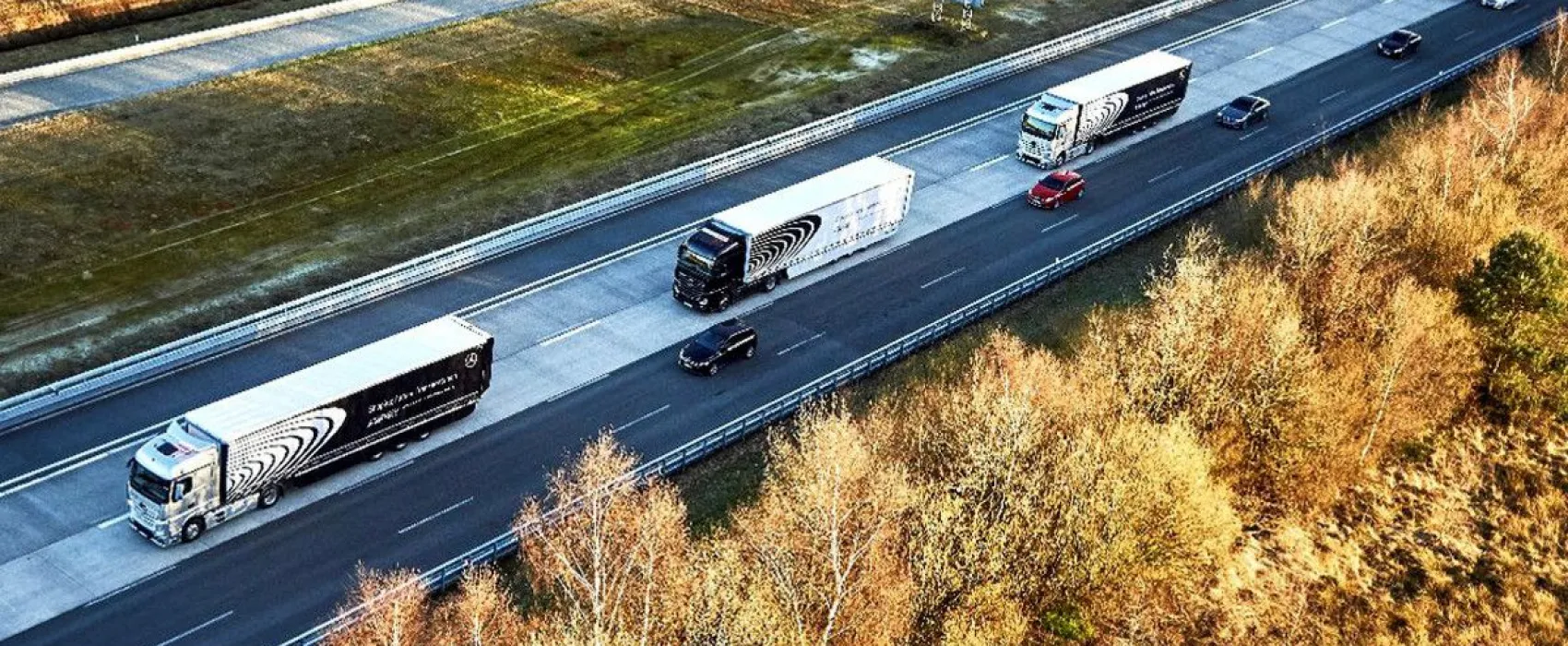
Truck Platooning: Making Highway Routes Safer and More Efficient
- [On-screen text]: Peter de Langen - Truck Platooning: safer, more efficient and sustainable road routes.
- Peter de Langen (Founder of Ports & Logistics Advisory): "The technology is already here. So we are not talking about something very futuristic, no."
- [Visual]: 3D animation of several autonomous trucks platooning along a highway.
- Peter de Langen: "A truck can send signals to another truck so that it performs the exact same movement as the leading truck. That's why, technologically, a second driver is not needed. Furthermore, if we do the math, the system will reduce the number of accidents, because the vast majority of accidents are caused by human error."
- [On-screen text]: The benefits of truck platooning are manifold: lower energy consumption, reduced labor costs, or greater route safety.
- Peter de Langen: "And with this system, later on, we can generate the benefits that platooning offers, such as lower fuel consumption costs... And in a second phase, labor costs, because either a second driver is not needed or the time that this driver spends in the truck doesn't have to count as active time, but as passive time. Therefore, once the platoon splits, this driver can drive without being obligated to stop."
- Peter de Langen: "The challenge is introducing it—introducing this technology. And ports play a major role here, because this implementation will never be incremental, but rather a huge leap forward. We will be capable of forming 100 platoons per day from Barcelona along an inland corridor."
- Peter de Langen: "The challenge is this: creating a coalition of companies that ultimately decide to invest in a fleet of trucks equipped with platooning capabilities and certified technology."
- [On-screen text]: Truck platooning, a small part of a big revolution.
- Peter de Langen: "In a way, this platooning is part of something larger. To understand the impact, one must understand all these individual components and then see how they converge into a new system."
- [Visual]: Footage of connected MAN trucks undergoing testing and software analytics displayed inside the cab.
- Peter de Langen: "And that's where platooning comes in, Big Data comes in, autonomous cars come in, hands-free automated logistics in warehouses comes in, Industry 4.0 comes in... Step by step, we are moving in this direction, and for every port, the challenge is to move forward and innovate fast."
- [Visual outro]: PierNext logo (Innovation by Port de Barcelona).
Imagen
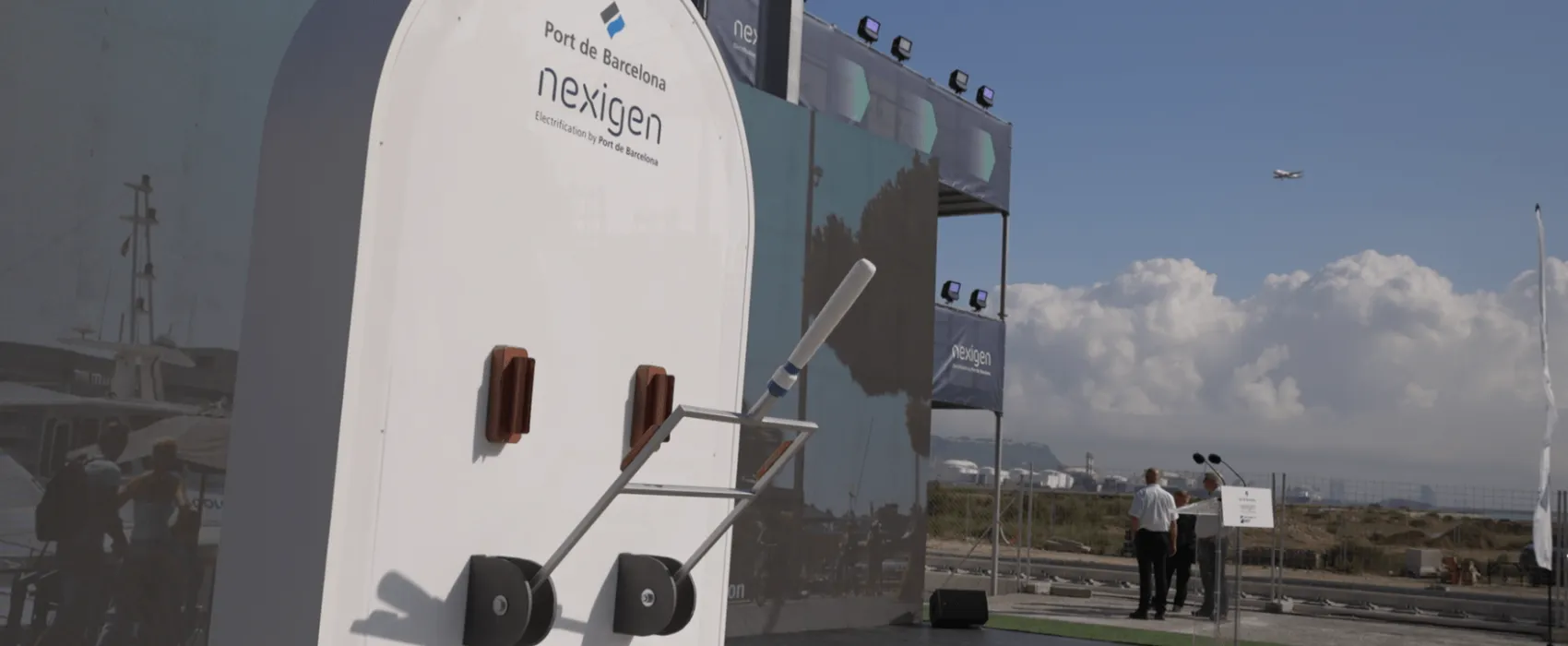
Onshore Power Supply is already a reality at the Port of Barcelona
- [On-screen text]: The Port of Barcelona launches the first OPS for container ships at a terminal in Southern Europe.
- [Visual description]: Aerial and tracking shots of heavy-duty cranes at the Hutchison Ports BEST container terminal as a large container ship arrives.
- [On-screen text]: The OPS system allows ships to connect to the onshore power grid while birthed at the port.
- [Visual description]: Close-up of port technicians operating underground connection boxes on the quay and deploying medium-voltage cables toward the vessel.
- [On-screen text]: This enables vessels to shut down their auxiliary engines and eliminate atmospheric emissions during their stay.
- [Visual description]: Visual simulation and real-time footage of the ship's auxiliary engines turning off, with smoke gradually stopping from the funnel.
- [On-screen text]: This initiative is part of the NEXIGEN wharf electrification plan, backed by a €110 million investment.
- [Visual description]: Overview of the electrical infrastructure, the port substation, and power sockets installed along the dockline.
- [On-screen text]: The goal: reduce CO₂ emissions from port operations by 50% by 2030.
- [Visual outro]: Animated logo of PierNext (Innovation by Port de Barcelona).
Imagen
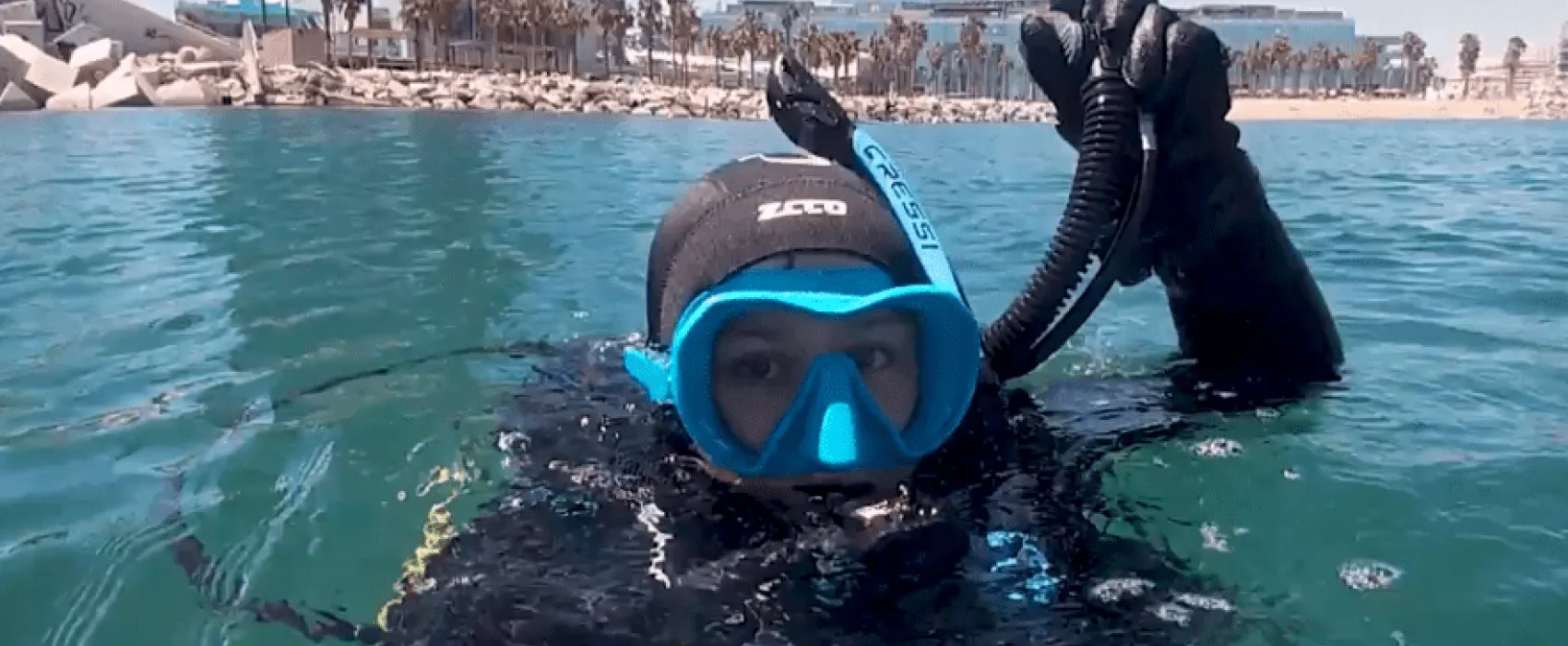
Seahorse biotope at the Sant Sebastià beach of Barcelona
- [On-screen text]: Anel·lides Serveis Ambientals has installed a marine biotope off Barceloneta beach to help recover local seahorse populations.
- [Visual description]: Underwater footage of the Barceloneta seabed showing the submerged biotope structure.
- [On-screen text]: The goal is to provide a safe habitat and promote the reproduction of this declining species along urban coastlines.
- [Visual description]: Close-up of a seahorse (Hippocampus) anchoring itself with its tail to the biotope structure, surrounded by marine life and algae.
- [On-screen text]: The initiative combines ecological restoration with citizen science actions and environmental awareness.
- [Visual description]: Andrea Comaposada and the Anel·lides team leading an educational workshop and awareness session with volunteers on the beach.
- [Visual outro]: PierNext logo (Innovation by Port de Barcelona).
Imagen
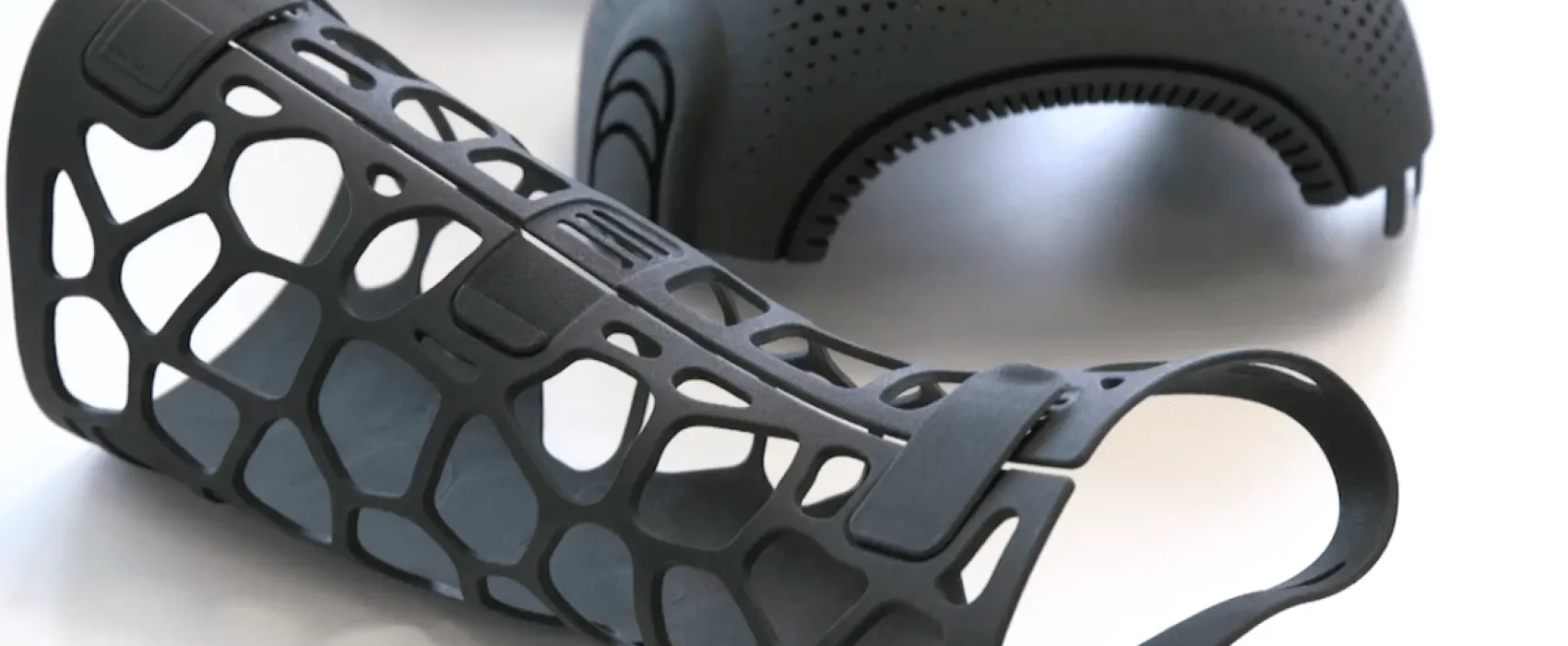
3D Factory Incubator: a hub to revolutionise the industrial sector with km0 manufacturing
- [On-screen text]: PierNext: 3D Factory Incubator.
- Speaker 1 (Aitor Aragón, 3D Factory Incubator): "3D Factory Incubator is an initiative led by the Consorci de la Zona Franca and Fundación Leitat, co-financed with ERDF funds through Fundación INCYDE. It aims to incubate the top 25 3D printing projects worldwide so that companies can start with a 3D printing mindset right from inception. We are looking for industrial entrepreneurs who can leverage all the production, process, and design 3D printing equipment that the incubator offers."
- [Visual]: Shots of the 3D Factory Incubator facilities at Barcelona's Zona Franca, industrial 3D printers operating in real-time, and display samples of manufactured components.
- Aitor Aragón: "The goal is to incubate 25 initiatives per year. The incubator opened recently, and we have already selected the first 16 incubated companies. Shortly, we will launch our second call for proposals, hoping to find the remaining nine gems. The great virtue of 3D printing is that it is a cross-cutting technology that serves an endless variety of sectors."
- Aitor Aragón: "For instance, we have a company producing saxophones using 3D printing technologies, many companies making dental products, others manufacturing shoe soles... And the company selected from the logistics sector is Transcoma Logistics. They understood that 3D printing will transform how goods are manufactured, purchased, and transported."
- Aitor Aragón: "A traditional factory production line is very costly. A 3D printer is not cheap yet, but it is far more accessible. This eliminates barriers to entry in manufacturing and brings back decentralized production. What moves around will no longer be finished goods, but raw materials. Transport will become much more efficient and reduced. Being close to a port or airport means being adjacent to core trade corridors essential for growth."
- Aitor Aragón: "Fused filament technology was patented in the 80s in the US, and patents expired in 2012 in Europe. Since 2012, we've seen exponential growth, though actual implementation in corporate value chains remains low. The maturity of the technology is extremely high, but companies still don't know how to use it; that's where we must focus our efforts."
- [Visual]: Robotic arms operating, 3D scanners, and intricate polymer and metal printed parts.
- Speaker 2 (Joan Alberich, Leitat): "3D technology is a disruptive tool leaning heavily toward customization. Anything driving customization and digital sectors will revolutionize packaging, prototyping, and manufacturing cost efficiency. We assist companies and see a major impact across three key pillars: prototyping (gaining speed and flexibility), tooling and fixture manufacturing for production lines, and overall productivity."
- Joan Alberich: "How this shift unfolds is still evolving. Shipping finished products is vastly different from transporting powders and chemical inputs needed for 3D printing. We are facing new business opportunities. 3D printing was born to bring manufacturing closer to design and creation. Therefore, its impact on logistics is clear: goods will be produced at 'kilometer zero', much closer to where consumption happens."
- [Visual outro]: PierNext logo (Innovation by Port de Barcelona).
Imagen
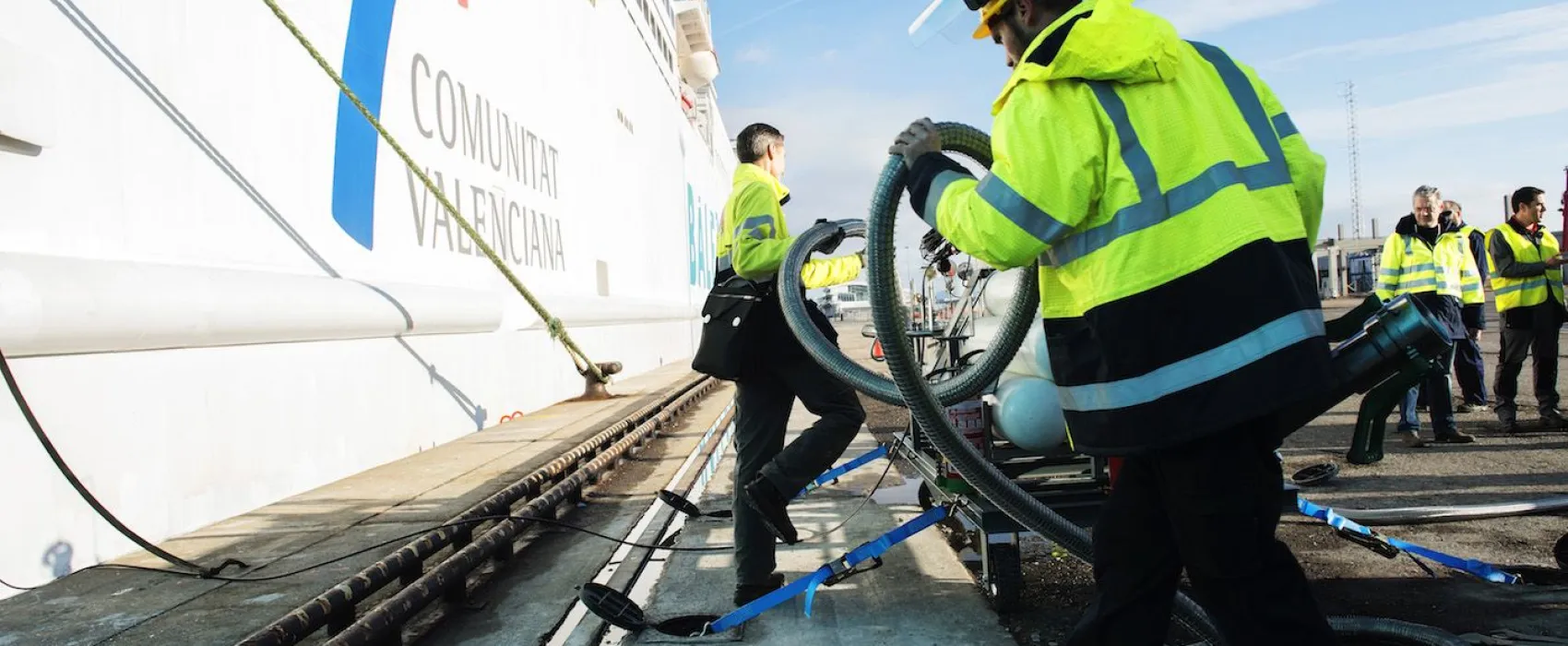
CleanPort: European project led by Baleària and Naturgy
- [On-screen text]: PierNext: Clean Port.
- Speaker 1 (Representative from Naturgy / Gas Natural Fenosa): "The Clean Port project is significant because it was the first trial, the first transformation project of an auxiliary power generation engine utilizing natural gas as fuel. Natural gas must be liquefied (LNG) because it occupies 600 times less volume than gas under normal conditions. It is the first project executed on an engine for a passenger ship or a Ropax vessel (freight and passenger ship), marking our first trial for this category of application."
- [Visual]: Technical renders and real footage of passenger and cargo vessels berthed at the Port of Barcelona, showing onboard LNG storage systems and engine connectivity.
- Speaker 2 (Representative from Baleària): "Over five years ago, we initiated a project installing a natural gas engine and generator on one of our ferries, enabling us to virtually eliminate harmful pollutant emissions—a crucial milestone for Barcelona and all port cities."
- Speaker 1: "We have been using LNG for years as a substitute for heavy fuel oil or diesel in industrial sectors. It is already a reality in long-distance heavy road freight transport, but we had never conducted a trial in maritime bunkering."
- Speaker 2: "Baleària aims to have 100% of its fleet powered by liquefied natural gas in the coming years. The Hypatia de Alejandría and Marie Curie are two newly built vessels powered by LNG for both main propulsion and power generators, integrating digital technology focused on eco-efficiency."
- Speaker 1: "The main challenge in using LNG for maritime transport lies in the logistics and bunkering supply operations for vessels and ferries."
- Speaker 2: "The ultimate goal is driving the global shipping fleet toward LNG adoption. We must also continue optimizing engine efficiency, propulsion systems, hull design, and vessel trimming."
- [Visual outro]: PierNext logo (Innovation by Port de Barcelona).