The EU Ports Strategy charts the course towards sixth-generation ports (6GP)

Carles Rúa is Head of Strategy and Grants at the Port of Barcelona.
Over recent decades, ports have progressively broadened their role in response to changes in their environment. First they were basic infrastructure for transferring goods; then industrial spaces tied to the growth of large production complexes; later, logistics nodes integrated into global supply chains; and, with the advance of digitalisation and corporate globalisation, networked platforms able to coordinate increasingly complex actors, information and services.
This accumulated evolution is what explains where we stand today. Ports have kept evolving and taking on new functions because trade, industry and the territory have demanded it of them. The question, then, is whether the recent accumulation of changes still amounts to an evolution of the earlier generations or whether we are facing a new leap in how we understand the role of the port.
According to the EU Ports Strategy, published on 4 March 2026, Europe's ports must stop being seen as mere transport infrastructure or points of modal interchange and become multifunctional strategic assets, essential to the competitiveness, security, resilience and sustainability of the European Union. The Commission defines them as gateways for trade, energy and mobility, but also as industrial and energy hubs, critical infrastructure for supply chains, nodes of innovation and digitalisation, and key platforms for the energy transition and Europe's strategic autonomy.
This positioning clearly raises new functions and responsibilities: ports must simultaneously increase their capacity, decarbonise operations, accelerate digitalisation, strengthen physical and cyber security, improve their resilience to disruption and contribute to the economic and territorial development of their surroundings. In short, the port is conceived as an orchestrator of complex ecosystems of goods, people, energy, data, industry and innovation, with a central role in Europe's economic and technological sovereignty.
But are we talking about an adaptive evolution or a generational change?

The port generations
The concept of "port generations" was born in the early 1990s with the UNCTAD report Port Marketing and the Challenge of the Third Generation Port (United Nations Conference on Trade and Development). It was there that the term "third-generation port" first appeared, describing ports that not only handle goods but also offer logistics services, distribution and value-added activities, generating employment and wealth beyond traditional operations. A fourth generation is mentioned in 1999 in the UNCTAD Ports Newsletter No. 19.
Let us look at what each involves:
First generation: the traditional port
The first generation of ports corresponds to the prevailing model up to the mid-twentieth century. At this stage, the port was essentially infrastructure for the physical interchange between sea and land transport (loading, unloading, storage and transfer of goods), with little terminal specialisation, limited mechanisation and scant connection to the wider economy.Second generation: the industrial port
From the 1960s onwards, growing international trade, productive specialisation and the development of large industrial complexes gave rise to a second generation of ports. Industrial activities such as refineries, petrochemical plants, steelworks and energy complexes expanded, and the port ceased to be a point of modal interchange to become an industrial platform, with specialised terminals emerging for liquid and dry bulk and energy products.Third generation: the logistics port
Globalisation and the rise of containerisation and intermodality drove the third generation of ports. According to UNCTAD itself, these ports no longer merely handle goods but offer value-added services such as storage, consolidation, distribution and other logistics activities. The port becomes integrated into global logistics chains, the first logistics activity zones appear (such as Barcelona's ZAL), along with dry ports and inland terminals, and advanced information systems are strengthened (a clear example being PCS, Port Community Systems). The port is understood as a logistics node that helps optimise cargo flows beyond its own boundaries.Fourth generation: the networked port
In the late 1990s the concept of the fourth-generation port emerged, associated with the globalisation of operators, the vertical integration of logistics chains and the development of international terminal networks. The port no longer depends solely on its own infrastructure or the services it provides locally, but on how it integrates into those global transport networks. Digitalisation, shared information systems, the coordination of actors and the integrated management of supply chains are key elements of port competitiveness.Fifth generation: the smart, sustainable port
The so-called fifth generation of ports no longer comes from UNCTAD but from the academic literature — for example, Flynn, Lee & Notteboom (2011) or Paul Tae-Woo Lee and Jasmine Lam (2015). This port generation incorporates concepts such as sustainability, a customer-centric and community-oriented focus (customer-centric port, community port), the use of advanced technologies, and introduces the notion of the smart port, or the need for ports that create value for every stakeholder in the port community.

Sixth-generation ports
The first references to sixth-generation ports are fairly recent. Such is the case with Kaliszewski (2017), Paul Tae-Woo Lee (2021) or Moldoveanu and Titu (2025), who argue that the fifth generation is not enough to meet today's challenges and that ports must fold into their management such aspects as advanced digitalisation, automation, resilience, business continuity, pandemic management, the massive exchange of information and greater coordination among stakeholders — and that environmental, social and governance (ESG) factors become structural to the port management model rather than mere sustainability add-ons.
To my mind —and this is a personal view— these changes are not enough to speak of a new generation, that is, a new way of understanding port activity, since most of the concepts introduced can be accommodated within an "advanced" fifth generation.
The notion of a generational change must be tied to a new way of understanding the port model, but also to the vast investment that such a change of model entails: when we move from 1GP to 2GP we mean that ports develop refineries, petrochemical complexes and heavy industry, at costs of billions of euros for a medium-sized port; when we move from 2GP to 3GP we are talking about developing logistics zones, inland terminals and rail connections… Again, billions of euros. Without that major investment to "do new things", I do not think we can speak of a generational change.
But the EU Ports Strategy does completely change the way the European Commission looks at ports and, in doing so, invites Europe's ports to take on a series of new roles that, taken together, do amount to a radical generational shift. And it requires us to invest in it.
Does the EU Ports Strategy thus become the management manual for sixth-generation ports? Probably.
To define what a sixth-generation port, or 6GP, is, we should first look at the new functions being demanded of them — and in the EU Ports Strategy we can identify at least six distinctive new roles that the ports of the future will have to take on:
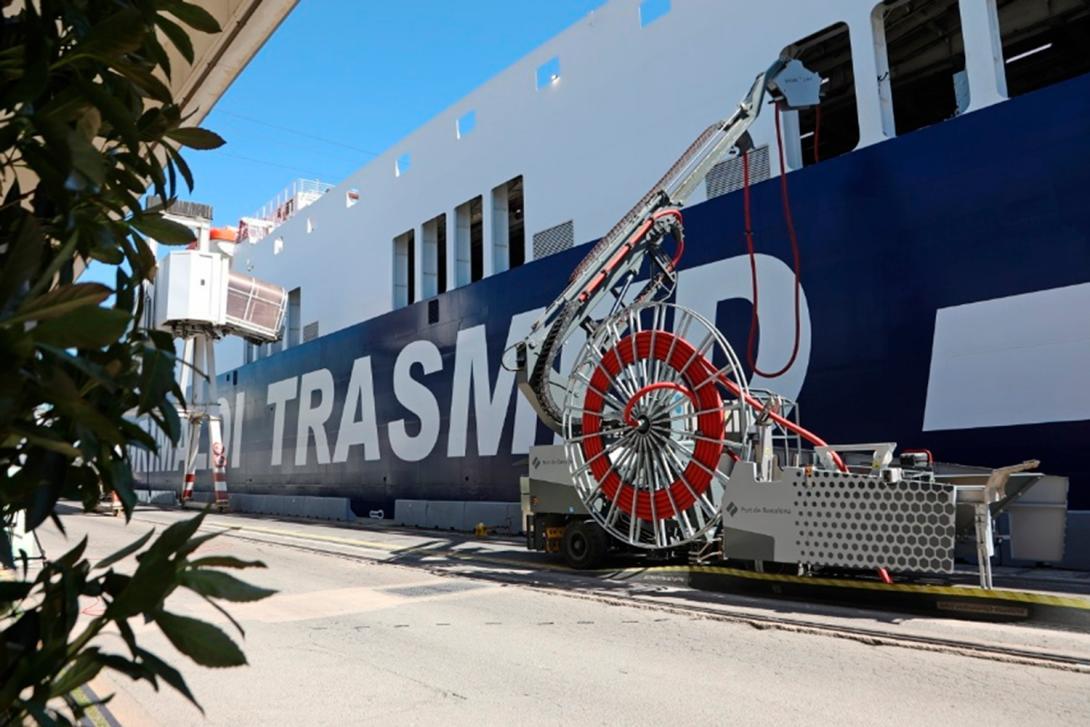
The port as an energy hub should not be understood merely as a space in which to roll out electrification (OPS, onshore power supply) or alternative fuels. That view, while necessary, is too instrumental. In a 6GP logic, the port comes to be conceived as a systemic energy node: a space where generation, consumption, storage, distribution, demand management, integration with electricity grids, connection to energy-intensive industries and the shaping of new energy markets and business models all converge.
The port is not only a large consumer that must decarbonise: it becomes infrastructure capable of ordering complex energy flows, facilitating the integration of renewables, acting as an interface between the electricity system, the logistics system and the industrial fabric, and contributing to the territory's energy security, flexibility and resilience. The port of Barcelona's energy transition master plan is a clear example of how to take on this new role, in that it provides a holistic view of managing the different types of energy in the port.The port as a digital and data platform, or as a logistics-intelligence node, comes to be conceived as systemic-intelligence infrastructure: a space where logistics, energy, environmental, commercial, customs, industrial and security data converge, and where that information is turned into a capacity for anticipation, coordination and decision-making.
The port is no longer just a place where data is recorded and transmitted (for instance, through the PCS); it is a node able to order complex information flows, detect disruptions, optimise multimodal chains, coordinate public and private actors, feed predictive models and strengthen the resilience of the logistics system. It evolves from the smart port to the cognitive port, with a capacity for understanding and anticipation. In this sense, data governance becomes a critical function and the port authority becomes the institutional architect of the exchange and management of information.The port as an industrial and innovation platform for the new economy represents the evolution of the traditional industrial port towards a space where the activities that will drive the territory's future competitiveness are developed, scaled and industrialised. In a 6GP logic, the port ceases to be merely a site for productive activities and starts to act as a platform capable of integrating infrastructure, energy, knowledge, technology and talent to accelerate the creation of new critical value chains that contribute to reindustrialisation, to changing its region's economic model and to strengthening productive autonomy.
It is not just about attracting industry, but about enabling the development of emerging sectors linked to the circular economy, advanced manufacturing, the energy transition and the new activities of the blue economy, becoming a catalyst for the productive transformation and strategic autonomy of the territory; and that entails creating innovation ecosystems able to connect companies, technology centres, logistics operators, public authorities, startups, universities and major industrial anchors.
A clear example of this new reindustrialisation is the NextGen District at the port of Antwerp-Bruges, conceived as a space to attract innovative industrial activities linked to the circular economy, the reuse of materials, sustainable chemistry and the energy transition. It is not just about occupying port land, but about transforming former, now obsolete, industrial areas into a new, value-generating productive ecosystem.As a manager of resilience and operational continuity ports must not only be efficient under normal conditions but must guarantee the continuity of critical flows in conditions of uncertainty, scarcity or disruption. The port comes to act as a node of stability, able to anticipate risks, coordinate multi-actor responses, prioritise essential traffic, adapt its operations and keep strategic supply chains connected. In this sense, the port authority's role is no longer only to optimise the port's ordinary functioning, but to ensure that the territory and the chains that depend on it can keep operating when that environment turns unstable.
The port as critical security infrastructure, in a 6GP logic, becomes a geostrategic guarantor: infrastructure whose continuity, control and strategic direction are essential to the economic, energy, industrial and logistics security of the state and of Europe.
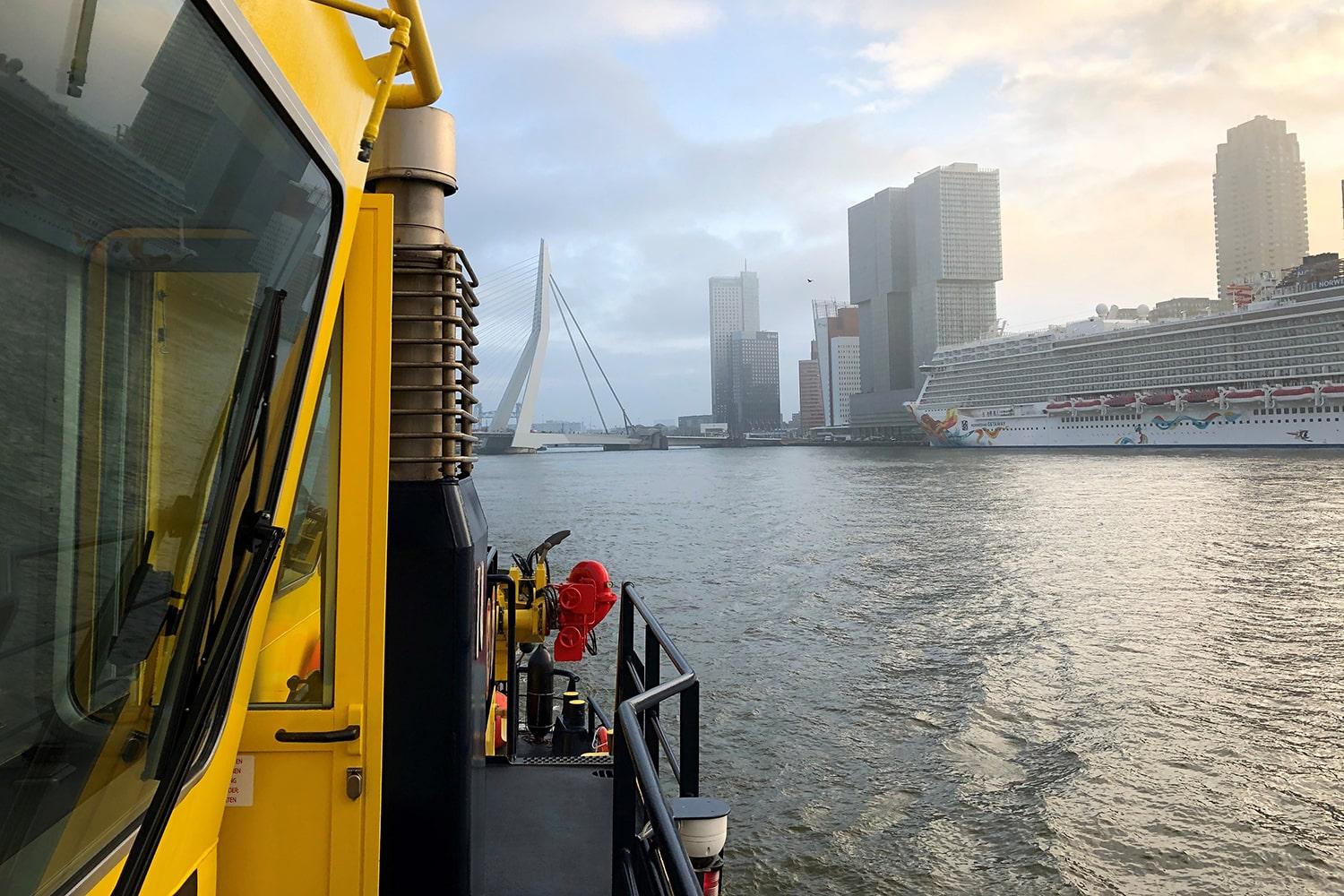
Rotterdam is a particularly telling case: its strategy presents the port not merely as an efficient node of global trade, but as a key piece in securing energy supply, industrial autonomy, the resilience of critical chains and the geo-economic standing of its European hinterland.
From this perspective, port security ceases to be a defensive or perimeter function (access control, physical surveillance, ISPS protection or cybersecurity) and becomes strategic: protecting the port means protecting flows of people, energy, raw materials, food, technology, data and critical goods, as well as maintaining the territory's capacity to operate in an environment of geopolitical rivalry, external dependence and continuous disruption.The port as a territorial and social actor represents an evolution of the port-city relationship. Today's major port projects (energy, digital, industrial, logistics or security) require not only investment and infrastructure but also social legitimacy, human capabilities, institutional coordination and territorial alignment.
A 6GP becomes a space where new professional skills are developed, human capital is built and consensus is forged among public authorities, businesses, citizens, knowledge centres and the productive fabric. Its territorial function no longer consists solely in minimising conflict, developing a waterfront or improving relations with the city, but in working together with the territory to achieve the prosperity of the hinterland.

Conclusions
The EU Ports Strategy (and, indeed, the United States' America's Maritime Action Plan too) not only reinforce the classic axes of digitalisation and the energy transition, but explicitly introduce hybrid security, strategic autonomy, the screening of foreign investment, the continuity of critical chains, the industrial base, the territorial cohesion of the hinterland and the systemic energy function of the port.
On that basis, the following definition of a sixth-generation port can be proposed:
A sixth-generation port is a port that operates as an integrating system for critical flows — goods, obviously, but also energy, information, industrial capital, talent and security — and that takes an active role in the economic, energy, technological, logistics and social stability of its hinterland.
Under this definition, does any 6GP exist today? The answer is no.
And it will probably be quite some years before we see one. Perhaps the secret lies not in treating this sixth generation as an aspirational goal for port authorities, but as a path to follow.
Nor should every port necessarily aspire to be a 6GP, or reach that stage across all domains at once. Many ports, for instance, have defined themselves in their strategies as green energy hubs, strongly embracing the energy and decarbonisation dimension; yet far fewer set out a broad geostrategic vision tied to economic security, industrial autonomy, the resilience of critical chains or the strategic position of their hinterland.