From pilot to quay: Barcelona puts scaling port innovation to the test

Ports have tried out almost everything. Sensors, digital twins, artificial intelligence, new fuels… The list of pilots is a long one and, all too often, that is where the story ends: the trial goes well, the photo gets taken and the technology is never seen again. It is a situation the sector knows only too well.
That was the talk of Barcelona, and then some, between 2 and 5 November. The week kicked off at World Trade Center Barcelona with Lighthouse Innovation Day, the closing event of the first edition of the acceleration programme run by BlueTechPort and the Port of Barcelona, and moved on to the Gran Via venue for Tomorrow.Blue Economy World Congress, held alongside Smart City Expo World Congress. The venues and the speakers changed, but the underlying question was always the same: how do you get from a pilot to an innovation the port actually uses every day?
An ecosystem with critical mass
The question carries weight because the sector does too. According to estimates in the EU Blue Economy Report 2025, in 2023 it generated some €263 billion in gross value added and almost 4.9 million direct jobs across the Union. And investors set their course for it some time ago.
On a global scale, the figures are even more striking. The report Rethinking the Blue Economy: Innovation Challenges and the Role of Ports, produced by Mind the Bridge with the Port of Barcelona on the basis of interviews with ten ports around the world, ranks the blue economy as the world’s fifth-largest economy, worth around $2.6 trillion, having doubled in real terms over the past 25 years. The Blue Tech ecosystem already counts more than 4,000 companies: 496 scaleups, around 1,200 startups and 2,500 innovative SMEs. The scaleups have raised $28.5 billion, and 86% of it has gone to companies linked to digitalisation. And the pace is picking up: investment, which stood at $6.2 billion in 2025, could top $12 billion in 2026.
Europe plays its cards well, at least on paper. It has 173 Blue Tech scaleups, more than the United States (146), and has attracted $7.8 billion in funding. The trouble is that its ecosystem is fragmented, which stops it from making the most of that potential.
As Mind the Bridge puts it, ports need startups to innovate, and startups need a real place to prove their technology works. Barcelona has been working on this for years, from its smart port model to BlueTechPort, the Port’s blue economy innovation hub, managed by World Trade Center Barcelona. By early 2026 it was already home to 22 companies, and it belongs to a network of port hubs such as AltaSea in Los Angeles.
Lighthouse: eight startups and a real port
The latest piece of this ecosystem is the Lighthouse International Acceleration Program, an acceleration programme for maritime startups. It is led by BlueTechPort, with the support of the Port of Barcelona and Mind the Bridge’s methodology. In July, from some 65 applications, it selected eight, from seven countries and three continents. Over twelve weeks, these startups received around 80 hours of business and technical mentoring and, above all, were able to use the port’s operations as a real-world testbed and work with their industrial partners. Taking part is free, and they did not have to give up any equity in return.
| Startup | Country | What it offers |
|---|---|---|
| MarinaChain | Singapore | AI for fleet emissions compliance and ESG reporting |
| Heyport | Germany | Digital coordination of port calls |
| Pharaday | France | AI that integrates data from legacy systems and automates shipping operations |
| Gatein.ai | US | Computer vision to track containers and trailers at terminals |
| Methanol Reformer | Spain | Modular systems that produce hydrogen and electricity from methanol |
| Linsol | South Korea | Ultrasonic detection of gas leaks and electrical faults |
| KOAI | South Korea | Autonomous marine robots that collect floating waste |
| Notpla | United Kingdom | Biodegradable packaging made from seaweed |
On 2 November they delivered their pitches, and the following day they had their own exhibition space at Smart City Expo, where they presented again to investors and other industry players to make contacts and explore business opportunities. But 2 November had much more to offer than a round of pitches.
Why is it so hard for innovation to reach the quayside?
Davide Faraci of Mind the Bridge presented the report’s findings, based on interviews with ten leading port authorities. The priorities are clear: sustainability is on the agenda of nine out of ten, digitalisation and automation on that of eight, and infrastructure resilience on that of seven. This is where the first paradox emerges: sustainability is ports’ top priority, yet it receives less than 10% of total Blue Tech funding. On the technology side, artificial intelligence leads the way, with machine learning, followed by clean propulsion and sustainable fuels, autonomous navigation and port community systems.
So the problem is not a lack of ideas or startups. Seven of the ten authorities are already testing technology as startup customers, through the venture client model, but only four have a structured innovation department. The will is there. What is often missing is the structure to turn a trial into a project.
The report sums it up in five gaps: the mismatch between what technology offers and what ports need, the difficulty of turning pilots into commercial deployments, the need to involve the whole port community, regulation that moves more slowly than technology, and the lack of clear ownership for some emerging challenges.
Port authorities’ innovation priorities and how they innovate
Survey of ten ports
Their priorities
- Sustainability9 / 10
- Digitalisation and automation8 / 10
- Infrastructure resilience7 / 10
How they innovate
- Already testing technology as customers of startups (venture client)7 / 10
- Have a structured innovation department4 / 10
Seven of the ten authorities already work with startups, but only four have a dedicated team to turn those trials into projects.
And a paradox: sustainability is a priority for nine out of ten ports, yet it receives less than 10% of total funding in the Blue Tech sector.
Source: Mind the Bridge, Rethinking the Blue Economy: Innovation Challenges and the Role of Ports (2026), based on interviews with ten port authorities.
The day also brought three deeper obstacles to the table:
- The first is maturity, and it cuts both ways. Some of the technologies on the port agenda have yet to prove that they work at full scale, and many startups lack a clear business model, a defined return or the ability to integrate with existing systems. Ports, for their part, work with fragmented data and with basic processes that are not always digitalised, and without that foundation it is hard to adopt AI or digital twins with any confidence.
- The second has to do with how a port is organised. Under the landlord model, the port authority owns the land, but it is private operators who run the concessions. Whether an idea becomes a project depends on them, and they do not always find it easy to pin down what technology they need.
- And the third, as so often, comes down to numbers. Shipping is the cheapest logistics model in the world and works on tight margins, so an innovation is judged, first and foremost, on its profitability. If a new solution is not clearly cheaper or clearly better than the one it replaces, it has a very hard time getting in.
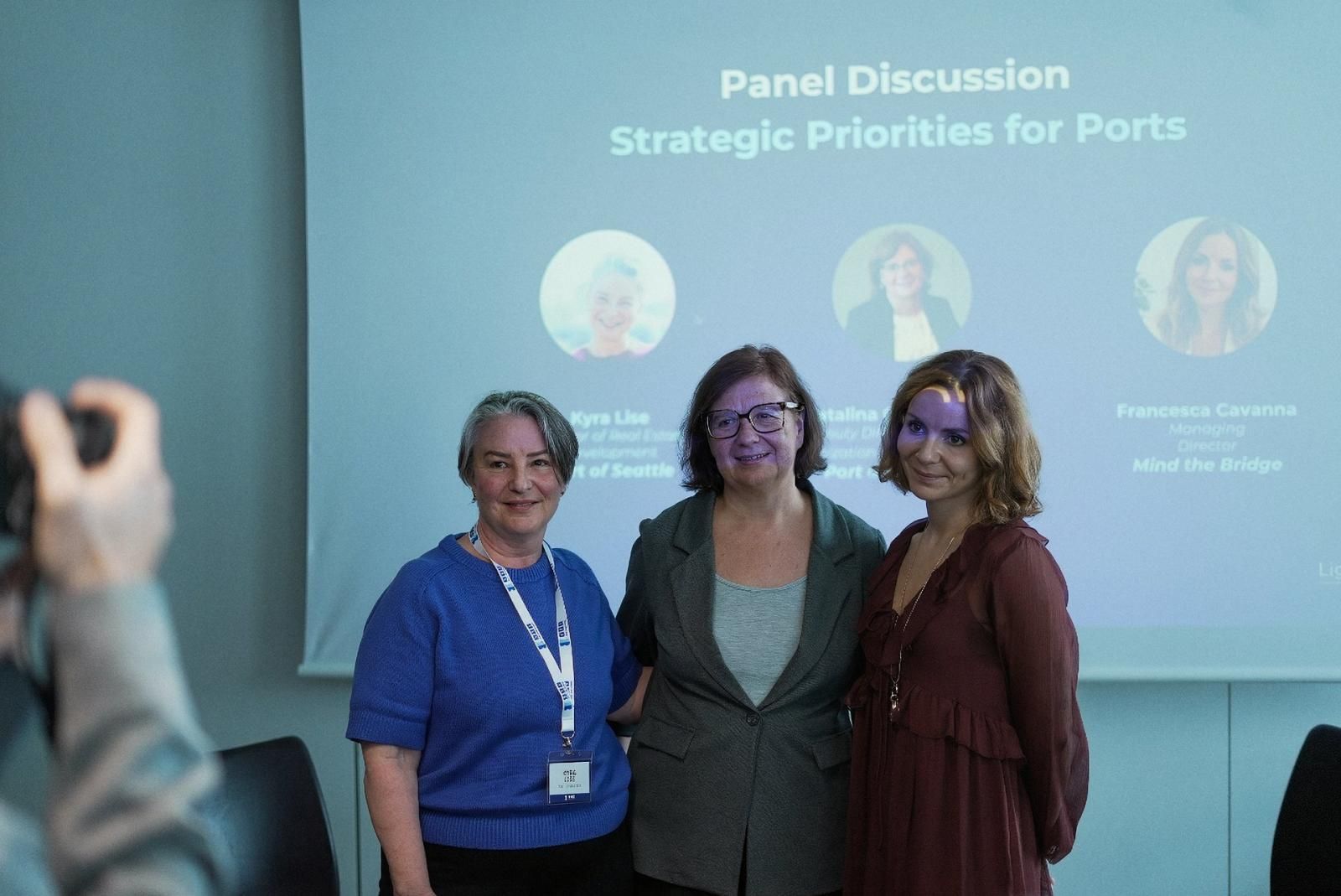
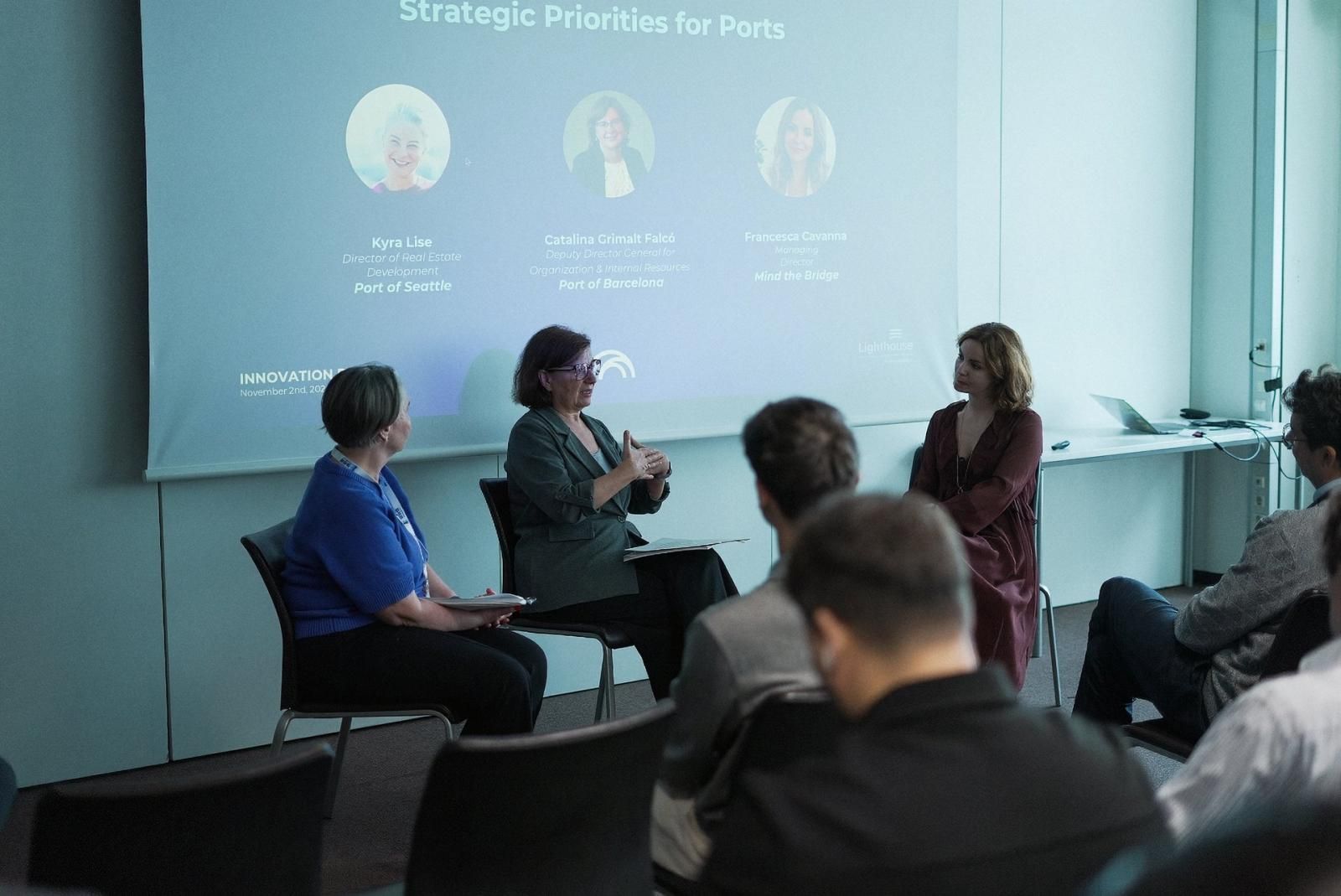
The round table that followed, “Strategic Priorities for Ports”, put faces to this diagnosis. Catalina Grimalt, deputy general manager for Organisation and Internal Resources at the Port of Barcelona and director of the BCN Port Innovation Foundation, did not mince her words: “innovation is not the goal, but a necessity”. The challenge, she added, is to turn ideas into established companies, because “the port we are planning today is meant to operate differently tomorrow”. Grimalt named cyberattacks and climate resilience among the port’s concerns, two fronts which, according to the report, open up opportunities for startups. Here at PierNext we have already explained why collaboration is ports’ best defence against cyberattacks.
Kyra Lise, director of Real Estate Development at the Port of Seattle, brought the view from the Pacific: “The energy and technology transition needs to be as seamless as possible, and right now it isn’t.” Lise spoke about the red tape involved in working with public administrations and noted that institutional communication is smoother in Barcelona. Completing the panel was Francesca Cavanna, managing director Europe at Mind the Bridge.
The conversation went beyond diagnosis. The three speakers agreed that ports need to tell each other more about what they are doing, and Barcelona’s Clean Energy Sandbox came up as an example that inspires the Port of Seattle. They also discussed the energy transition, with decarbonisation, new fuels, electrification and adapting infrastructure; the need for reliable, scalable solutions with long-term operational support; and the importance of long-term planning and of creating spaces for experimentation, known as innovation sandboxes.
What it takes for a pilot to end in a contract
Next, the collaborative session “Making Innovation Work in Ports” opened the debate to startups, corporates, investors and other members of the port community. The conversation was built around four challenges, and the conclusions were fairly concrete.
The first is integration with the systems already in place. Both the startup and the partner hosting it must take responsibility for making sure the technology fits the port’s infrastructure and systems. The second is data: 60% of participants stressed that without clear data governance, it is hard for the different players to collaborate and share information. The third is money, and not just at the start. Most insisted on factoring in hidden costs, especially maintenance and scalability.
And the fourth is, in fact, the question that runs through this whole article. Moving from a proof of concept that works to a long-term contract or a real deployment requires several things at once: a clear operational owner, an allocated budget, defined procurement processes and the backing of senior management. If one is missing, the pilot stays a pilot.

New Latitude: crunching the numbers before testing
If cost is the toughest barrier, New Latitude takes it head on. This open innovation programme run by the BCN Port Innovation Foundation and the Port of Barcelona starts from challenges set by the companies themselves. Miquel de la Mano, the foundation’s technical director, explained the methodology they apply with Safetytech Accelerator, part of Lloyd’s Register: connect technology providers with companies and, before taking anything to the quayside, quantify the return each innovation can deliver.
This year, the challenges focus on three fronts. One is digitalising operations by structuring data from communications between pilots, tugs and mooring crews to optimise port calls and bunkering. Another is about the circular economy: turning dredged material and waste plastics into construction materials for the port itself. And the third is looking for cleaner standards and systems for cleaning hulls and removing biofouling without putting the water at risk.
By the end of November there will be six technical and commercial feasibility studies, and they will produce the projects to be tested on the quayside during 2027. The Port of Barcelona’s general manager, Àlex Garcia i Formatjé, framed it at Smart Ports with two clear ideas: “innovation is not a complementary activity”, and its future “must be open innovation”.
“The real success of a smart port is not measured by the number of pilot projects it launches, but by its real ability to scale these technologies.”
Javier Garrido, innovation manager at the Port of Barcelona
Smart Ports: three questions for a blue week
From 3 to 5 November, the debate moved to Tomorrow.Blue Economy, the forum that links the strategy of coastal cities with maritime business innovation. On the first day, the eighth edition of Smart Ports: Piers of the Future opened the congress, with the Port of Barcelona as host and founder of the forum and the Port of Seattle as guest. For years this forum has championed collaboration between ports, and its format reflects that: it showcases the results of pilots that have already been applied to operations.
This year the aim was twofold, bringing innovation closer to industry and connecting it with capital, and three questions were put on the table to get there. First, how a port gets past the testing phase so that an innovation is used every day. Second, how industry’s operational needs fit with what startups are developing. And third, perhaps the most direct, what a blue economy project has to deliver to attract investment funds.
That last question took up the afternoon. Blue Economy Investor Day combined two rounds of pitches with an investor panel on how port innovation can generate profitability, industrial competitiveness and sustainable impact. Meanwhile, the Global Blue Finance Summit (BlueFIN), organised by the World Ocean Council, brought investment banks, venture capital and impact funds and insurers together with maritime technology developers to discuss blended finance and the role of insurance in the resilience of coastal infrastructure.

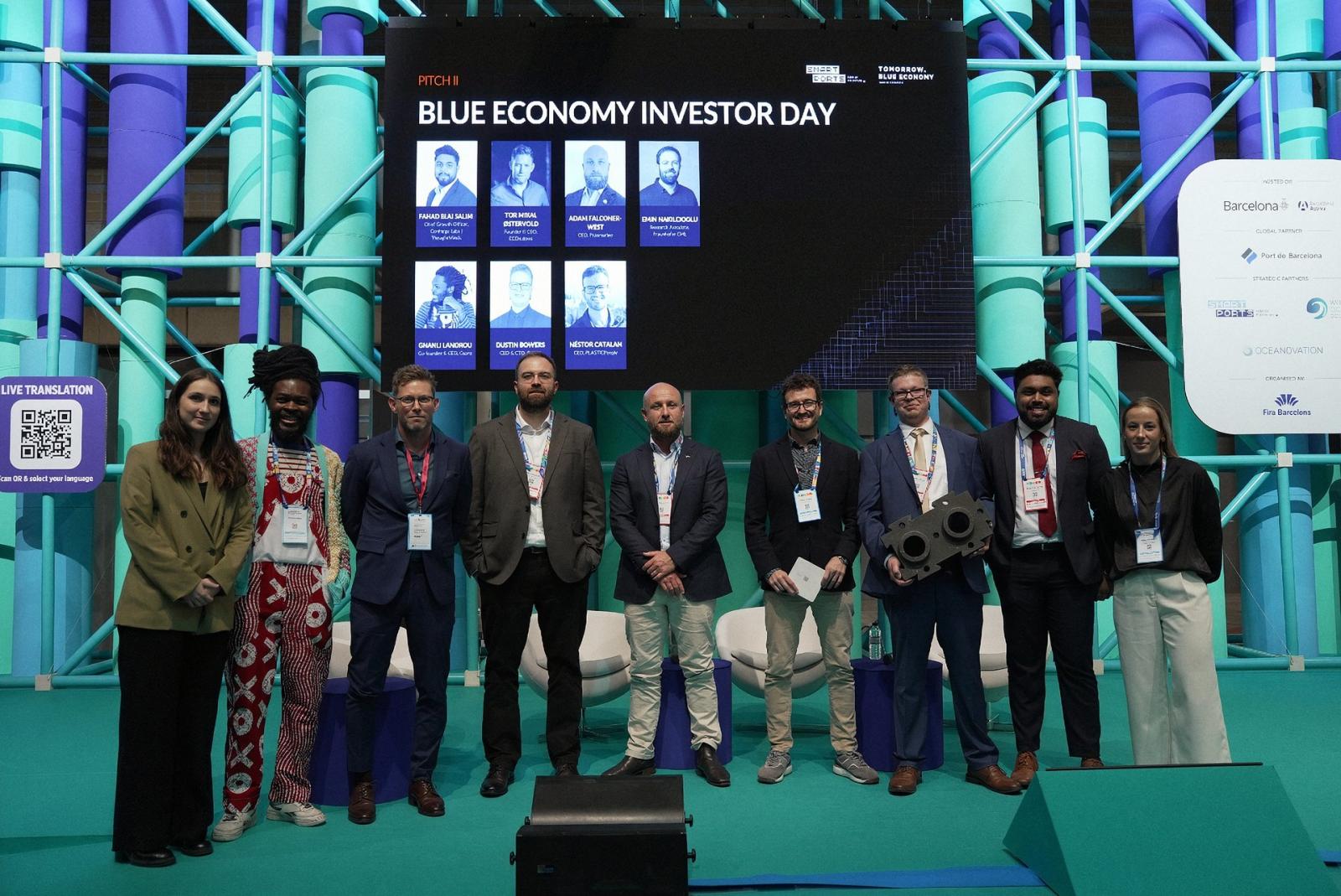
The World Ocean Council also organised the Sustainable Ocean Summit, focused on private industry commitments on underwater noise, invasive species and shared use of marine space. And at the Ocean Innovation Hub, run by Oceanovation, more than 30 startups showed their solutions to maritime corporates.
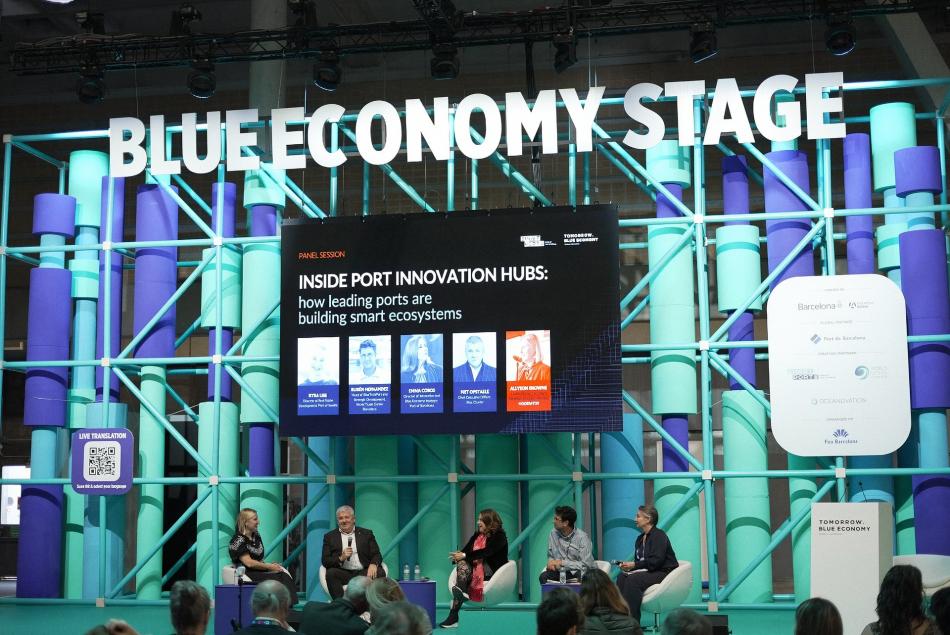
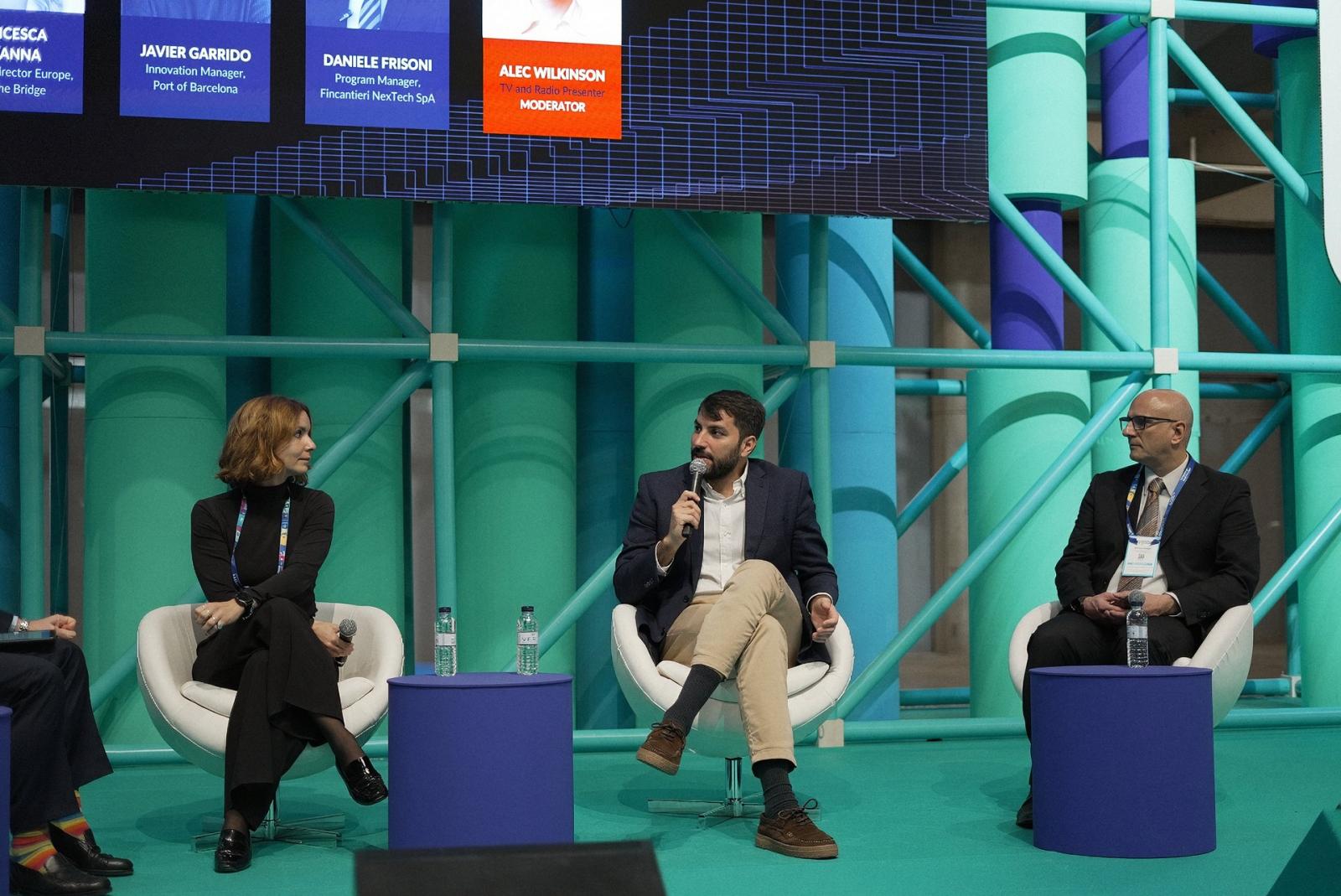
On the main stage, Emma Cobos, director of Innovation and Blue Economy Strategy at the Port of Barcelona, and Rubén Hernández, head of BlueTechPort at World Trade Center Barcelona, shared a panel with Piet Opstaele of Blue Cluster and Kyra Lise of the Port of Seattle on how ports build their innovation ecosystems. They explained how BlueTechPort acts as a physical and digital connector between startups, maritime corporates, research centres and investors.

Talent had its own forum too. On 2 and 3 November, the Sant Pau Art Nouveau Site hosted the Blue Equal Congress, the first international congress on women and the blue economy, which aims to boost women’s presence and leadership in a sector where they are still a minority, especially in management and technical roles. It is a subject closely linked to the talent the blue economy will need in the coming years.
Science, cities and a strategy of its own
The week also had a scientific and urban dimension. A UN Ocean Decade workshop, Solution Blueprint: Ocean Economies, looked at how to turn knowledge about the ocean into concrete action plans for a sustainable, equitable and resilient blue economy by 2030. The discussions centred on how to move from publications to practical roadmaps, how to build a common language between business, finance, science and public policy, and how to measure social and environmental impact clearly.
It was in this setting that the Barcelona Manifesto was presented, a roadmap that frames coastal resilience as a public responsibility and, at the same time, as an investment opportunity. It is promoted by the Ocean Decade Collaborative Centre for a Sustainable Ocean Economy (DCC-SOE), hosted by the Barcelona Capital Nàutica Foundation with the support of Barcelona City Council, the Government of Catalonia and the Port of Barcelona. It is launched with the backing of 23 cities and 8 regions, including Dakar, Marseille, New York, Vancouver, Venice, the Jakarta metropolitan area, the state of Rio de Janeiro and the Azores, and it will remain open to new signatories until the UN Ocean Decade Conference, to be held in Rio de Janeiro in April 2027. This is not the first time cities and ports have joined forces in this field.
Barcelona City Council also devoted a congress session, organised by Barcelona Activa, to its Barcelona Blue Economy Strategy 2026-2030, presented in May. It foresees €150 million in public investment up to 2030, €56 million of it for BlueTechPort, and aims to strengthen the links between businesses, marine research and local talent.

The pieces are in place
Over the week, the diagnosis was broadly shared. There are ports willing to open up their operations, hubs that connect startups, corporates, research centres and investors, and programmes that crunch the numbers before running pilots. Now comes the hardest part: making those connections the rule rather than the exception.
The Port of Barcelona wants to play its part. With initiatives such as the Lighthouse programme and BlueTechPort, says Javier Garrido, the Port’s innovation manager, “we don’t just offer a testing ground; we build the operational bridge so that startups’ solutions become structural tools for logistics”. The first test will come with the six New Latitude studies and, above all, with the pilots that emerge from them in 2027.
Then we will see whether, this time, the story does not end with the photo.