Innovative cities, laboratory ports: why sandboxes will be a new competitive advantage

Javier Garrido is Innovation Manager at Port de Barcelona.
For years, urban innovation has been measured through indicators such as talent, mobility, technology, governance, sustainability and the ability to attract investment. Rankings such as the IESE Cities in Motion 2026 analyse precisely this combination of factors to assess which cities are best prepared to face the challenges of the 21st century. The 2026 edition studies 183 cities across 92 countries and ranks their performance in dimensions such as economy, human capital, social cohesion, governance, the environment, mobility and transport, urban planning, technology and international outreach.
But for port cities an increasingly strategic question arises: what happens when an innovative city also has a port capable of acting as a testing laboratory? The answer points to a new competitive frontier. Ports are no longer merely logistics infrastructure, but platforms where startups, companies, universities and public administrations can test solutions in real conditions, reduce risks and accelerate their time to market.
This trend is best understood in light of the IAPH World Ports Tracker 2026, produced by Theo Notteboom and Thanos Pallis. The report gathers responses from 116 IAPH members, which together handle more than 8.6 billion tonnes of maritime cargo and 372 million TEU, roughly 40% of global container traffic. Although the report itself warns that the sample tends to represent ports that are especially active in sustainability and innovation, it offers a highly valuable snapshot of the sector's global transformations.

From testbed to sandbox: experimenting to scale
The terms sandbox, living lab and testbed are often used interchangeably, although they don't mean exactly the same thing. A testbed makes it possible to validate a technology in a controlled environment; a living lab brings in real users and co-creation processes; and a regulatory sandbox adds a supervised framework that allows experimentation with a degree of regulatory flexibility, generating evidence-based regulatory learning.
Barcelona has embraced this logic in its Ordinance on Experimentation Spaces, approved in 2026, which regulates physical, digital or hybrid environments for developing innovative trials, including sandboxes, living labs and testbeds. The ordinance provides for mechanisms of authorisation, supervision, evaluation, knowledge transfer and regulatory improvement based on the results obtained.
The difference is key. A pilot can demonstrate that a technology works. A sandbox makes it possible to understand whether that technology can be deployed safely, profitably, in a way that is regulable and scalable. And that difference is precisely what turns these environments into tools for economic return, not just technological or social impact.
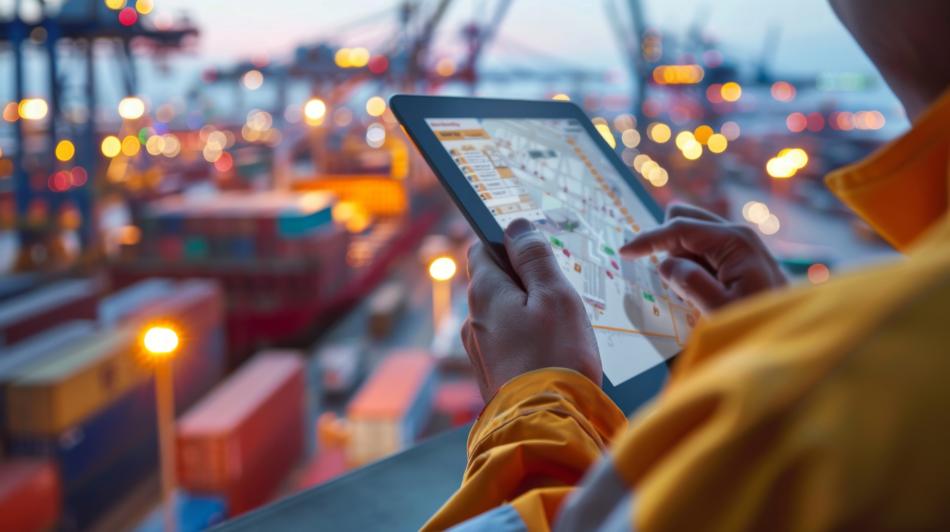
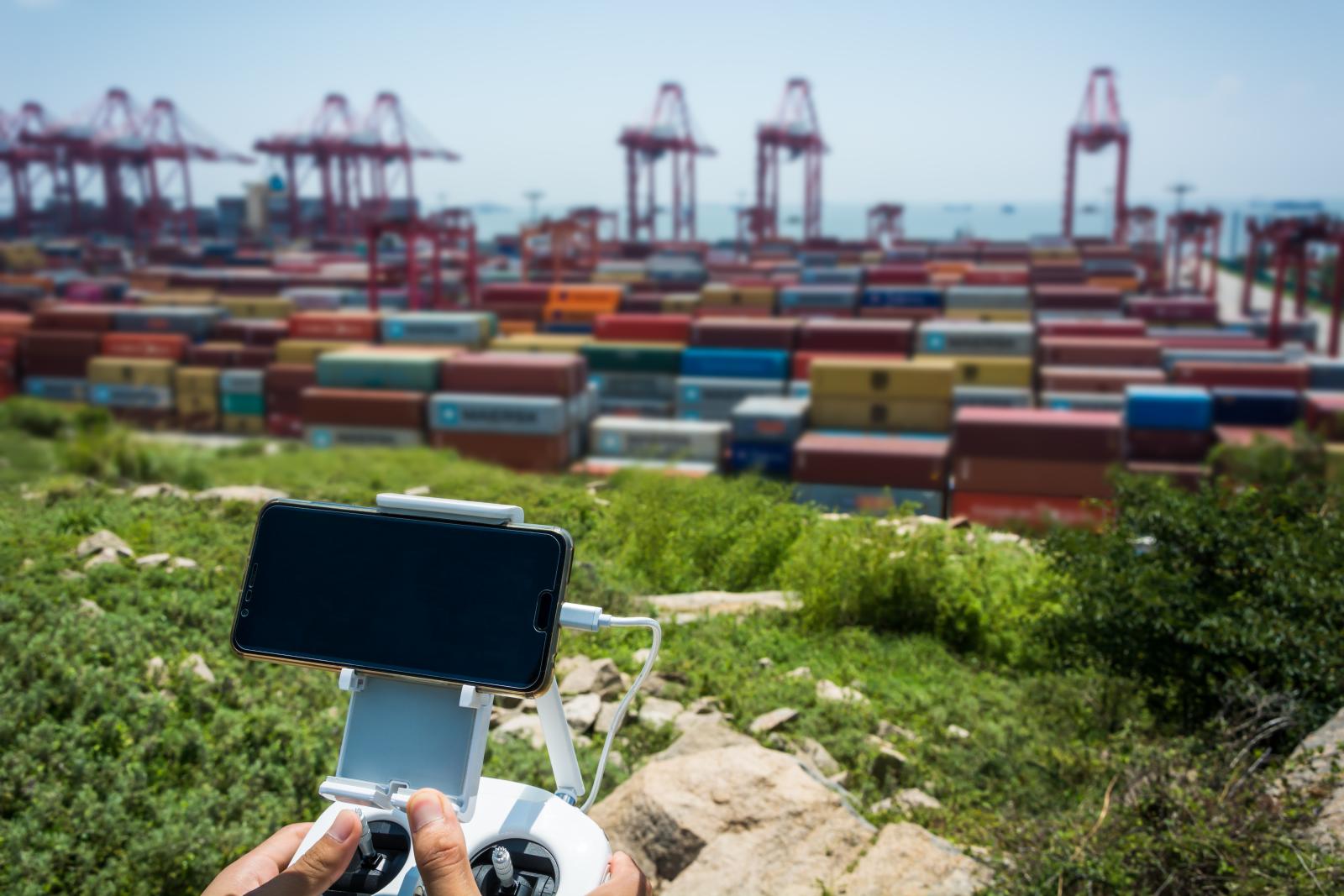
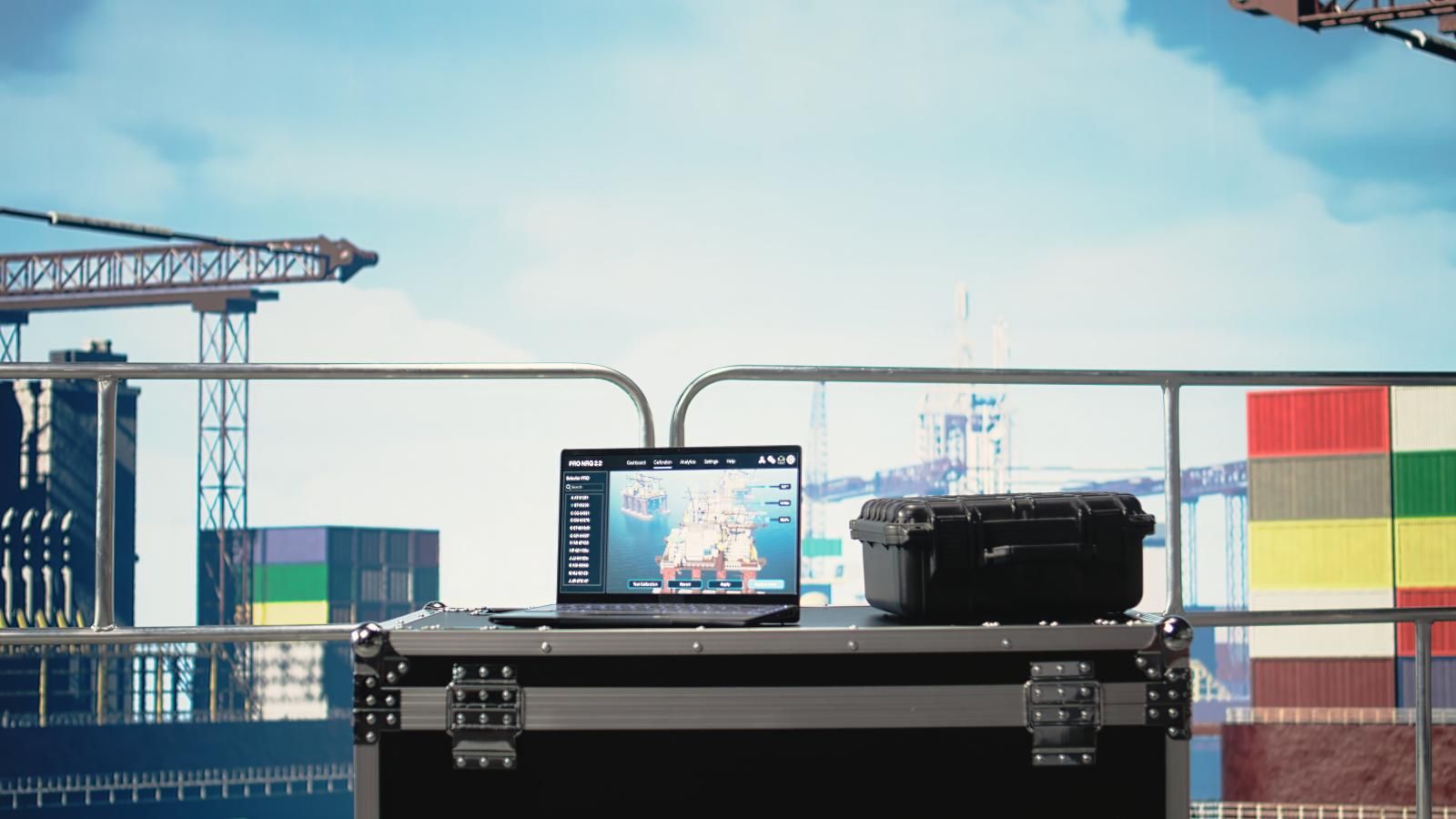
The port context reinforces this need. According to the IAPH World Ports Tracker 2026, ports are incorporating technologies that require increasingly sophisticated testing environments: 51% of the ports surveyed use drones, 47% have adopted IoT solutions, 42% apply artificial intelligence, 37% have implemented 5G and almost a quarter already work with digital twins.
These technologies don't just digitise existing processes; they create the conditions to simulate scenarios, automate decisions, anticipate risks and test new operating models before scaling them up. At the same time, the report shows that this digitalisation increases exposure to risk.
Cybersecurity emerges as the main risk perceived by ports: 61% consider cyberattacks a high risk and, combining high and moderate risks, the figure reaches 92%. In this context, sandboxes make it possible to experiment with connected, automated or data-based technologies under controlled conditions, reducing operational, regulatory and reputational exposure.

The smart cities that are also laboratory ports
Cross-referencing the IESE Cities in Motion 2026 ranking with the existence of ports or maritime ecosystems equipped with sandboxes, living labs, testbeds or similar environments reveals a particularly interesting group of port cities. Not all of the smartest cities have a port experimentation strategy, but some are turning that intersection into a competitive advantage.
Smart cities that are also laboratory ports
Cross-referencing the IESE Cities in Motion 2026 ranking with the existence of port experimentation environments (sandboxes, living labs and testbeds)
| IESE ranking 2026 | City | Associated port or ecosystem | Experimentation environment |
|---|---|---|---|
| 1 | London | Thames Freeport, London Gateway, Port of Tilbury | Connectivity Lab with AI, 5G, smart infrastructure and trials in real port environments. |
| 3 | Paris | HAROPA PORT and the Seine corridor | 5G Lab, Trafis Lab, drones and river logistics trials. |
| 5 | Tokyo | Tokyo Bay and the Japanese maritime ecosystem | MEGURI2040 and DFFAS, with autonomous navigation demonstrations. |
| 6 | Singapore | MPA and PSA Singapore | MPA Living Lab and PSA Living Lab. |
| 8 | Copenhagen | Copenhagen Malmö Port and the Nordic maritime ecosystem | BluePortLab and living labs for sustainable ports. |
| 11 | Oslo | Port of Oslo and the Oslofjord | Oslofjord Critical Maritime Infrastructure Protection Test Bed and zero-emissions port. |
| 17 | Hamburg | Port of Hamburg | homePORT Reallabor. |
| 24 | Barcelona | BlueTechPort, BCN Port Innovation | Municipal experimentation ordinance, BlueTechPort and port sandbox. |
| 25 | Dubai | DP World and Jebel Ali | Sandbox Dubai and DP World's port innovation strategy. |
| 26 | Hong Kong | Hong Kong Port | Port Community System and Low-Altitude Economy Regulatory Sandbox. |
| 27 | Rotterdam | Port of Rotterdam | Field-testing, drones, AI, PortXL and RDM Rotterdam. |
| 35 | Shanghai | Shanghai Port / SIPG | Smart port, AI, automation and intelligent terminal operation systems. |
| 43 | Los Angeles | Port of Los Angeles / AltaSea | AltaSea, blue economy hub. |
Accessible description of the table
The table lists 13 port cities, ordered by their position in the IESE Cities in Motion 2026 ranking, with each city's associated port or ecosystem and port experimentation environment:
- London (1): Connectivity Lab with AI, 5G, smart infrastructure and trials in real port environments.
- Paris (3): 5G Lab, Trafis Lab, drones and river logistics trials.
- Tokyo (5): MEGURI2040 and DFFAS, with autonomous navigation demonstrations.
- Singapore (6): MPA Living Lab and PSA Living Lab.
- Copenhagen (8): BluePortLab and living labs for sustainable ports.
- Oslo (11): Oslofjord Critical Maritime Infrastructure Protection Test Bed and zero-emissions port.
- Hamburg (17): homePORT Reallabor.
- Barcelona (24): Municipal experimentation ordinance, BlueTechPort and port sandbox.
- Dubai (25): Sandbox Dubai and DP World's port innovation strategy.
- Hong Kong (26): Port Community System and Low-Altitude Economy Regulatory Sandbox.
- Rotterdam (27): Field-testing, drones, AI, PortXL and RDM Rotterdam.
- Shanghai (35): Smart port, AI, automation and intelligent terminal operation systems.
- Los Angeles (43): AltaSea, blue economy hub.
The reading is clear: urban innovation and port innovation don't always coincide. Some cities that rank very highly in global indices are major economic or technological hubs but show no such clear evidence of a formalised laboratory port. By contrast, Singapore, London, Paris, Hamburg, Rotterdam, Barcelona and Los Angeles are indeed building spaces where innovation can be tested, measured and scaled in real port environments.
The IAPH World Ports Tracker 2026 reinforces this idea by showing that port innovation is beginning to become institutionalised, albeit still unevenly. Some 32% of the ports surveyed already have a dedicated innovation department, 15% have an innovation centre or hub, 8% have a Chief Innovation Officer and 5% use corporate venture capital instruments.
At the same time, 30% report that they still lack specific structures to promote innovation. This gap indicates that the next competitive advantage will not depend solely on adopting technologies, but on creating structures capable of turning them into operational, economic and strategic value.

Innovation with returns: the economic value of experimenting
The economic argument is central. Sandboxes and living labs should not be understood solely as impact policies or as instruments to energise startups. They are also return-on-investment infrastructure. They reduce uncertainty, shorten validation cycles, facilitate private investment, improve productivity and allow public administrations to make regulatory decisions based on real evidence.
The scale of the market explains why this issue is strategic. The OECD estimated that the ocean economy generated 1.5 trillion dollars in 2010 and could exceed 3 trillion dollars by 2030, with around 31 million associated direct jobs. In Europe, the EU Blue Economy Report 2025 puts the blue economy at €890 billion in turnover, €250.7 billion in gross value added and 4.82 million jobs in 2022.

Conclusion: the new competitive advantage will be learning and monetising faster
The world's smartest cities no longer compete solely to attract talent, investment or visitors. They also compete to offer environments where the solutions of the future can be tested sooner, better and more safely. In port cities, that natural environment is the port.
The port of the future will not be merely an infrastructure for moving goods. It will be an infrastructure for learning, reducing risk and generating returns. The cases of Singapore, London, Paris, Hamburg, Rotterdam, Barcelona and Los Angeles show that the new port competitiveness will be built at the intersection of urban innovation, logistics assets, flexible regulation and experimentation in real conditions.
IAPH's data reinforce this conclusion: ports are already adopting drones, IoT, artificial intelligence, 5G and digital twins; they are investing in OPS, solar and wind energy; and they are starting to create departments, hubs and specific mechanisms to promote innovation. But they also operate in an environment of growing risks, especially cybersecurity, climate pressure, infrastructure congestion and the energy transition.
Over the next decade, ports will not only compete to be more efficient. They will compete to be better places to experiment, attract investment and turn innovation into growth. And the cities that manage to connect urban intelligence, port infrastructure and regulatory sandboxes will be better prepared to transform pilot tests into real economic growth.