The Arctic on the global logistics chessboard: a new era for shipping routes?

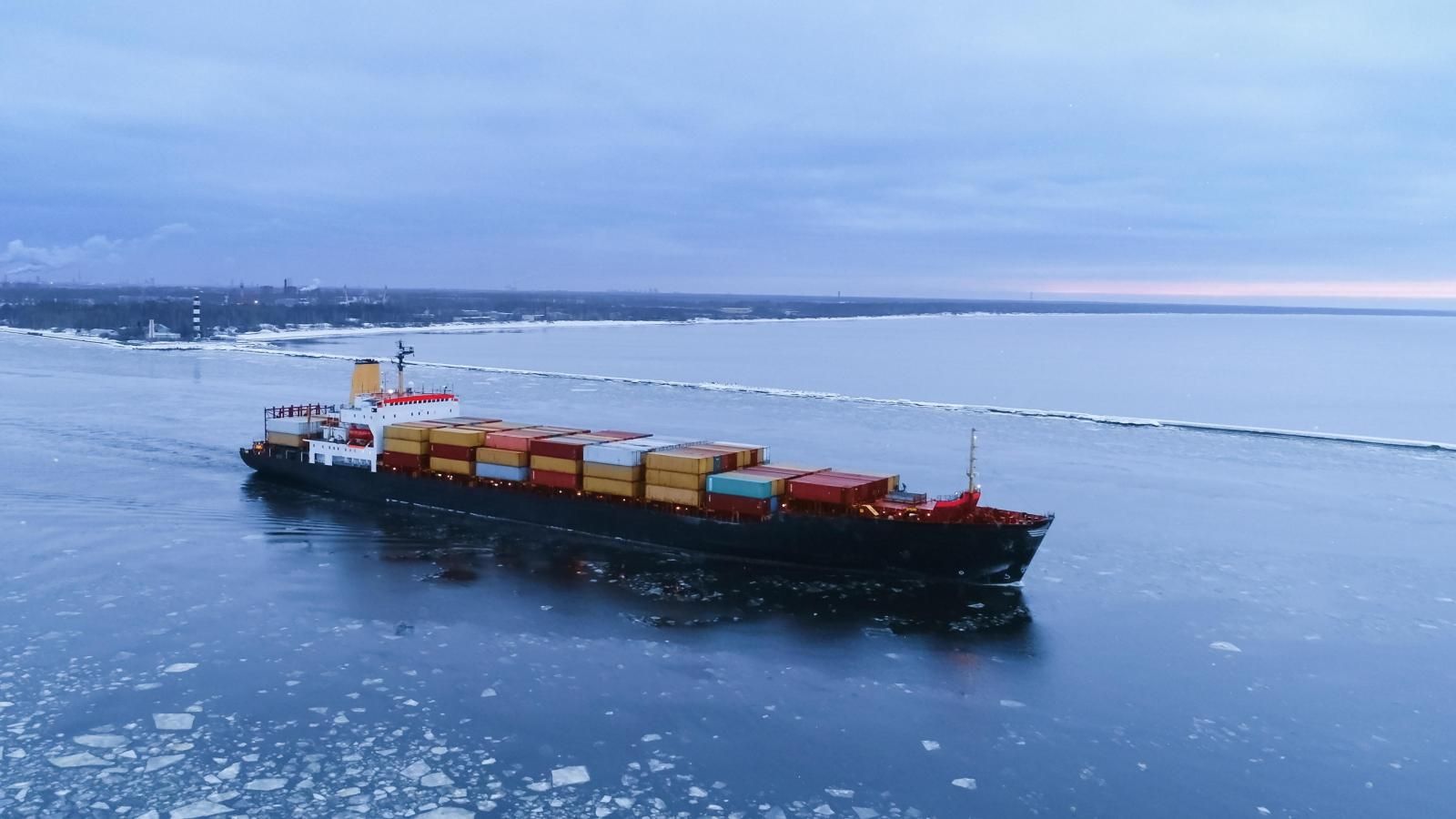
The chessboard of international maritime trade is undergoing tectonic shifts. In the summer of 2026 we have witnessed milestones that barely a decade ago looked like science fiction: the Chinese carrier Sea Legend has launched a seasonal programme of eight weekly container sailings linking the port of Ningbo with Felixstowe, in the United Kingdom, in around twenty days via the Arctic.
In parallel, South Korea has joined the polar race by dispatching the container ship PanStar Acro, which sailed from Busan on 22 August bound for Felixstowe, Rotterdam, Hamburg and Gdansk on a voyage backed by its Ministry of Oceans and Fisheries.
Understanding the Northern Sea Route (NSR) is not merely a geographical curiosity but a strategic necessity if we are to anticipate the reconfiguration of global supply chains. What follows are the keys to that transformation.

History of the Arctic route: from the explorers' dream to commercial reality
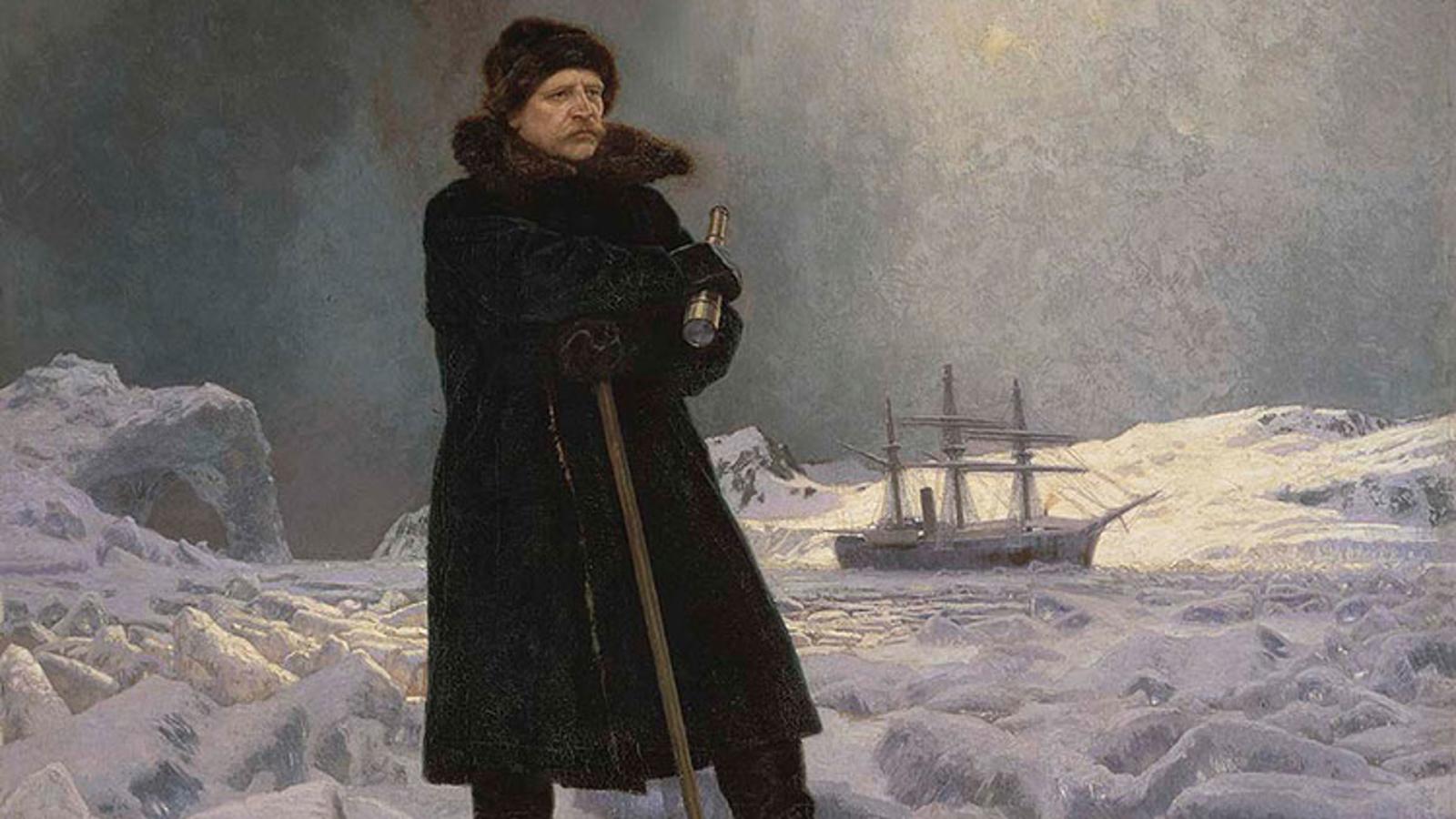
For centuries, the search for the Northeast Passage (along the Siberian coast) and the Northwest Passage (through the Canadian archipelago) obsessed powers and explorers looking for a shortcut between the Atlantic and the Pacific.
Historic milestones: the explorer Adolf Erik Nordenskiöld successfully completed the first crossing of the Northeast Passage between 1878 and 1879. Years later, the Norwegian Roald Amundsen conquered the Northwest Passage (1903-1906).
The Soviet period: during the Cold War, the Northern Sea Route saw intensive but closed use, limited to the internal supply of Siberia and to resource extraction under the custody of state icebreakers.
The 2018 precedent: the first commercial trial by a major Western carrier was Maersk's, with the Venta Maersk, which crossed the NSR in the summer of 2018 loaded with reefer containers. The Danish company called the voyage a one-off experiment and ruled out exploiting the route, but the transit proved the operation was technically feasible and set the direct precedent for what Sea Legend and PanStar are doing today.
Modern commercial opening: what once demanded military support and uncertain crossings lasting several months has become a commercial corridor that exploits the progressive retreat of Arctic sea ice.

Technological innovation: how do you navigate the top of the world?
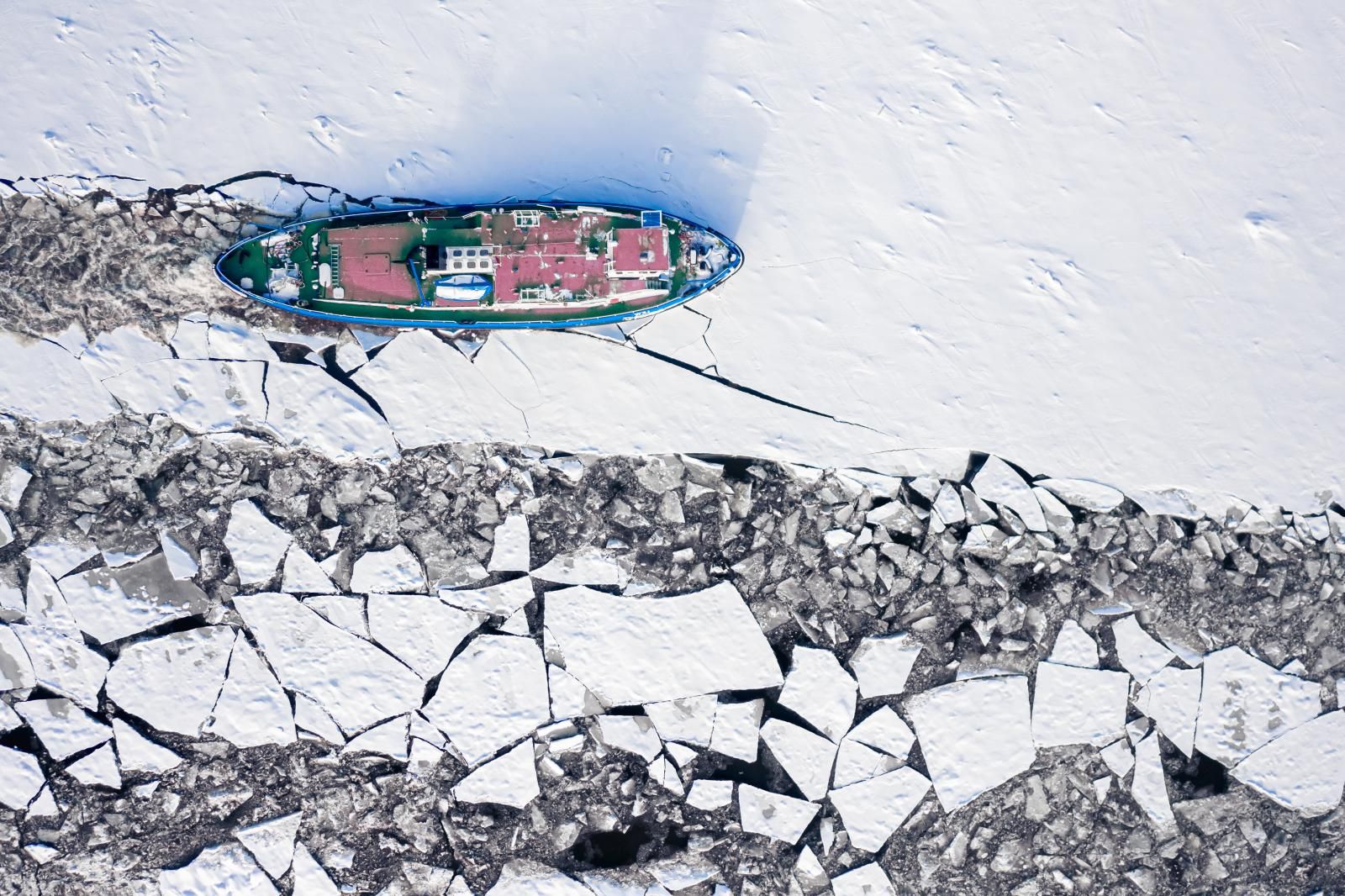
Operating commercially in polar latitudes requires a disruptive leap in naval engineering and in digital technology applied to extreme environments.
Reinforced hulls and ice classes: two classification systems coexist and should not be confused. The Polar Class notations (PC1 to PC7) are the standard of the International Association of Classification Societies (IACS), while the Arc classes (Arc4 to Arc9) belong to the Russian Maritime Register; an Arc7 vessel is roughly equivalent to a PC3. Cargo ships in these higher categories incorporate special steel structures capable of breaking ice of moderate thickness without requiring continuous assistance.
It is worth qualifying, however, that the ships opening the container corridor do not belong to that elite. The Dubai Tower, lead ship of the Sea Legend service, is a container vessel of just 1,732 TEU with a low ice class, and much of this season's transit activity depends on escort by Russian nuclear icebreakers. Technological autonomy in the Arctic remains, today, more the exception than the rule.Azimuth propulsion: steerable propulsion systems, popularised by ABB's Azipod brand, allow the vessel to rotate the propeller through 360 degrees. This enables the so-called double acting principle: sailing astern to break ice with the propellers' own wash, a technique that radically improves the ability to work free of compressed ice.
The nuclear icebreaker fleet: Russia holds an active monopoly with eight large nuclear-powered icebreakers, deployed simultaneously for the first time this summer. Their renewal, however, is advancing more slowly than planned: each Project 22220 unit takes five to six years to build, so only three additions are expected before 2030 (Chukotka, Leningradand and Stalingrad), with delays documented as a result of sanctions and supply difficulties at the shipyards. China, for its part, is building its first nuclear icebreaker.
Environmental fuel requirements: given the extremely high ecological risk, the International Maritime Organization has banned the use and carriage of heavy fuel oil in Arctic waters since 1 July 2024. The measure, however, coexists with waivers and exemptions for ships flying the flag of the Arctic coastal states which do not expire until July 2029, a margin that considerably reduces its real reach on a route that runs entirely through Russian waters.
Digital twins and satellites: risk management relies on AI predictive models that process satellite imagery in real time, plotting dynamic routes that avoid ice drift currents.

Climate change as a catalyst, and how the data has evolved
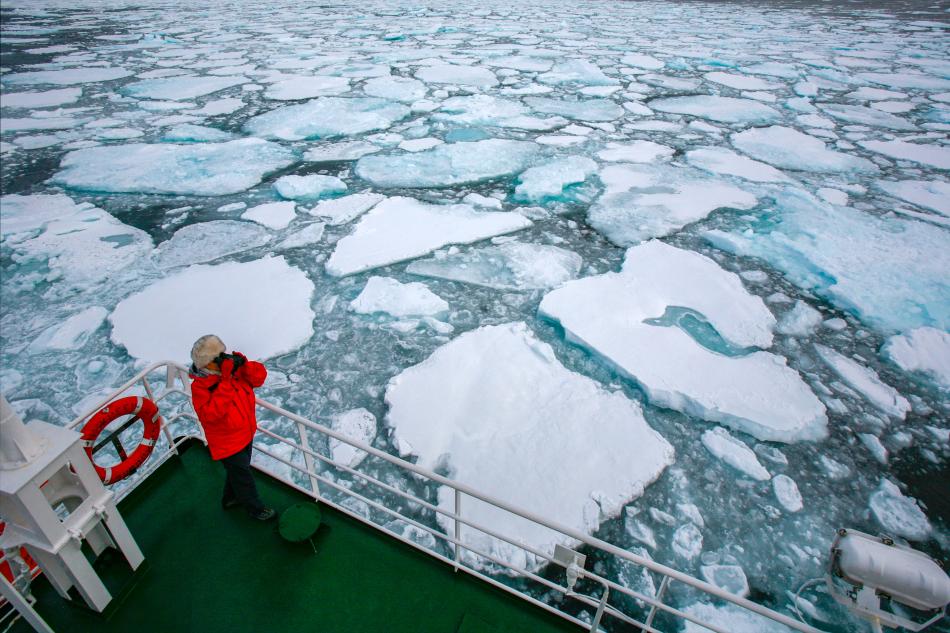
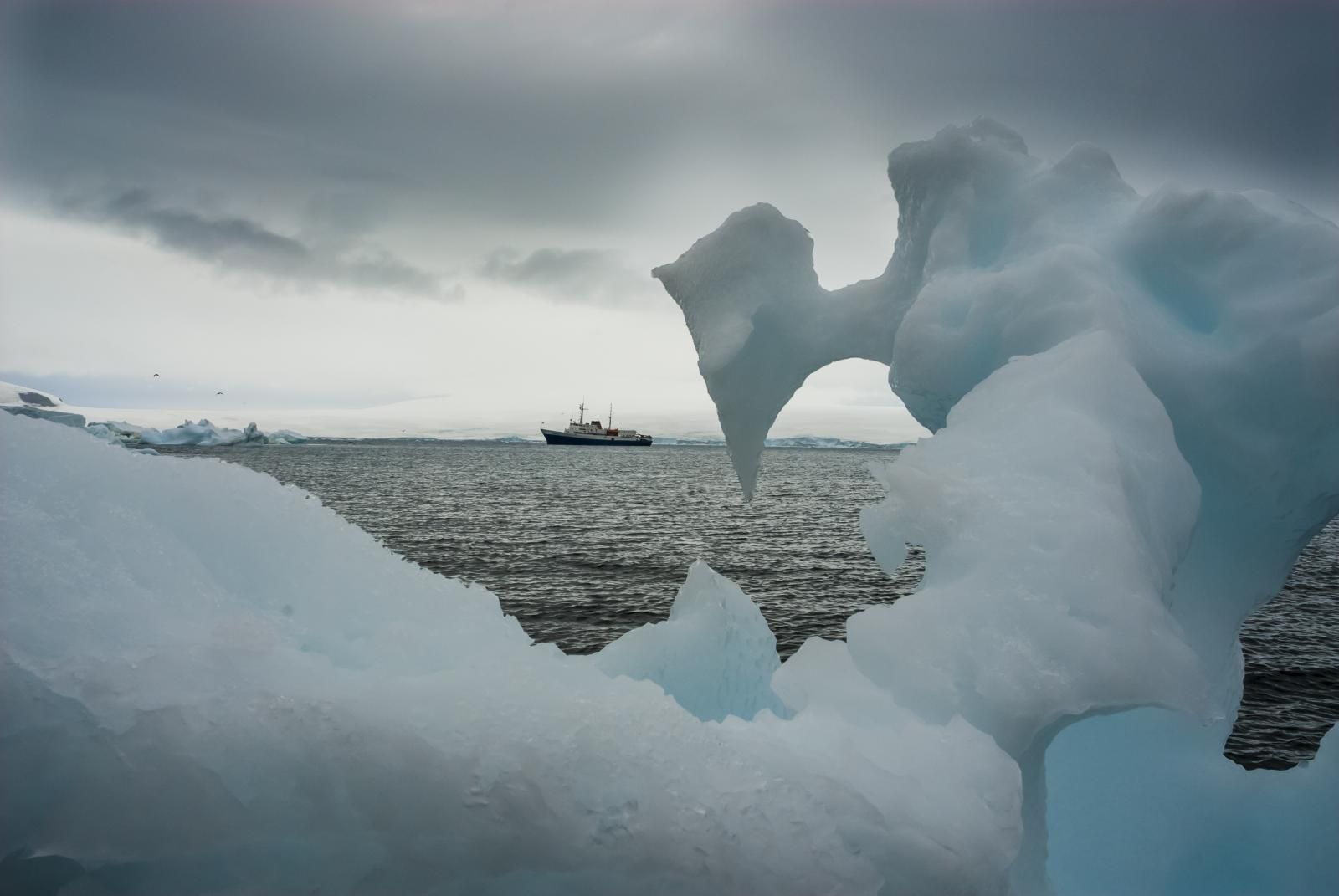
The viability of the Arctic route is the clearest symptom of an accelerating climate crisis. The Arctic is warming up to four times faster than the planetary average. During the summer window, the polar ice cap shrinks to a third of its winter maximum.
Rate of ice loss: according to satellite data from the National Snow and Ice Data Center, the summer minimum of Arctic sea ice is declining at 12.2% per decade against the 1981-2010 average. Since 1980, the retreat of the ice has freed a marine area of an order of magnitude comparable to the surface of the Caribbean Sea.
Operational saving: sailing north cuts the distance between East Asia and northern Europe almost in half, some 13,000 km against more than 20,000 km on the Suez route, shortening transit time to around twenty days. Operators on the corridor put the reduction in carbon footprint per voyage at up to 50%, though this is an industry estimate that does not capture two relevant factors: the fuel burned by the icebreaker escort and, above all, the effect of black carbon. Soot deposited on ice reduces its reflectivity and exerts a radiative forcing far greater than the same emissions released in open water, so the net climate balance of the route remains a matter of scientific debate.
Evolution of the Northern Sea Route (NSR)
| Indicator | 2000 | 2010 | 2020 | 2026 |
| Navigable window with assistance | ~30 days | ~45 days | ~75 days | ~90 days (Jul-Nov) |
| Asia-northern Europe transit (southern route) | 35-40 days (Suez) | 35-40 days (Suez) | ~35 days (Suez) | ~50 days (Cape of Good Hope) |
| Asia-northern Europe transit (Arctic route) | — | — | ~30 days (trial) | 20-21 days |
| Commercial activity on the NSR | Occasional transits | Russian cabotage and resources | Pilot trials (Venta Maersk, 2018) | Seasonal weekly-service programmes |
Compiled by PierNext from NSIDC and Centre for High North Logistics (CHNL) data and operator announcements. Navigable-window figures are indicative estimates and depend on the vessel's ice class.

Geopolitical analysis: sanctions, bottlenecks and the Asian breakthrough
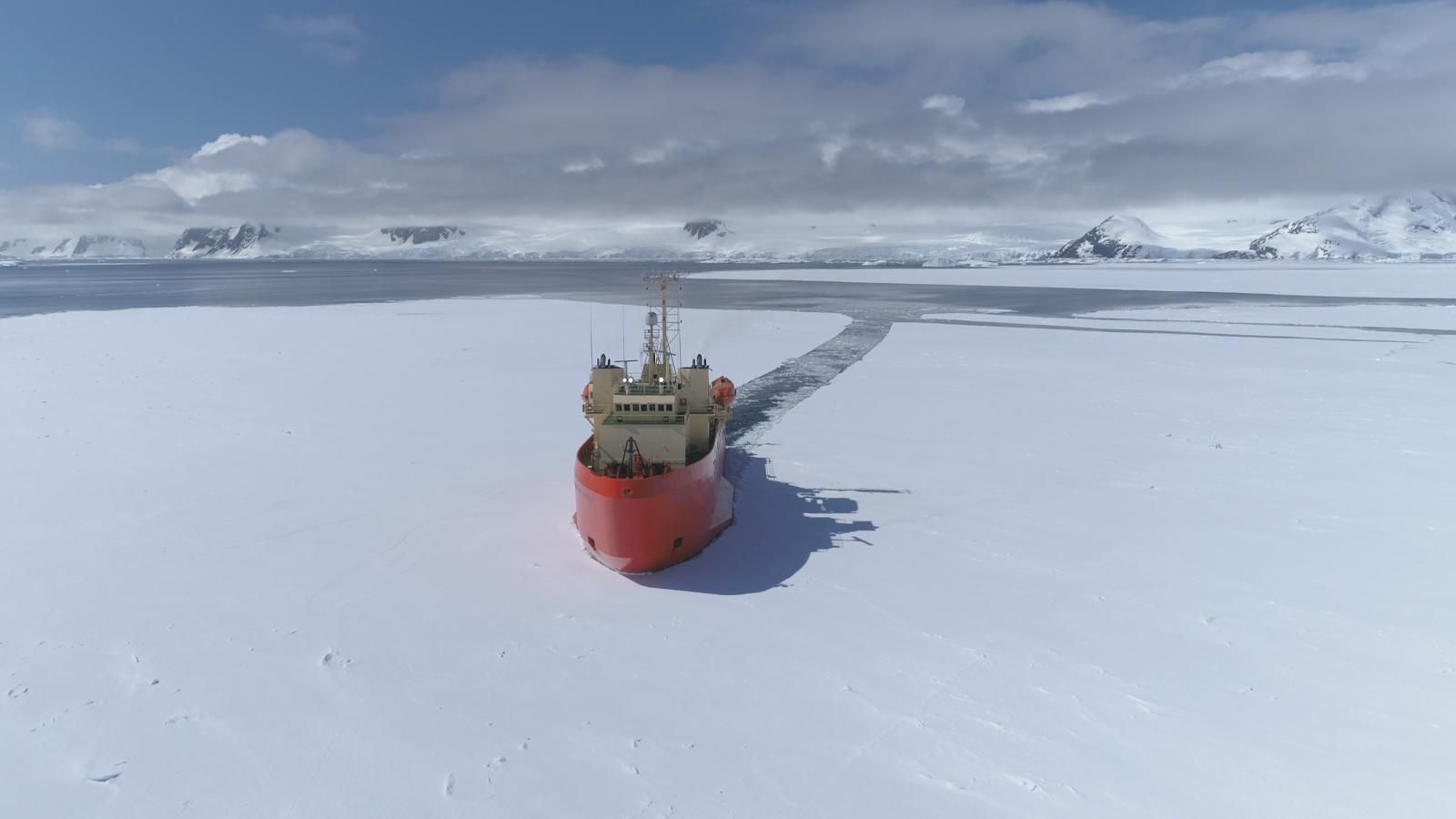
The rise of the Arctic route is a geopolitical chessboard of the first order, shaped by instability along the traditional passages.
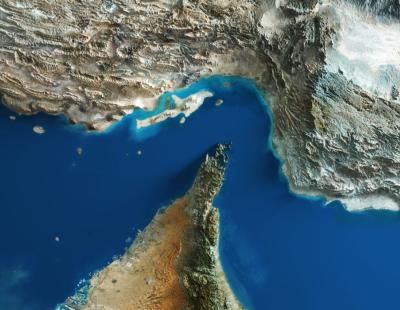
An alternative to the bottlenecks: the security crises in the Red Sea and the Strait of Hormuz, and the latent risk in Malacca, have forced Asian economies to look for alternative routes so as not to remain exposed to blockades.
Russian control: the NSR runs through waters under Russian jurisdiction. The state atomic corporation Rosatom, infrastructure operator for the route, controls transit permits, escort fees and the rescue infrastructure. It is telling that the Sea Legend service is designed not to call at any Russian port: Asian operators are willing to depend on the transit, but not on Russian inland logistics. Dependence on permits and on nuclear escort, by contrast, is unavoidable.
The gap between Europe and Asia
In the West, the major European and Taiwanese carriers (MSC, CMA CGM, Maersk, Hapag-Lloyd and Evergreen) have signed the Arctic Corporate Shipping Pledge, the voluntary commitment promoted by Ocean Conservancy not to use Arctic routes on environmental grounds. Added to that commitment are the economic sanctions on Russia and, above all, a less visible but more decisive day-to-day obstacle: insurance cover. Western protection and indemnity (P&I) clubs face enormous difficulty insuring transits that depend on permits, fees and rescue services provided by a sanctioned Russian state entity. It is this combination of voluntary commitment, sanctions and insurance risk that in practice keeps European shipowners out of the corridor.
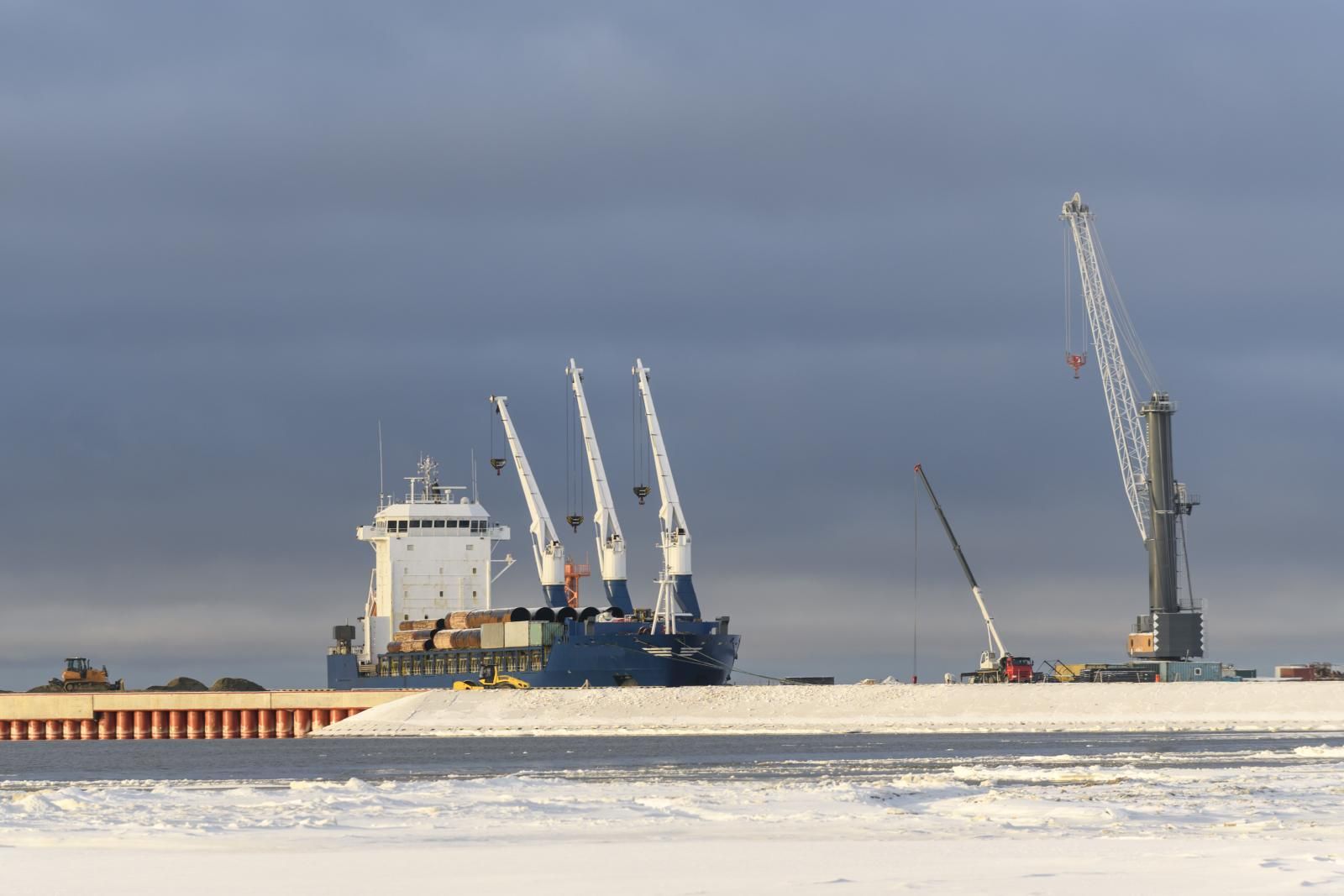
In Asia, China and South Korea have chosen to lead the corridor. While China connects its manufacturing hubs (electronics, batteries and e-commerce) through the carrier Sea Legend, South Korea has turned the PanStar Acro trial into a state project aimed at consolidating an Arctic corridor by 2030 and strengthening Busan's role as a global hub.

Strategy and innovation at global ports: the role of the Mediterranean
The summer shift of cargo flows to the north is forcing port authorities worldwide to adapt their strategic plans.
Asia (origin nodes): ports such as Busan, Ningbo, Shanghai and Qingdao are configuring consolidation terminals specifically for ice-class vessels.
Northern Europe (destination nodes): Felixstowe, Rotterdam and Hamburg are positioning themselves as the direct receiving hubs for distributing cargo across central and northern Europe.
The Mediterranean: for southern European ports, like Barcelona or Algeciras, the opening of the Arctic is not an immediate threat in volume terms, but it is a variable already built systematically into the trend analysis that guides long-term innovation strategy.
The impact plays out on three fronts:
- The first is the division of hinterland. Asian cargo that enters through the Mediterranean today and moves up to central Europe by road or rail competes directly with cargo landed in the Hamburg-Le Havre range. If for three months a year part of that cargo arrives directly in the north, the balance between the two gateways comes under strain precisely in the highest-value segment: goods sensitive to transit time.
- The second is seasonality. The Arctic window does not represent a structural loss of traffic but a pattern of peaks and troughs. For berth planning, quay occupancy and rail capacity, a corridor that appears in July and disappears in November is a different management problem — and in some respects a more complex one — than a sustained loss of share.
- The third, and probably the most relevant in the short term, is the regulatory advantage. Precisely because voluntary moratoria, sanctions and insurance restrictions exclude European carriers from the Arctic corridor, the Mediterranean axis is consolidating as the default compliant route for all traffic that cannot or will not transit Russian waters. For a port such as Barcelona, whose strategy rests on service quality, intermodal connectivity and certifiable decarbonisation of the port call, that condition is not a defensive data point but a commercial argument. The strategic question is not how much cargo is diverted north, but how to capitalise on the fact that the polar shortcut remains, for half the industry, out of reach.

Future prospects for world maritime trade
In the short and medium term, the Arctic will function as a seasonal, complementary corridor, not as a substitute for the Suez Canal. The scale says everything: over the past year barely twenty container ships completed the NSR transit, and this season's most ambitious programme consists of eight sailings with vessels of under 2,000 TEU. Available draught, the brevity of the summer window and dependence on escort structurally limit its capacity.
Nor should the phenomenon be extrapolated to the other end of the Arctic. The Canadian Northwest Passage, despite offering a comparable shortcut, remains hampered by drifting multi-year ice, by the near-total absence of rescue infrastructure and by an unresolved jurisdictional dispute between Canada and the United States over whether its waters are internal or an international strait. The NSR is advancing because it has a single operator that charges for passage; the Northwest Passage has none.
The great challenge ahead will be regulatory and environmental. As traffic grows, pressure on fragile polar ecosystems will demand strict international frameworks set by the International Maritime Organization (IMO) to limit black carbon emissions and prevent ecological disasters that would be impossible to clean up in ice.
The Arctic has ceased to be an inaccessible frontier and become a logistics motorway under trial. From the standpoint of port innovation, following the pace of the melt closely is indispensable to designing tomorrow's supply chains.
References
- National Snow and Ice Data Center (NSIDC) / NASA: Arctic Sea Ice News and Analysis and Arctic Sea Ice Minimum Extent. Decadal rate of decline of the summer sea ice minimum (-12.2%, 1981-2010 baseline).
- Intergovernmental Panel on Climate Change (IPCC): Special Report on the Ocean and Cryosphere in a Changing Climate (SROCC).
- Protection of the Arctic Marine Environment (PAME / Arctic Council): Arctic Shipping Status Reports (ASSR).
- Centre for High North Logistics (CHNL): records of commercial transits, navigable days and cargo volumes on the Northern Sea Route.
- International Maritime Organization (IMO): amendments to MARPOL Annex I on the ban on heavy fuel oil in Arctic waters, in force since 1 July 2024.
- Ocean Conservancy: Arctic Corporate Shipping Pledge, list of signatory companies.
- The Loadstar and High North News (August 2026): coverage of Sea Legend's China-Europe service and of the PanStar Acro schedule.
- Ministry of Oceans and Fisheries of the Republic of Korea (August 2026): statement on the PanStar Acro's departure from Busan New Port.