Can Europe's new rail governance finally deliver the modal shift?

The missing modal shift
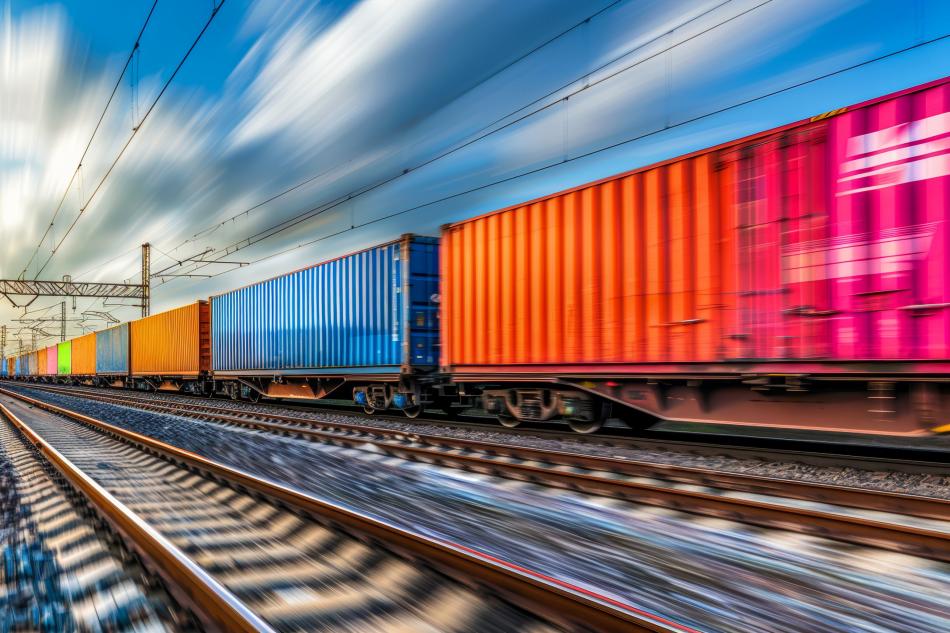
Almost every tonne of freight in Europe has to travel inland at some point, and most of the time it does so on a truck. Despite ambitious decarbonisation targets, dedicated funding and new corridors, the modal shift has stubbornly refused to happen, and rail freight has struggled to strengthen its position in the inland freight market. According to Eurostat, between 2010 and 2024 road's share of EU inland freight rose from 75% to 78%, while rail slipped from 18% to 17% and inland waterways from 7% to 5%. This challenge sits at the core of the Smart and Sustainable Mobility Strategy and the European Green Deal, yet current trends are far from the Strategy's targets of increasing rail freight by 50% by 2030 and doubling it by 2050. Two recent EU regulations, one on the TEN-T network and one on rail capacity management, take a different approach: instead of focusing only on building more infrastructure, they try to fix how the railway is governed.
Road keeps gaining ground in EU inland freight
Modal split of inland freight transport in the EU-27, 2010–2024 (% of the total)
Road
74.6% to 78.2%
+3.6 percentage points
Rail
18.0% to 16.6%
−1.4 percentage points
Inland waterways
7.4% to 5.2%
−2.2 percentage points
Share of each mode in inland freight transport, by year
Chart description and data
Stacked column chart showing the share of each mode in EU-27 inland freight transport between 2010 and 2024. Road rises from 74.6% to 78.2%, while rail falls from 18.0% to 16.6% and inland waterways from 7.4% to 5.2%. Rail’s highest share in the period was 19.2%, in 2011.
| Year | Road | Rail | Inland waterways |
|---|---|---|---|
| 2010 | 74.6% | 18.0% | 7.4% |
| 2011 | 74.0% | 19.2% | 6.8% |
| 2012 | 73.5% | 19.1% | 7.4% |
| 2013 | 73.9% | 18.7% | 7.4% |
| 2014 | 73.9% | 18.8% | 7.2% |
| 2015 | 74.1% | 18.9% | 6.9% |
| 2016 | 74.2% | 19.1% | 6.7% |
| 2017 | 75.0% | 18.5% | 6.4% |
| 2018 | 75.3% | 18.9% | 5.8% |
| 2019 | 76.0% | 18.0% | 6.0% |
| 2020 | 77.1% | 17.1% | 5.8% |
| 2021 | 77.0% | 17.4% | 5.6% |
| 2022 | 77.4% | 17.5% | 5.1% |
| 2023 | 78.1% | 16.9% | 5.0% |
| 2024 | 78.2% | 16.6% | 5.2% |
Source: PierNext, based on Eurostat data (dataset tran_hv_frmod). Figures from 2012 onwards are Eurostat estimates.

Several factors help explain the limited progress achieved so far. In the case of rail freight, one of the main challenges is its lower reliability and resilience compared with road transport. While road freight benefits from a highly flexible and interconnected network, rail services often face operational and infrastructural constraints that can affect service quality and punctuality.
These challenges are particularly evident in cross-border transport. Although the European railway market has become increasingly integrated, infrastructure management remains largely organised at the national level. The need to coordinate operations across multiple infrastructure managers can create inefficiencies and bottlenecks, especially on international corridors.
In addition, planned maintenance works frequently require the temporary closure of railway lines, reducing network capacity and disrupting freight flows. The impact of these disruptions is often amplified by the limited availability of alternative routes, or by diversion options that result in significantly longer transit times and higher operating costs.
Over the last two years, the European Union has introduced two major regulatory initiatives aimed at improving the performance, coordination and reliability of the European rail network. This article examines these initiatives and discusses their potential contribution to strengthening the competitiveness of rail freight transport.
This debate is particularly relevant for ports. As gateways for international trade, ports generate substantial rail traffic and often act both as terminal operators and as managers of internal railway infrastructure.

The Rail Freight Corridor model
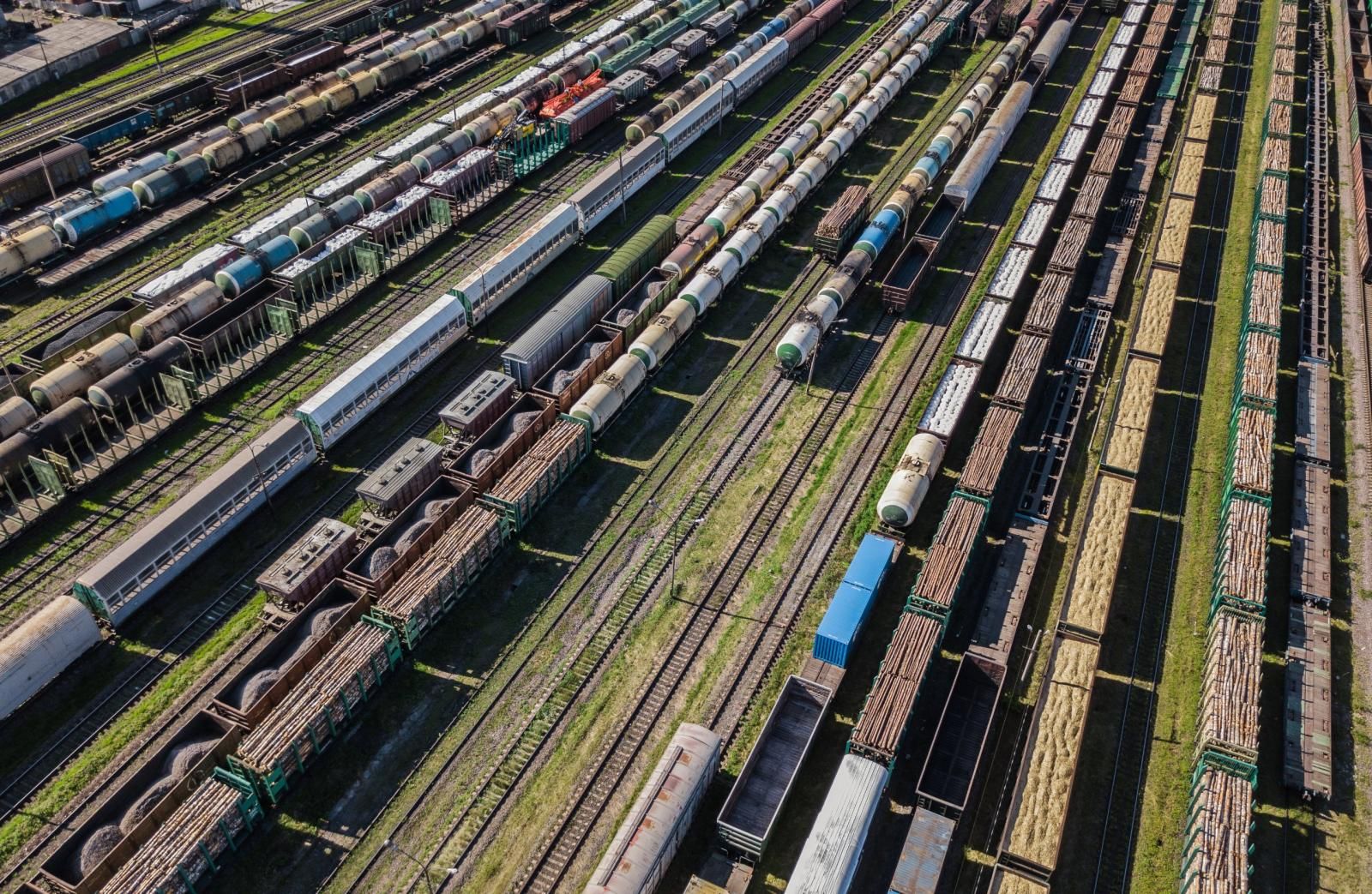
Adopted in 2010, Regulation (EU) 913/2010 aimed to address one of the structural weaknesses of European rail freight: the lack of coordination across national borders. Through the creation of Rail Freight Corridors, the regulation sought to improve cross-border cooperation, enhance service reliability, facilitate capacity allocation, and support infrastructure development on key freight routes. Its ambition was to create a more integrated and efficient European railway network, capable of competing more effectively with road transport and contributing to the EU's decarbonisation goals. Within the governance structure of the Rail Freight Corridors, the regulation introduced two stakeholder consultation bodies: the Terminal Advisory Group (TAG) and the Railway Undertaking Advisory Group (RAG). These groups provide recommendations and operational feedback to corridor management bodies on issues such as capacity allocation, traffic management, infrastructure development, and service quality, helping to align corridor planning and decision-making with the requirements of market stakeholders.
Even the best-connected network will fail to attract freight if capacity allocation, traffic management and disruption handling remain fragmented.
From freight corridors to transport corridors: TEN-T 2024
One of the most significant changes introduced by Regulation (EU) 2024/1679 is the integration of the former Rail Freight Corridors into the new European Transport Corridors. The Commission had concluded, in its evaluation of the corridor framework, that Regulation 913/2010 had not delivered the expected improvements in international rail freight performance or the anticipated modal shift from road to rail. As a result, the corridor concept was broadened from freight only to a multimodal approach within TEN-T.
While Regulation 913/2010 established the RAG and TAG as advisory bodies to represent railway undertakings and terminal operators, Regulation (EU) 2024/1679 significantly strengthens their role. Beyond providing operational feedback, these groups are now expected to contribute to corridor planning, infrastructure and investment priorities, capacity management, interoperability improvements, and performance monitoring, thereby giving stakeholders a more active role in the governance of the new European Transport Corridors.
Multimodal freight terminals were already part of the TEN-T network. What changes now is the level of ambition: the regulation requires better rail connections to ports and terminals, sets minimum standards for accessibility and capacity, and obliges Member States to assess terminal needs and prepare action plans. The objective is to create a more efficient and interconnected logistics network capable of facilitating a greater shift of freight from road to rail and other sustainable transport modes.
The nine European Transport Corridors
Revised TEN-T network: the corridors that replace the former Rail Freight Corridors
Corridors
- Atlantic
- North Sea – Rhine – Mediterranean
- North Sea – Baltic
- Scandinavian – Mediterranean
- Baltic Sea – Adriatic Sea
- Rhine – Danube
- Mediterranean
- Western Balkans – Eastern Mediterranean
- Baltic Sea – Black Sea – Aegean Sea
Select a corridor in the legend, or hover over a line, to highlight it on the map
Map description and data
Simplified schematic map of the nine European Transport Corridors of the revised TEN-T network, drawn as links between their main nodes. Barcelona and its port lie on the Mediterranean corridor. The list below, also available as a downloadable file, gives the main nodes of each corridor.
- Atlantic: Sines, Lisbon, Aveiro, Porto, Vigo, A Coruña, Valladolid, Gijón, Santander, Bilbao, Vitoria, Madrid, Cordoba, Seville, Huelva, Antequera, Algeciras, Zaragoza, Bordeaux, Toulouse, Tours, Paris, Nantes, Brest, Le Havre, Dijon, Metz, Strasbourg, Mannheim, Cork
- North Sea – Rhine – Mediterranean: Shannon-Foynes, Dublin, Cork, Le Havre, Zeebrugge, Amsterdam, Rotterdam, Utrecht, Cologne, Antwerp, Ghent, Lille, Calais, Brussels, Liège, Luxembourg, Metz, Strasbourg, Basel, Paris, Dijon, Lyon, Marseille, Frankfurt, Mannheim, Bern, Novara, Milan, Genoa
- North Sea – Baltic: Amsterdam, Utrecht, Rotterdam, Osnabrück, Antwerp, Liège, Cologne, Düsseldorf, Hannover, Bremerhaven, Bremen, Hamburg, Berlin, Magdeburg, Leipzig, Szczecin, Frankfurt (Oder), Poznań, Warsaw, Wrocław, Katowice, Łódź, Kraków, Lviv, Kyiv, Mariupol, Lublin, Białystok, Kaunas, Vilnius, Klaipėda, Riga, Ventspils, Tallinn, Helsinki, Tampere, Oulu, Luleå
- Scandinavian – Mediterranean: Narvik, Luleå, Oulu, Stockholm, Oslo, Örebro, Gothenburg, Malmö, Turku, Helsinki, Hamina-Kotka, Copenhagen, Hamburg, Aarhus, Bremen, Hannover, Rostock, Berlin, Frankfurt, Nuremberg, Leipzig, Munich, Innsbruck, Verona, Bologna, La Spezia, Livorno, Rome, Naples, Bari, Taranto, Gioia Tauro, Augusta, Palermo, Cagliari, Valletta
- Baltic Sea – Adriatic Sea: Tricity, Warsaw, Łódź, Katowice, Szczecin, Poznań, Wrocław, Ostrava, Brno, Vienna, Žilina, Bratislava, Graz, Klagenfurt, Udine, Venice, Trieste, Bologna, Ravenna, Ancona, Bari, Maribor, Ljubljana, Koper, Rijeka, Split
- Rhine – Danube: Strasbourg, Stuttgart, Munich, Salzburg, Wels/Linz, Frankfurt, Nuremberg, Regensburg, Vienna, Bratislava, Budapest, Pilsen, Prague, Rostock, Berlin, Dresden, Ostrava, Žilina, Košice, Lviv, Oradea, Arad, Timișoara, Brașov, Bucharest, Craiova, Constanța, Sulina, Belgrade
- Mediterranean: Algeciras, Antequera, Seville, Murcia, Cartagena, Madrid, Valencia, Zaragoza, Tarragona, Barcelona, Perpignan, Montpellier, Toulouse, Lyon, Marseille, Nice, Genoa, Palma, Turin, Novara, Milan, Verona, Venice, Trieste, Koper, Ljubljana, Zagreb, Rijeka, Budapest, Lviv
- Western Balkans – Eastern Mediterranean: Salzburg, Klagenfurt, Ljubljana, Wels/Linz, Graz, Maribor, Zagreb, Belgrade, Budapest, Sofia, Svilengrad, Podgorica, Sarajevo, Ploče, Pristina, Skopje, Tirana, Durrës, Bari, Thessaloniki, Igoumenitsa, Athens, Patras, Heraklion, Limassol, Nicosia, Larnaca
- Baltic Sea – Black Sea – Aegean Sea: Tallinn, Helsinki, Riga, Ventspils, Kaunas, Klaipėda, Vilnius, Białystok, Lublin, Tricity, Warsaw, Kraków, Košice, Lviv, Odesa, Bucharest, Chișinău, Oradea, Cluj, Sibiu, Brașov, Arad, Timișoara, Craiova, Sofia, Constanța, Burgas, Thessaloniki, Athens, Heraklion, Limassol
Source: PierNext, simplified schematic based on the European Commission map of the European Transport Corridors (Regulation (EU) 2024/1679, Annex III). Alignments in third countries are indicative.
While the TEN-T regulation focuses on infrastructure and corridor governance, infrastructure alone is not sufficient. Even the best-connected network will fail to attract freight if capacity allocation, traffic management and disruption handling remain fragmented. This is precisely the challenge addressed by the new Capacity Management regulation.
One rulebook for capacity: the 2026 regulation
Regulation (EU) 2026/1184 aims to improve the efficiency, reliability and coordination of the European rail network. Replacing the corridor-based approach established under Regulation 913/2010, the new framework introduces a more integrated model for managing railway capacity across Europe. It sets up a three-stage process covering strategic capacity planning, capacity allocation, and operational adaptation, allowing greater flexibility for freight transport while preserving long-term stability for rail services.
The regulation also strengthens European coordination through the European Network of Infrastructure Managers (ENIM), which develops the common European frameworks for railway capacity management. Participation is mandatory for managers of sections of the TEN-T core and extended core networks; other managers may take part in its deliberations or attend as non-voting observers.
Furthermore, the regulation establishes common procedures through three European frameworks:
- European Framework for Capacity Management;
- European Framework for the Coordination of Cross-Border Traffic Management, Disruption Management and Crisis Management;
- European Framework for Performance Review.
The regulation requires infrastructure managers, railway undertakings and other stakeholders to share reliable, up-to-date information on capacity, train movements and disruptions through interoperable digital tools. For a cross-border freight train, that means fewer surprises when something goes wrong.
Overall, the regulation marks a shift towards a more integrated and coordinated European railway capacity management model, with the first timetable developed under the new framework due to start in December 2030.

Stakeholder involvement and the role of ports
The new regulation recognises that improving rail capacity management is not only a matter of infrastructure managers and regulators. In developing the new European frameworks, which are to be implemented at national level by infrastructure managers, ENIM is expected to consider the views and contributions of stakeholders across the rail freight sector. Through the European Railway Platform (ERP), railway operators, terminal managers, logistics companies and other stakeholders will have a formal channel to contribute to the design and monitoring of the European capacity management system. Coordinated by Forum Train Europe (FTE), the platform is intended to bring market perspectives into strategic planning, operational coordination and performance monitoring, helping to ensure that the future railway network is developed around the needs of its users rather than solely around infrastructure constraints.
Here lies the main open question for terminals. Under Regulation 913/2010, the TAG and RAG gave terminals and railway undertakings a dedicated voice in each corridor, and the TEN-T regulation reinforces that role in the new European Transport Corridors. The Capacity Management regulation, however, provides for Regulation 913/2010 to be repealed after a transition period and creates the European Railway Platform, where railway undertakings, operators of service facilities and operators of multimodal terminals will be consulted together. It is a broader table, but also a more crowded one. Shippers, logistics providers, railway undertakings, terminal operators and ports rarely share the same priorities, and a single platform may struggle to give each of them an equal voice.
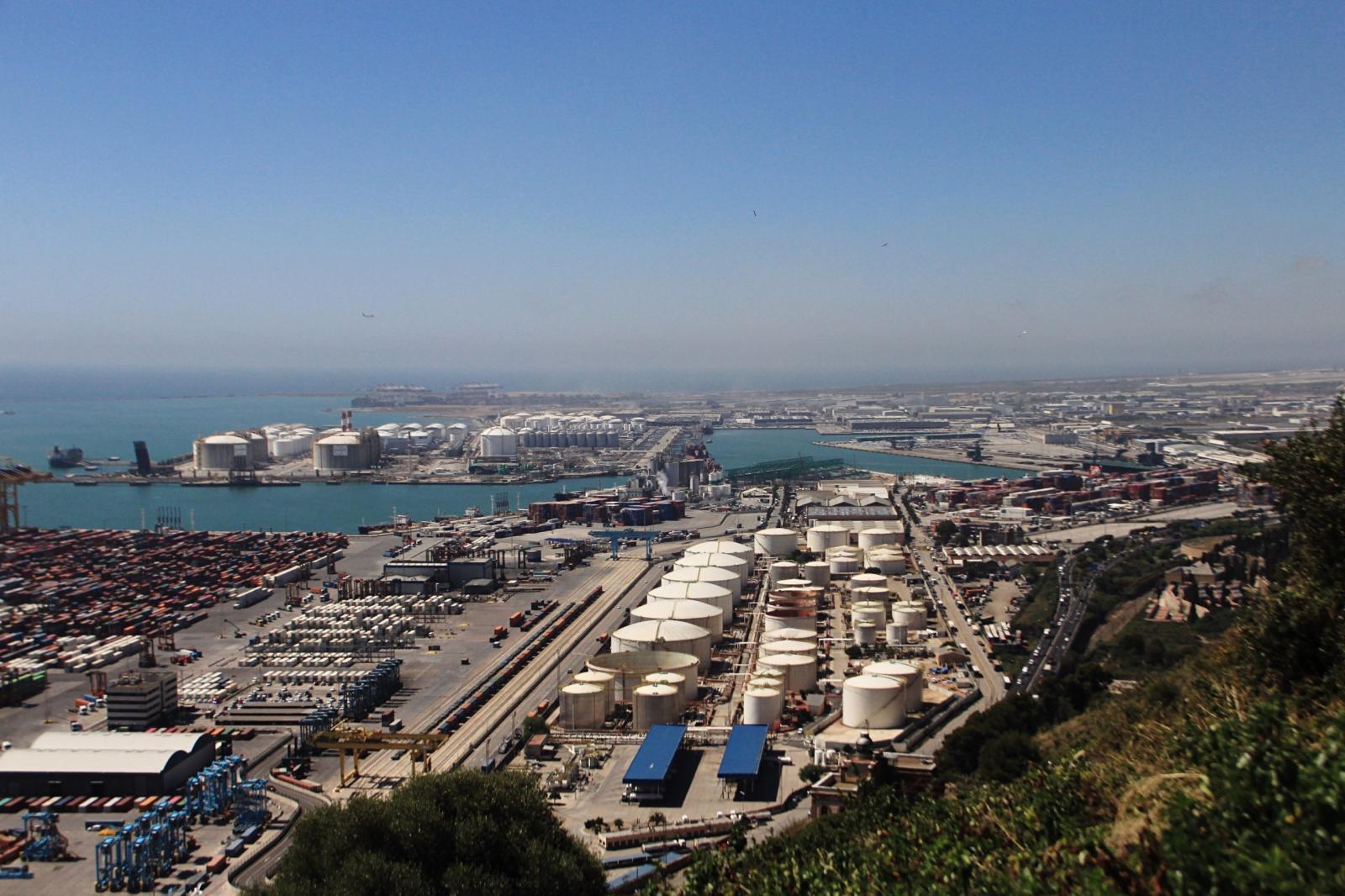
Ports are a special case. As gateways for international trade, they are fundamental to any rail freight strategy, and they often act both as terminal operators and as managers of their own rail infrastructure. In a large port, several terminals handling containers, bulk and general cargo share the same internal network, and the port must reconcile their needs while connecting efficiently with the national system. That dual role gives ports a perspective that capacity planning, investment and corridor governance should consider, and a good reason to make sure ports have a voice in the new European framework for capacity management.
It is a broader table, but also a more crowded one. Shippers, logistics providers, railway undertakings, terminal operators and ports rarely share the same priorities.
Will the modal shift finally happen?
Achieving a significant modal shift from road to rail will require more than ambitious policy targets. It demands a fundamental improvement in the performance, reliability, and competitiveness of the European rail freight system. Taken together, the two regulations are arguably the most significant reform of European rail governance in decades. TEN-T 2024 sets up multimodal corridors and puts terminals on the map; the Capacity Management regulation tackles the daily problems of capacity planning, cross-border traffic, disruption handling and data sharing. Their shared aim is a railway that is more reliable, resilient and customer-oriented.
Does this mean that Europe's new rail governance will finally deliver the modal shift? The answer is: potentially, but not automatically. The new framework addresses many of the barriers that have prevented rail freight from competing effectively with road transport, particularly in cross-border operations. However, regulations alone will not be sufficient. Their success will depend on effective implementation, adequate investment, genuine cooperation between stakeholders, and the ability of infrastructure managers and railway undertakings to translate regulatory objectives into measurable improvements in service quality, reliability, and capacity.
Several governance questions remain open. While the roles of the TAG and RAG have been strengthened under the TEN-T regulation, their future beyond 2030, when the first timetable under the new framework starts, remains uncertain with the introduction of the new Capacity Management regulation and the ERP. Will stakeholder participation increasingly be channelled through this new platform, or will dedicated advisory groups continue to represent the specific interests of terminals and railway undertakings? The answers to these questions will determine whether Europe's new governance model can transform regulatory ambition into tangible improvements for rail freight competitiveness and intermodal transport performance.
My hope is that this new framework will help unlock the potential of rail freight transport in Europe and accelerate the transition towards a more sustainable transport system. Achieving this objective should not simply mean shifting traffic from one mode to another but rather creating a truly integrated transport network that combines the strengths of rail, road, maritime, and inland waterway transport to deliver the most efficient and resilient logistics solutions.